Corolla Beaches Guide: Public Access And Horses
Corolla's beaches split into two very different worlds: paved-road family beach south of town, and the 4WD-only sand north of NC-12 where the wild horses live.
Short answer
Corolla offers standard paved-access beaches around the village and, north of the end of NC-12, a 4WD-only beach that is the only road into Carova and the home range of the wild horses. The beach is public road; horses must be viewed from at least 50 feet. A guided 4WD truck tour runs about 2 hours, rated 4.8 across 2,871 reviews, from $65 per person.
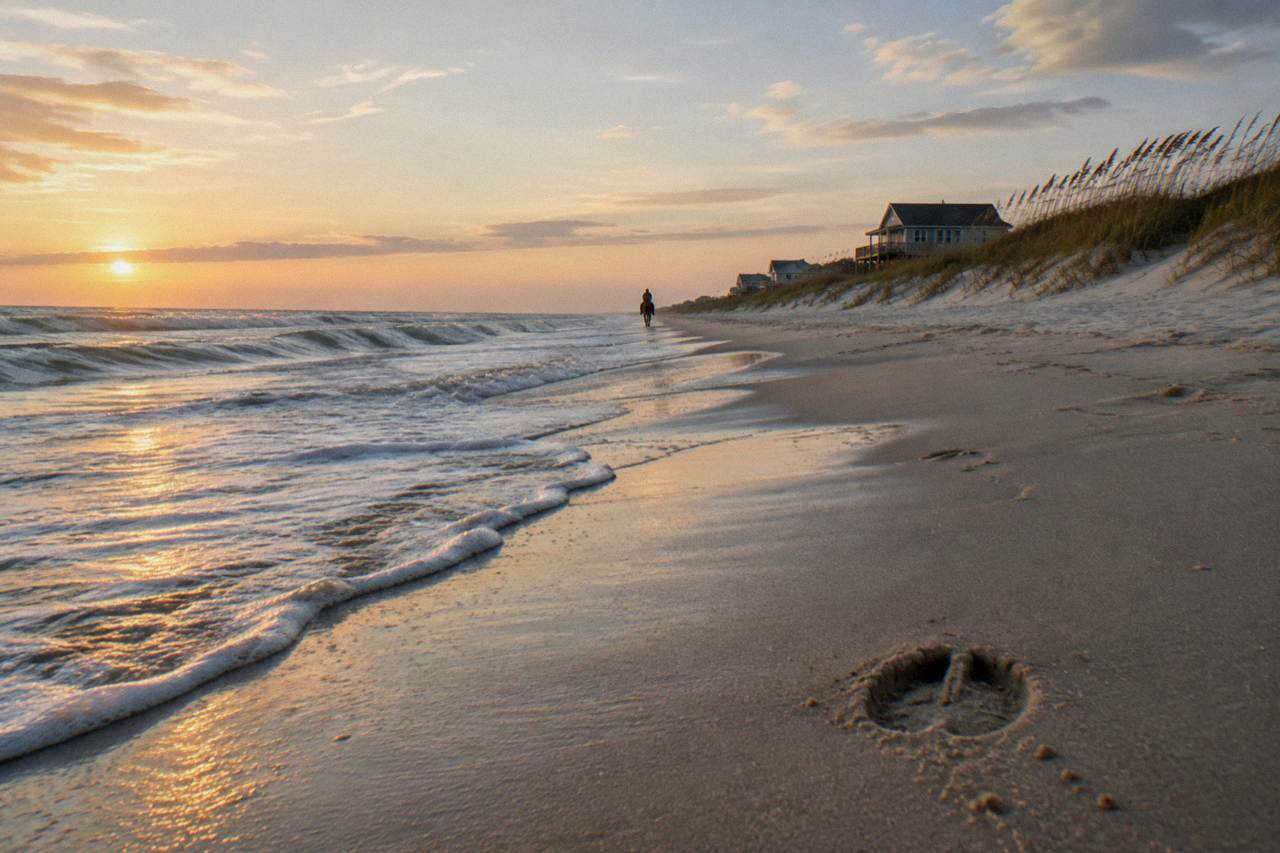
Corolla sits at the northern end of the paved Outer Banks, and its beaches divide cleanly at the spot where NC-12 runs out of asphalt. South of that point you get the conventional beach town experience: village accesses, walk-over dune paths, lifeguarded stretches in summer and a lighthouse on the sound side. North of it the beach itself becomes the road, open only to four-wheel-drive vehicles, running eleven miles up to the Virginia line through the range of the wild horses. The Corolla Wild Horse Fund, which manages the herd, describes the animals roaming 7,544 acres of habitat that mixes maritime forest, marsh, sand and roughly 700 houses. The herd is only part of the story, and a quick look at everything Corolla is famous for beyond the horses rounds out the picture.
That split is the single most useful thing to understand before you plan a beach day here. The two halves of Corolla answer different questions, need different vehicles and different gear, and carry different rules. The paved-side beaches are ordinary public beaches with a few access points scattered along Ocean Trail. The 4WD side is a public road, subject to a county ordinance that protects the horses, and it is where nearly every horse sighting happens. This guide walks both halves, the access logistics, the rules, and the seasonal patterns that change what the sand looks like month to month, with the 2-hour Outer Banks wild horse tour by 4WD truck as the easy way to see the northern beaches without driving them. If you're still choosing between towns for your trip, our comparison of Duck versus Corolla for a vacation covers how the two stack up on beaches, horses, and lodging.
Where Are The Public Beach Access Points In Corolla NC?
Corolla's paved-side beaches sit along Ocean Trail and the village streets east of it, reached by a scattering of dune walkovers and modest public accesses rather than one big paid lot, and once NC-12 ends, the only access north is the sand itself in a four-wheel-drive vehicle. The town's developed core stretches a few miles between the Currituck Beach Lighthouse and the road's terminus, and beach access here is a matter of finding the nearest walkover and walking over. There is no single central beach facility the way bigger resort towns have.
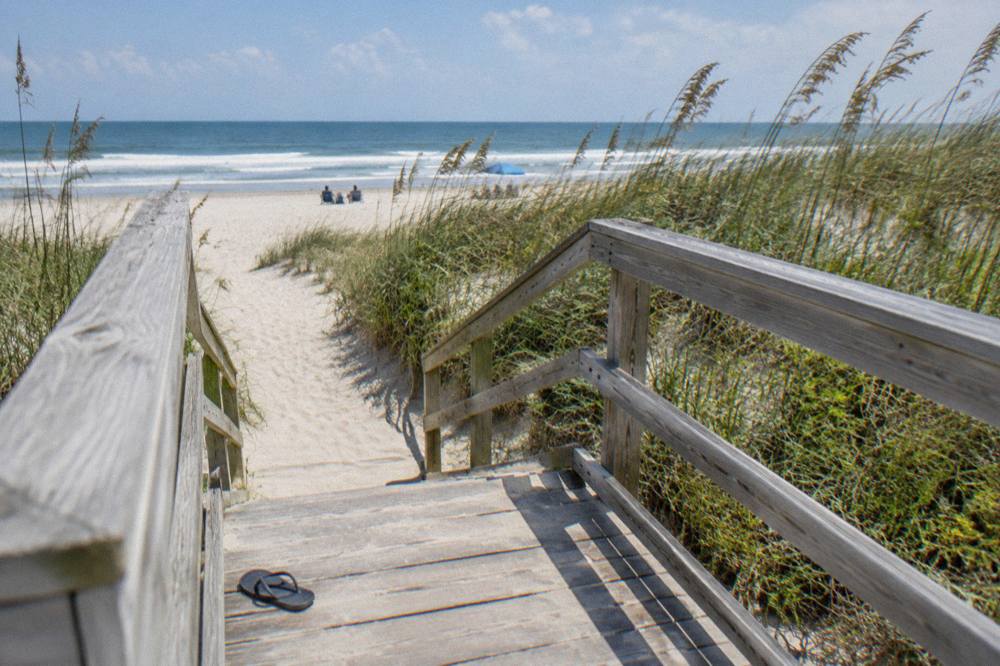
The Fund's history page is plain about what happens past the last pavement: the beach north of the paved road "is considered public road, and it is open to the public. It is the only access for residents and their guests staying in Carova, North Swan Beach, and Swan Beach." So the public beach does not stop at the end of the asphalt, it simply changes form. For people staying in the village, the practical pattern is simple: park near your rental or a public access, walk over the dune, and set up south of the road's end.
Beach access points here carry no parking fee, though conditions can change seasonally. Seasonal lifeguard coverage and posted swimming flags vary, and the county and the Currituck County tour rules page both frame the beach as a working public space rather than a groomed resort strip. That working character is exactly why the northern section stays wild: there are no facilities, no vendors and no boardwalk up there, just sand, dunes, ocean and horses.
A reasonable way to split a day is to spend the morning on the paved-side beach near the village, visit the lighthouse or the Fund's museum and Mustang Mornings programs in the afternoon, and save the 4WD beaches for a dedicated trip, either your own vehicle or a guided truck. Readers weighing a similar split up the road can also compare Corolla versus Duck for a wild horse trip, since Duck offers only paved beaches and no horse range at all.
| Beach area | Access style | Vehicle needed | Wild horses likely? |
|---|---|---|---|
| Village beaches (south of NC-12 end) | Dune walkovers, street parking | None, walk-on | Rarely; horses occasionally wander south |
| Beach at the NC-12 terminus | Ramp onto sand | 4WD required | Sometimes, near the fence line |
| 4WD beach to Carova and Swan Beach | Sand road, no pavement | 4WD required | Yes, this is the home range |
| Currituck National Wildlife Refuge tracts | Walk-in from the beach | 4WD or boat to reach, then on foot | Occasionally, viewed from a distance |
What Is The 4WD Beach North Of The Paved Road?
The 4WD beach is the strip of sand between the end of NC-12 in Corolla and the Virginia state line, roughly eleven miles, where the beach is the only road, four-wheel drive is mandatory, and the wild horse herd lives among the houses, dunes and marsh behind the dune line. The US Fish and Wildlife Service states it directly for the refuge portion: follow NC-12 north to its terminus in Corolla, where traffic is diverted onto the beach, and four-wheel drive is required. The Fund gives the same picture for the whole strip.
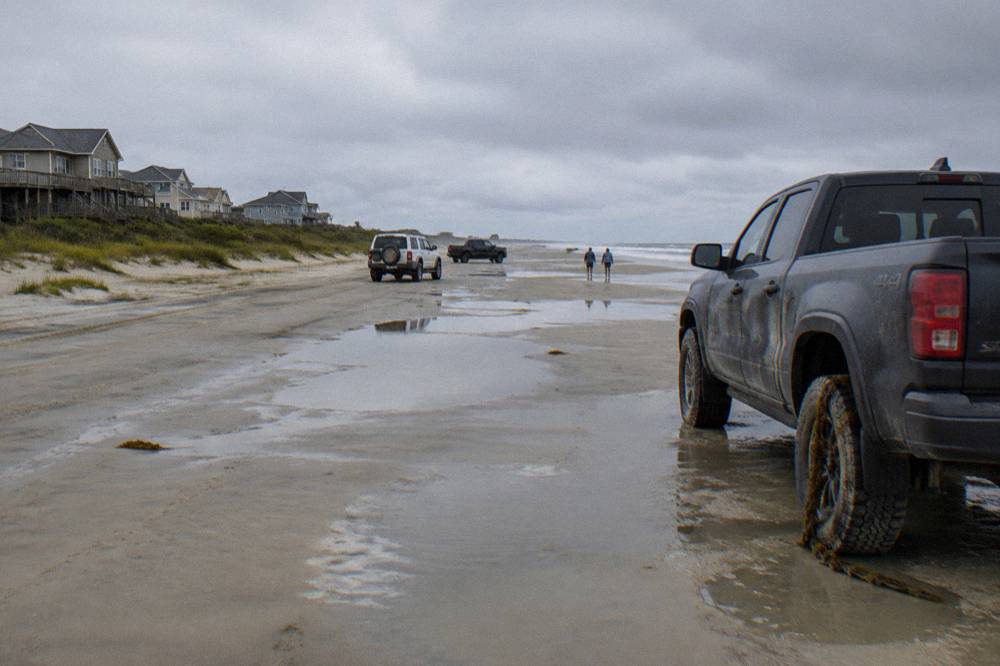
Up here the geography changes character fast. The Fund describes the horses' 7,544-acre range as 70 percent private land and 30 percent public use, with 3,150 platted lots of which only about a quarter are currently developed. In practice that means beach houses scattered through the maritime forest, long empty stretches of sand, and the Currituck National Wildlife Refuge's six units strung between Corolla and the state line. The refuge says it has no developed public facilities at all, no roads, trails, restrooms or waste disposal, and is open daily from sunrise to sunset. With no facilities or marked paths in the refuge, your best bet is planning ahead, and the free ways to spot the Corolla horses covers exactly where to go without spending anything.
For most visitors the question is not whether the 4WD beach is interesting, it is how to get onto it. The honest answer has three branches. Rent a house up there and drive it daily. Drive your own properly equipped 4WD, following the county's guidance to use four-wheel drive at the ramp and keep a slow, steady speed. Or ride it with a licensed operator, which is where the guided 4WD truck tour earns its place: the 2-hour open-air truck run from the meeting point at 1148 Ocean Trail, rated 4.8 across 2,871 reviews, from $65 per person, with a guide who knows the range. The guide to driving the 4WD beach yourself versus a guided tour covers the tradeoffs in detail.
The county regulates commercial vehicles on this beach closely, and the rules tell you something about conditions. Licensed tour vehicles must display a valid North Carolina tag and county-issued identification, tour operation west of the dune line is prohibited before 8 a.m. and after 8 p.m., and amplified sound is banned on that section at all times. Tour vehicles are also directed to stay at least 50 feet from the horses. Private drivers are held to the slow-steady-speed guidance, and the rules for the Corolla 4x4 beach are worth reading before any first trip up the sand.
| What the county and agencies state about the 4WD beach | Who states it |
|---|---|
| Four-wheel drive is required where traffic diverts onto the beach at the NC-12 terminus | US Fish and Wildlife Service |
| Use 4WD entering the ramp, keep a slow steady speed, do not attempt without 4WD | Currituck County guidance |
| The beach north of the paved road is public road, the only access for Carova and the Swan Beaches | Corolla Wild Horse Fund |
| Tour vehicles operate 8 a.m. to 8 p.m. west of the dune line, no amplified sound | Currituck County |
What Beach In NC Has Wild Horses?
The beach with wild horses in North Carolina is the 4WD strand at Corolla on the northern Outer Banks, plus the Shackleford Banks islands down at Cape Lookout; the Corolla herd are Colonial Spanish Mustangs living free across 7,544 acres between the end of the pavement and the Virginia line. This is one of the most-searched horse questions in the state, and the answer names only a handful of places. Corolla is the one with road access, of a sort, and it is the main base for wild horse tours. If you're curious how a Spanish breed ended up on these remote sands, the story of how wild horses reached the Outer Banks explains where the Corolla herd came from.
The horses' presence is not incidental or a re-introduction project for tourism. The Fund traces the herd to Colonial Spanish Mustang stock, and in June 2010 the North Carolina General Assembly adopted the Colonial Spanish Mustang as the Official Horse of the State of North Carolina. The Fund itself was organized in 1989, after eleven horses were hit and killed on Highway 12 between the paving of the Duck-to-Corolla road in 1985 and 1989, and the horses frequenting the village were moved north of the paved road into what locals call the 4x4 area. That history is why the herd lives where it does today, behind the fence at the north end of the pavement rather than on the village beaches. Everything else covered here is indexed on Corolla North Carolina Horse Tours.
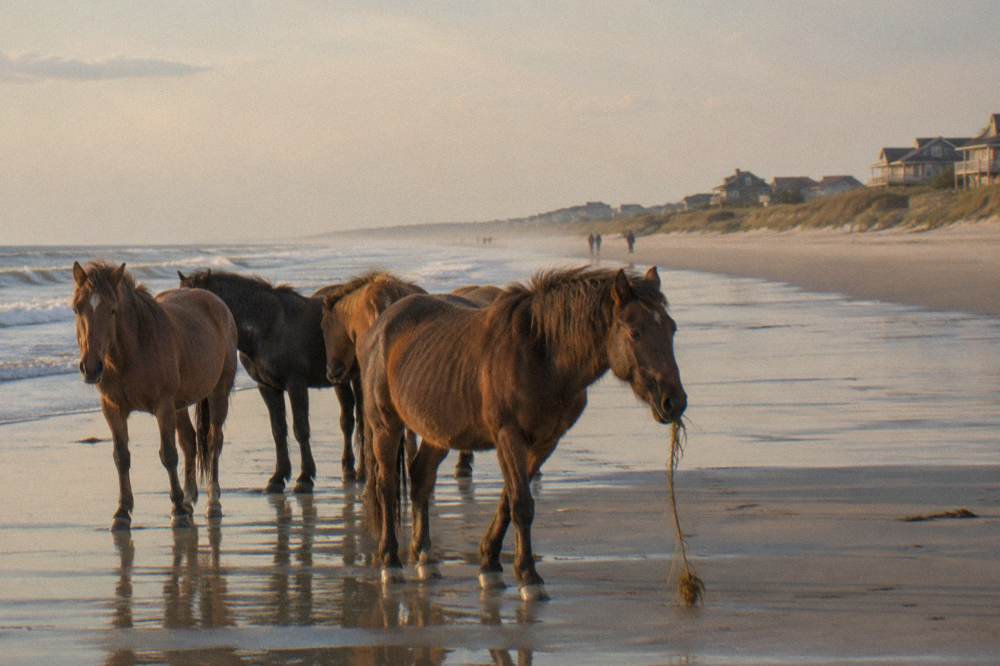
Spotting them is a matter of range and timing, not guarantee. The horses move across the whole acreage, from the beach to the marsh to the yards of the rental houses, and nobody can promise a sighting on any given day. Seasonally, though, they are predictable in their habits: the fresh reporting on the herd notes that in April biting flies and shifting winds push horses out of the secluded areas onto the open beach, and that summer heat does the same thing the insects did, forcing animals out of cover and into the open where people can see them. The pattern is so reliable that one local observer wrote that the herd is not multiplying, it is relocating, seasonally and predictably.
That is the honest pitch for the guided 4WD truck tour as a beach activity: guides drive the range daily and read those patterns for a living. The listing for the 2-hour Outer Banks Wild Horse Tour by 4WD Truck, run by Benders Beach Services, caps the truck at 12 travelers in an open-air four-wheel-drive vehicle, no ATVs, with a guide whose whole job is finding horses and keeping the vehicle inside the rules. Children under five or under 40 pounds cannot be accommodated, moderate fitness is recommended, and the booking page shows the live price. For families sizing the trip, the horse tours with kids guide works through those limits in detail.
Where Can I See Horses On The Beach In NC?
In Corolla the realistic viewing options are a licensed 4WD truck tour, your own four-wheel-drive vehicle on the 4WD beach, a walk from the parking area at the end of NC-12 if horses happen to be near the fence line, or occasionally from the village side when a band wanders south; every option carries the same 50-foot legal minimum distance. Some of these are far more reliable than others, and it is worth being blunt about which.
The guided tour is the high-percentage play because the operator drives the range every day. The featured 2-hour truck tour holds a 4.8 rating across 2,871 reviews, which reflects thousands of rides over the same sand you would drive yourself, with a guide doing the finding. For the self-drive route, the Carova 4x4 access rules guide lays out what a driver needs; the short version is a real 4WD vehicle, the county's slow-steady-speed habit, and an understanding that the horses have the right of way in every sense.
The walk-up option gets people horses sometimes, especially in the warm months when the seasonal movement pattern pushes bands onto the open beach, but it depends entirely on luck. The Fund also runs educational programming on the mainland: in 2026 Mustang Mornings opened the Betsy Dowdy Equine Center in Grandy to the public on Wednesdays from May 27 to August 26, 9 a.m. to 1 p.m., with a suggested donation of $10 per vehicle, including a free screening of a 32-minute documentary about the herd. The Fund's calendar is the place to check for the next season and the fall open house. And for readers who would rather not pay for anything, the site's roundup of free ways to see the Corolla wild horses collects the no-cost angles honestly.
| Viewing method | Odds of horses | Cost basis | Rules that apply |
|---|---|---|---|
| Guided 4WD truck tour | High; guides range daily | From $65 per person | Licensed vehicle, 50-foot rule |
| Own 4WD on the sand | Moderate; depends on the day | Fuel and vehicle wear | 4WD required, slow steady speed, 50-foot rule |
| Walk from the NC-12 end | Luck-dependent | Free | 50-foot rule applies to walkers too |
| Mustang Mornings at Grandy | Guaranteed horses, sanctuary setting | Suggested $10 per vehicle in 2026 | Fund's on-site rules |
How Does The 50-Foot Rule Work On The Sand?
Currituck County's wild horse ordinance makes it unlawful to come within 50 feet of a wild horse, to lure or entice one closer, or to feed, ride or pet one, and violations are punishable by law; if horses approach you, the Fund states plainly that it is your responsibility to stay at least 50 feet away. This applies to everyone on the beach, tour passenger or private visitor, experienced horseperson or not. The Fund's FAQ puts it flatly: there is a county ordinance that makes it illegal regardless of the person's experience.
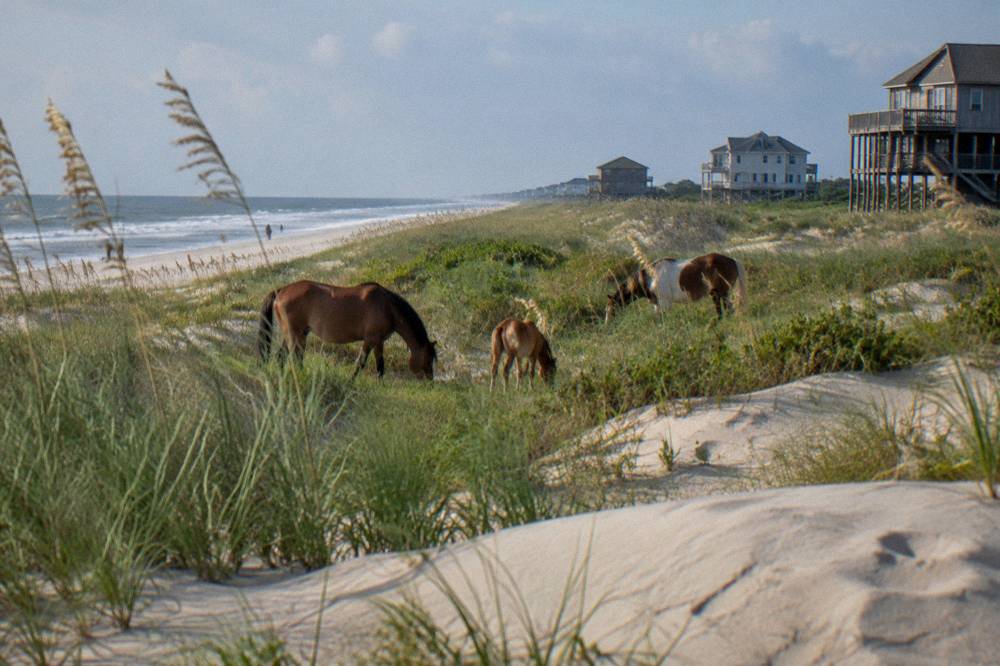
The reasoning is not bureaucratic caution, it is animal welfare with a long memory behind it. The Fund has stressed that getting too close causes the horses stress and can separate foals from their mothers, and its educational update on horses approaching people noted that foals are extremely impressionable in their first months and must not become accustomed to humans. On the federal side, the wildlife refuge states that it is unlawful to harm, approach, feed or kill any wild horse on the refuge, and the Fund's ordinances page catalogs the county's full list: cruelty, enticing, harboring, luring, seizing and failure to report injury are all unlawful.
The practical beach-day version is simple. If horses come down to the surf line while you are swimming or sunbathing, move back, gather your food, keep dogs leashed and close, and give the band room to pass. Report injured horses to the Fund at 252-453-8002, or after hours to Currituck County dispatch at 252-453-3633. The full etiquette, including how tour trucks handle an approach, is covered by the 50-foot rule and etiquette guide, and the question of whether you can touch the wild horses in the Outer Banks gets its own direct answer.
One point specific to this beach: the ordinance's protections run the whole length of the four-wheel-drive area, from the terminus of the paved portion of NC-12 to the Virginia state line, and the county's code even bars bringing outside horses into that stretch. So the 50-foot rule is not a village-vs-4WD distinction, it covers the entire northern beach where the herd lives.
What Seasonal Changes Shape The Corolla Beaches?
Corolla's beaches shift character with the seasons as the horses relocate predictably in response to insects and heat, summer crowds concentrate near the accesses, foals arrive through spring and summer, and the off-season leaves the sand quiet with horses moving back into cover. The 2026 season illustrated each of these patterns clearly enough that they are worth planning around.
The spring push is the most useful one for visitors. In April, biting flies and shifting winds drive horses out of the secluded maritime forest and onto the open beach, which concentrates sightings near the dune breaks and, notably, near the southern barrier fence at the paved road's end. Through the summer, heat stress does the same work the insects started, keeping bands in the open where the breeze and the flies are fewer. A local observer summarized it: the horses are not multiplying, they are relocating, seasonally and predictably, in response to conditions that repeat every summer.
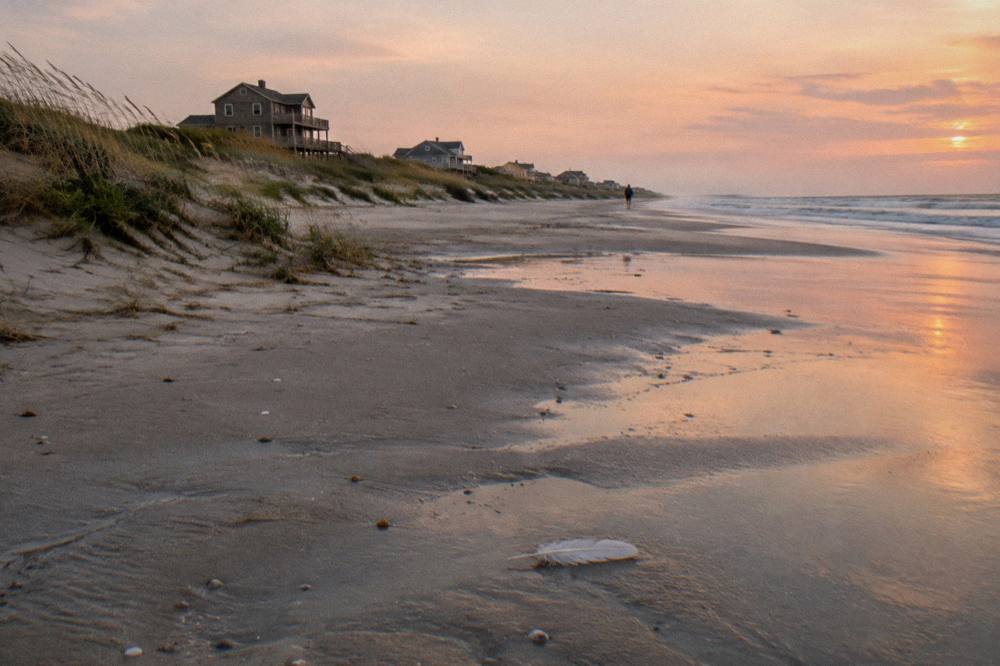
Foals are the other seasonal storyline. In 2026 the first four were spotted by late April, the count reached ten by midsummer, and by late summer it stood at twelve healthy foals with the Fund noting one or two more could still arrive. Foal season sharpens the 50-foot rule's importance, since a separated foal is exactly the harm the ordinance exists to prevent. The site's best time of year guide and the piece on the best time of day for Corolla wild horses break the calendar and the clock down further.

Operators adjust to the seasons too, and that affects how you book. One direct operator, per its own page, runs an open-air truck from April through November and switches to an enclosed SUV from January through March; another lists an in-season window of May 1 to October 1 with 8 a.m. to 8 p.m. hours; a third opens for the season in late April. The featured 4WD truck tour's availability shifts with demand, and the booking page shows the live calendar and any free-cancellation terms before you commit. County rules hold year-round regardless: no tour operation west of the dune line before 8 a.m. or after 8 p.m., and no amplified sound on that section at all.
| Season | Horse behavior on the beach | What it means for a visit |
|---|---|---|
| Spring (April to May) | Flies and winds push bands onto open sand; first foals | Strong sighting odds near the dune breaks |
| Summer (June to August) | Heat keeps horses in the open; foal count grows | Peak season, book the truck tour well ahead |
| Fall (September to November) | Bands drift back toward cover; crowds thin | Quieter sand, softer light, still tourable |
| Winter (December to March) | Horses favor sheltered range away from the surf | Fewer sightings, some operators switch to enclosed SUVs |
How Do You Plan A Beach Day Around The Horses?
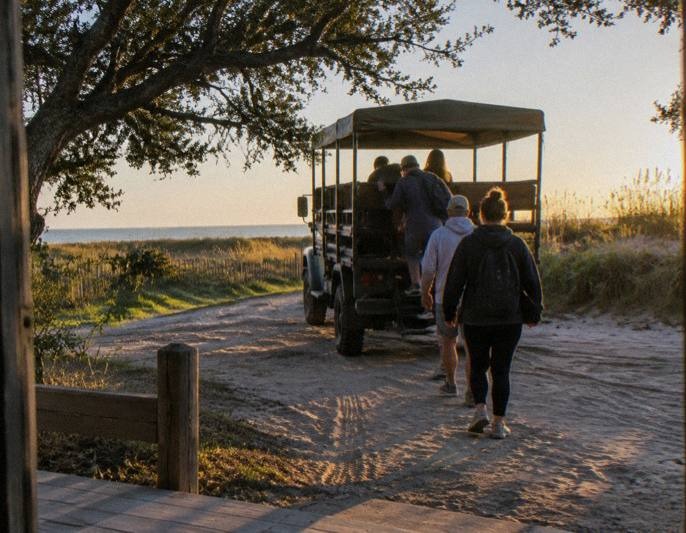
A Corolla beach day built around the horses usually pairs a morning or late-afternoon 4WD truck tour with village beach time, the lighthouse, and the Fund's museum, since the tour takes about two hours from the meeting point at 1148 Ocean Trail and leaves the rest of the day free. The logistics are friendlier than people expect, because the tour's meeting point shares a parking lot with a Beer Garden in Corolla village, minutes from the walkovers and the Currituck Beach Lighthouse.
Dress for the truck, not the beach chairs. The open-air ride means sun, wind and salt spray for roughly two hours on the sand, so the site's what to wear and bring guide is worth a read before packing. Food and drinks are not included on the tour, hotel pickup is not offered, and travelers with back problems are advised against the ride since the beach is unpaved the whole way. Riders report the bumpiness as part of the experience, and the site's accessibility and ride-quality guide addresses that honestly.
If the plan is broader than a single day, the three-day Outer Banks itinerary with a wild horse tour sequences the beaches, the lighthouse, the wild horse museum and the horse range into a workable route, and the piece on where to stay in Corolla for wild horse tours helps decide between the village side and a 4WD-beach rental. The museum and gift shop at 1130E Corolla Village Road runs seasonal hours, Tuesday through Saturday, 10 a.m. to 4 p.m., per the Fund's site, and makes a good rain-plan stop.
The beach itself remains the main event. Corolla's sand, south and north of the pavement, is the reason the herd is here at all, and the same strip that carries your towel in the morning carries the tour trucks and the wild bands in the afternoon. The whole system works when everyone, driver, swimmer and rider, keeps the county's rules and the Fund's distances in mind.
Common Questions About Corolla Beaches
What beach in NC has wild horses?
The 4WD beach at Corolla, on the northern Outer Banks, is the road-accessible beach with wild horses in North Carolina; the Shackleford Banks at Cape Lookout is the other well-known herd location. Corolla's horses are Colonial Spanish Mustangs, the state horse of North Carolina, living across 7,544 acres between the end of the pavement and the Virginia line.
Where can I see horses on the beach in NC?
In Corolla you can see horses from a licensed 4WD truck tour, from your own four-wheel-drive vehicle on the 4WD beach, on foot from the end of NC-12 if a band is near the fence line, or at the Fund's sanctuary events in Grandy. Every option carries the same rule: stay at least 50 feet from any wild horse.
Can you drive on the beach in Corolla?
Yes, north of where NC-12 ends, the beach is a public road and the only access to Carova and the Swan Beaches. Four-wheel drive is required, and county guidance asks drivers to use 4WD at the ramp and keep a slow, steady speed. Standard two-wheel-drive vehicles should not attempt it.
Are Corolla beaches free to access?
The village-side beaches are reached by dune walkovers and public accesses, and no county or Fund source lists a parking fee for them. The 4WD beach is a public road with no permit or fee found in any fetched official page. Rental gear, tours and the lighthouse are separate costs.
Is it safe to swim at Corolla beaches?
The village beaches are conventional Atlantic swimming beaches with seasonal lifeguard coverage and posted flags, and the usual Outer Banks caution about currents applies. On the remote 4WD beach there are no facilities or lifeguards, and the wildlife refuge section has no restrooms or developed amenities at all.
Do the wild horses come onto the beach where people swim?
Sometimes. In spring and summer, biting flies and heat push the horses out of cover and onto the open sand, which is when swimmers and sunbathers most often share the beach with a band. If that happens, move back, secure food and pets, and give the horses room to pass, keeping the 50-foot distance the county ordinance requires.