Corolla Vs Duck: Where To Base A Wild Horse Trip
Corolla and Duck sit twenty minutes apart on the same barrier island, but only one of them puts you at the door of the wild horse tours. Here is how the two towns actually compare for a horse-focused trip.
Short answer
Corolla is the better base for a wild horse trip: the herd lives north of the village, the guided 4WD truck tours depart from 1148 Ocean Trail in Corolla, and the beach at the end of NC-12 is the only road into the 4x4 area. Duck suits shoppers and diners who plan one day trip north.
The northern Outer Banks packs two very different vacation towns onto one thin ribbon of sand. Duck, south of Corolla, is the walkable village of boardwalk shops, sound-side sunsets and restaurants. Corolla, at the paved end of NC-12, is where the road stops, the sand begins, and the wild horses take over. If horses are the point of the trip, the choice matters more than most visitors expect, because everything about seeing the herd, from the tour departure point to the beach access rules, happens in and north of Corolla. For a fuller comparison of the two towns beyond the horse tours, our guide to whether Duck or Corolla makes the better vacation base weighs beaches, lodging, and access side by side.
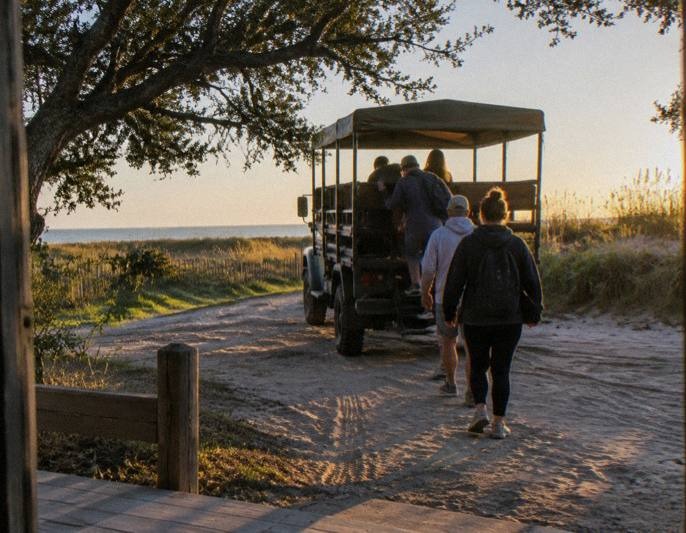
The featured 2-hour open-air 4WD truck tour, rated 4.8 across 2,871 reviews and priced from $65 per person, departs from a single meeting point in Corolla village. Duck has no horse tour departure, no herd habitat and no 4WD beach of its own. That does not make Duck the wrong base for everyone, but it does mean the two towns answer different questions, and this guide works through them one by one: access to the horses, the town character, beaches, lodging strategy, day-trip logistics and the questions families ask most.
Where Do The Wild Horses Actually Live?
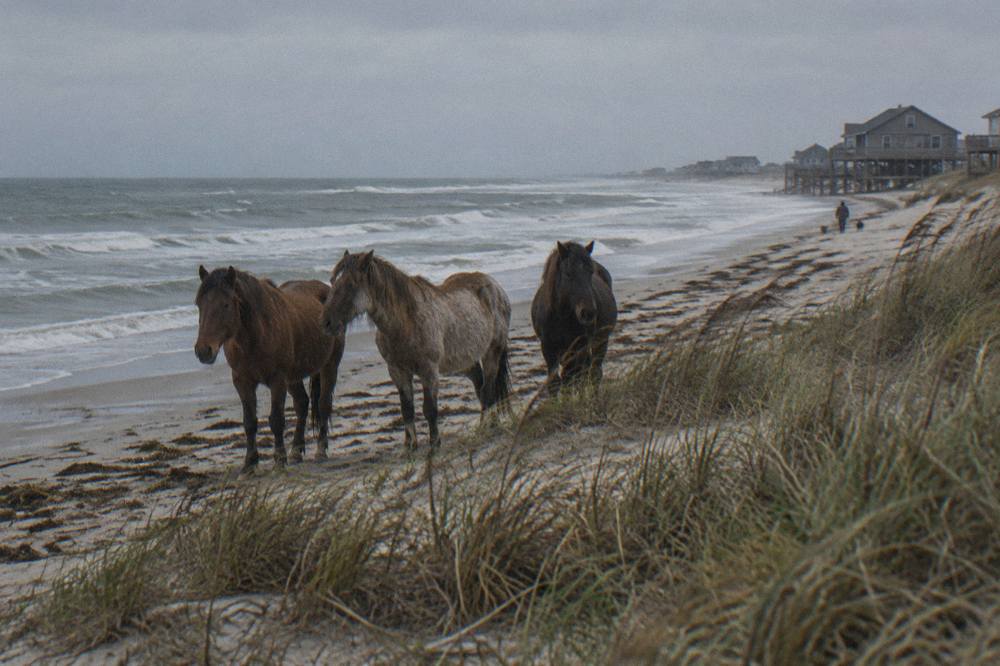
The Corolla wild horses live only north of where NC-12 ends in Corolla village, on roughly 7,544 acres of the four-wheel-drive beach stretching about eleven miles to the Virginia state line. Duck has no wild horse habitat at all: the herd's southern boundary is the fence at the paved road's terminus, so a Duck base always means driving north to see horses. The Corolla Wild Horse Fund, the nonprofit that manages the herd, describes the range as a mix of 70 percent private land and 30 percent public use, threaded with houses, vehicles and people. The beach itself is considered a public road and is the only access for anyone staying in Carova, North Swan Beach or Swan Beach. Since the herd roams private and public land with no paved access, booking a guided trip is the practical way most visitors see the horses, and our guide to bookable Corolla wild horse truck tours covers which options you can reserve ahead.
That geography has a history behind it. Between 1985, when the road from Duck to Corolla was paved, and 1989, eleven horses were killed on Highway 12, and the horses frequenting the village were moved north of the paved road into what locals call the 4x4 area. The Fund was organized in 1989 to manage them there. So the herd did not drift north by preference; it was deliberately separated from traffic, and the fence line has defined the boundary ever since.
The practical consequence for trip planning is simple. A visitor sleeping in Corolla is a ten minute drive from the tour meeting point and the beach ramp. A visitor sleeping in Duck is building every horse outing around a drive north on NC-12, which in summer moves slowly, and a parking plan in Corolla village, where the lots near the tour departure fill early. For a closer look at which neighborhoods put you nearest the departure point, our guide to Corolla lodging for a wild horse tour trip covers the options area by area.
Which Town Is Closer To A Corolla Horse Tour?
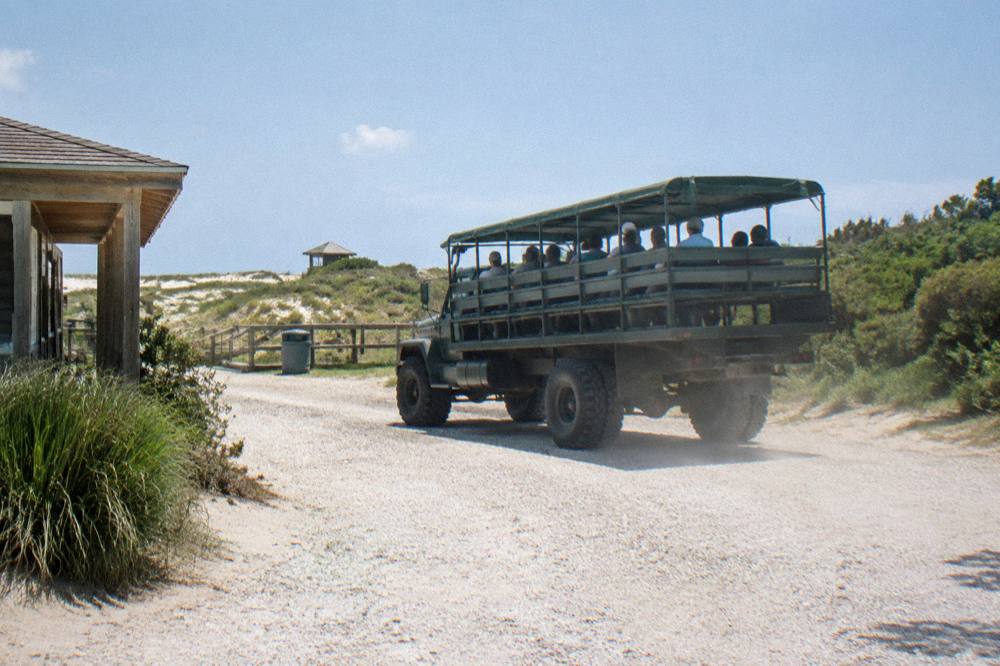
Corolla wins outright on tour logistics. The 2-hour open-air 4WD truck tour meets at 1148 Ocean Trail in Corolla village, next to the Beer Garden parking lot, and every licensed horse tour in the area departs from the Corolla end of the island because that is where the sand road begins. From Duck, the meeting point is a drive of roughly twenty minutes without traffic, longer in season. The tour itself carries up to 12 travelers in an open-air 4-wheel drive truck, with no ATVs, a friendly professional guide, and food, drinks and hotel pickup excluded, so every rider arrives at the Corolla meeting point under their own steam regardless of where they sleep.
This is the single biggest structural difference between the two towns for a horse trip, and it compounds. Book the afternoon departure of the guided 4WD tour and you want to be in Corolla, parked and ready, not watching brake lights on the Duck road. Book a morning slot and the same applies in reverse, only earlier. Riders with back problems are advised against the open-air truck ride, and children under five or 40 pounds cannot be accommodated, so families split by those rules often pair one adult tour with a beach day, another reason proximity counts.
The comparison is honest in both directions, though. Duck visitors are not shut out; they simply treat the horse tour as a half-day excursion and spend the rest of the week enjoying the town they chose for other reasons. The tour operators compared guide lays out who runs what from the Corolla departure zone, including the direct-booking operators alongside the featured tour.
Currituck County licenses and regulates the horse tour operators, and its rules explain why departures cluster where they do. Tour vehicles must display a valid North Carolina license tag and county-issued yearly identification, tours west of the dune line may only run between 8 a.m. and 8 p.m., amplified sound is prohibited on the 4x4 beach, and tour vehicles must stay at least 50 feet from the horses. The county's horse tour rules page states all of this plainly, and it applies to every vehicle that rolls off the paved road, whoever owns it.
Which Town In The Outer Banks Is Best For A Vacation?
Neither town is "best" in the abstract: Duck is the better all-round vacation village, with a sound-side boardwalk, shops and restaurants walkable from most rentals, while Corolla is the better base for wild horses, lighthouses and 4WD beach access. Travelers who rank dining and walkability first tend to prefer Duck; travelers whose itinerary revolves around the herd, the tour truck and the northern beaches prefer Corolla. The two towns sit close enough on the same island that the "wrong" choice costs a drive, not a day.
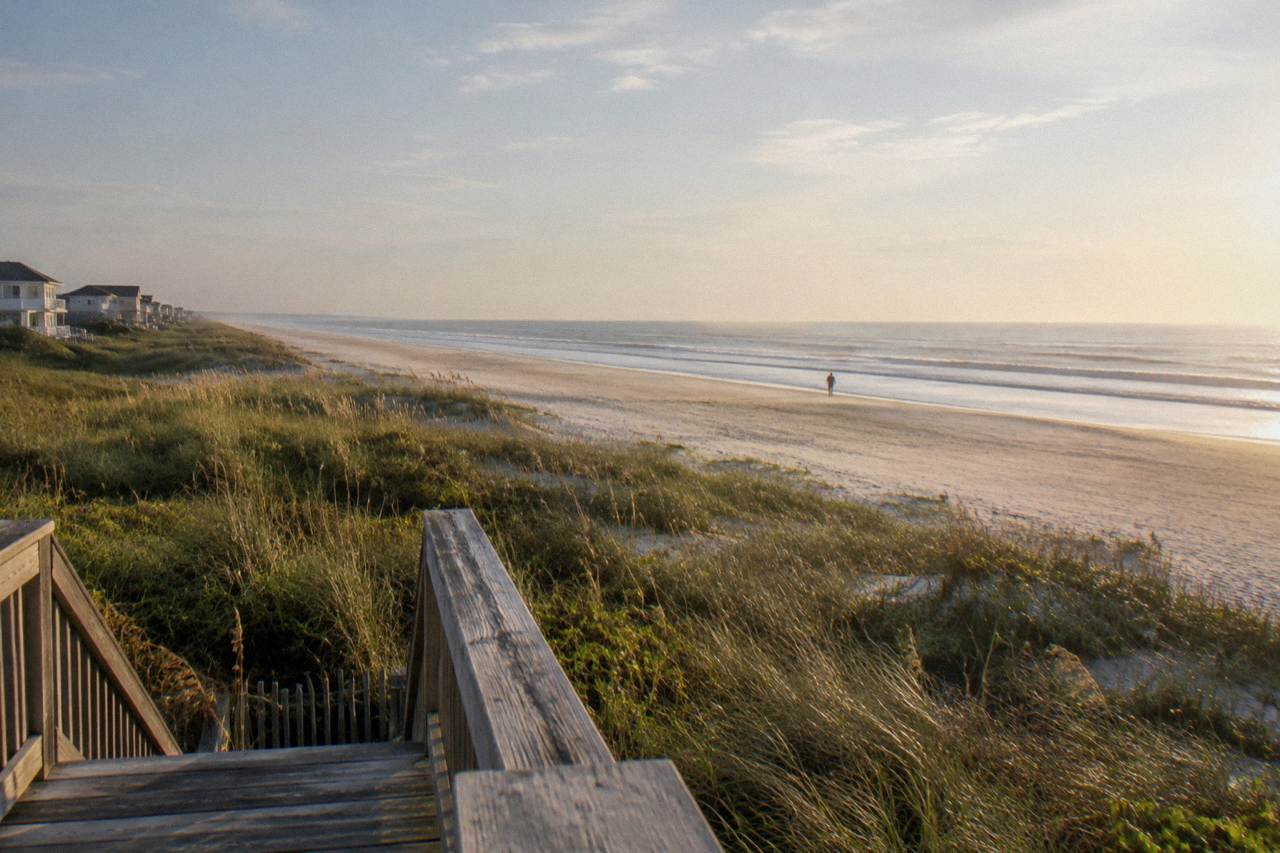
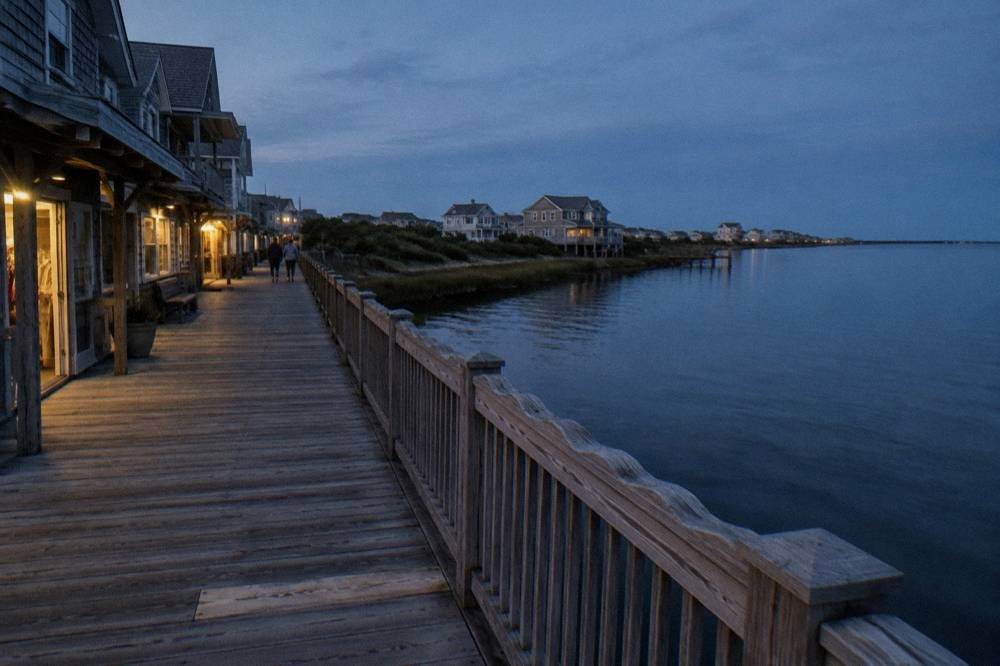
Duck's center of gravity is its village core and boardwalk along the Currituck Sound, built for evenings: ice cream, boutiques, sunset over calm water. Corolla's center of gravity is its attractions: the Currituck Beach Lighthouse, the Whalehead estate, the Corolla Wild Horse Fund's museum and gift shop on Corolla Village Road, open seasonally Tuesday through Saturday, 10 a.m. to 4 p.m., and the beach ramp at the end of the pavement. The things Corolla is known for guide covers that attraction set in detail.
A useful way to frame the decision is what your evenings look like. In Duck you park the car and walk to dinner. In Corolla you cook in the rental more often, drive to dinner, and in exchange you wake up minutes from the horse tour departure and the lighthouse. Neither trade is painful, which is exactly why the question gets argued in every Outer Banks travel forum every summer.
The table below summarizes the head-to-head as a planning snapshot, drawn from what the official sources actually publish.
| Factor | Corolla | Duck |
|---|---|---|
| Wild horse habitat | Yes, at and north of the NC-12 terminus | None |
| Horse tour departure | In the village at 1148 Ocean Trail | No departure point |
| Beach character | Wide Atlantic beach plus the 4x4 sand road north | Wide Atlantic beach, no driving |
| Walkable village core | Limited, attractions spread out | Yes, boardwalk and shops |
| Marquee sights | Currituck Beach Lighthouse, Whalehead, horse museum | Sound-side boardwalk and park |
| Best for | Horse-first itineraries, 4WD access | Dining, shopping, central base |
How Do The Beaches Compare Around Corolla And Duck?
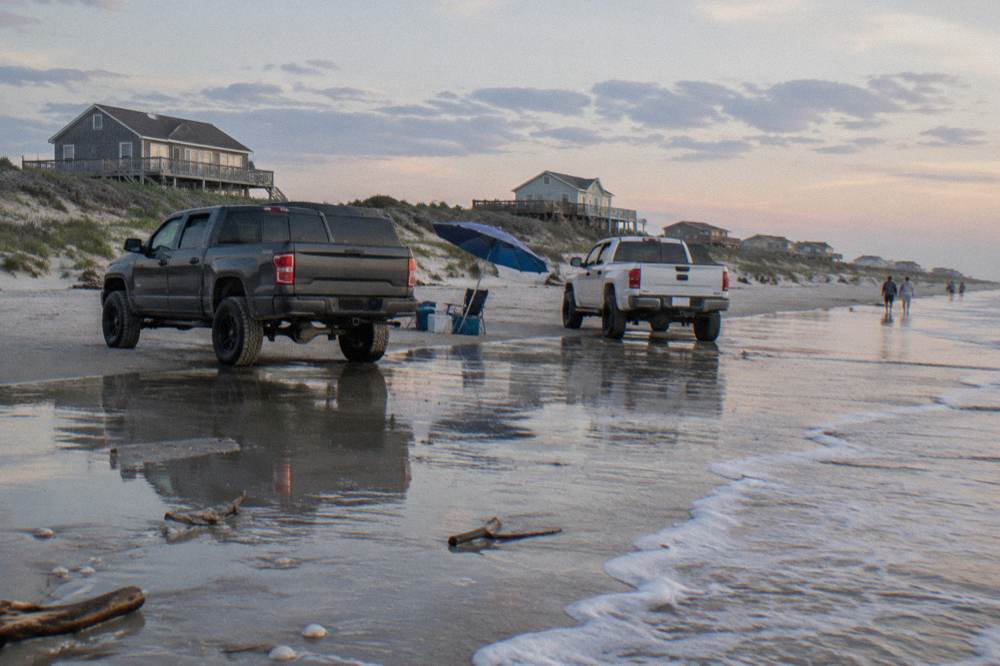
Both towns front the same Atlantic Ocean with wide lifeguarded beaches in season, but only Corolla has the drivable sand at the northern end, where the pavement stops and the beach legally becomes the public road into the 4x4 area. Duck's beaches are pedestrian only, with no vehicle access of any kind. The US Fish and Wildlife Service, which manages the Currituck National Wildlife Refuge north of Corolla, states that at the NC-12 terminus traffic is diverted onto the beach and four-wheel drive is required, with refuge access by 4WD vehicle or boat only.
That sand road is a real dividing line in experience. In Corolla you can watch air-downed trucks rolling past the dune line toward Carova, and if you have a 4WD vehicle you can join them under county guidance: use 4WD when entering the ramp, maintain a slow steady speed, and do not attempt the beach without four-wheel drive. The driving the Corolla 4x4 beach guide walks through the self-drive versus guided-tour trade in full, and the Carova beach access rules page covers what the county and the refuge expect of drivers.
Duck's beach experience is quieter in a different way: no engines, a groomed feel near the town accesses, and the sound side for toddlers and paddleboards. For families with small children who are too young for the truck tour, that calm water is a genuine point in Duck's favor. For visitors who want to feel the wild edge of the island, Corolla's northern beach, with horses sometimes moving along the surf line at a legal distance, is the whole show.
Where Should You Stay To Be Close To The Horse Tour?
For a horse-first trip, stay in Corolla village or the northern Corolla beaches, which put you within minutes of the 1148 Ocean Trail meeting point and let you take an early or late tour slot without a highway commute. Duck works as a base if your rental, budget or group size points there, but plan on driving to Corolla for tour day and parking near the departure lot. There is no hotel pickup on the featured tour, so nobody gets delivered: every rider self-drives to the meeting point.
Lodging strategy differs by town in ways that go beyond the drive. Corolla's rental stock skews toward large oceanfront houses, many in the four-wheel-drive area itself, where guests trade pavement convenience for horses grazing near the fence line, though county rules still forbid approaching within 50 feet. Duck offers a similar big-house market plus a tighter cluster of village-adjacent options walkable to shops. Corolla splits into distinct zones, and where you base yourself affects how easily you reach the 4x4 beach departure points. Duck lodging works fine as a general vacation base, since the horse tours depart from Corolla itself.
Budget logic also differs. Because the featured tour runs from $65 per person and the direct-booking Corolla operators price in a similar band per their own pages, the tour itself is a small line item next to a week's rental. The money decision is really the house. Duck premiums buy walkability; Corolla premiums buy proximity to the herd and the 4x4 beach. Decide which of those you will actually use at 7 a.m. on a summer morning, and the choice makes itself.
| Trip profile | Recommended base | Why |
|---|---|---|
| Horse tour is the headline event | Corolla village or north Corolla | Minutes to the 1148 Ocean Trail meeting point |
| Self-drive 4x4 beach days planned | Corolla, 4WD-capable rental | Direct access to the sand road at NC-12's end |
| Dining and shopping drive the trip | Duck | Walkable boardwalk and village core |
| Mixed group, one tour day only | Either, or in between | Single day trip north absorbs the drive |
| Families with under-5s | Duck or south Corolla | Kids under five or 40 pounds cannot ride the truck tour |
How Much Drive Time Does A Duck Base Add?
A Duck base adds a drive of roughly twenty minutes each way to the Corolla tour meeting point in light traffic, and in peak summer season that stretch of NC-12 can take considerably longer, so Duck-based riders should leave generous margin for morning and late-afternoon departures. No official source publishes a minute-by-minute figure for seasonal congestion, so treat the twenty-minute baseline as the no-traffic case and pad it on weekends. The distance itself is fixed: Duck sits south of Corolla on the same island, one road connecting them.
The timing constraint is real because tour hours are not flexible. County rules allow tour operation west of the dune line only between 8 a.m. and 8 p.m., and the fresh sweep of operator pages shows departure times varying by season rather than a fixed published grid. A Duck guest targeting the first departure of the day is committing to an early start down a two-lane road with everyone else's beach gear on the roof. A Corolla guest is rolling out of bed into the parking lot.
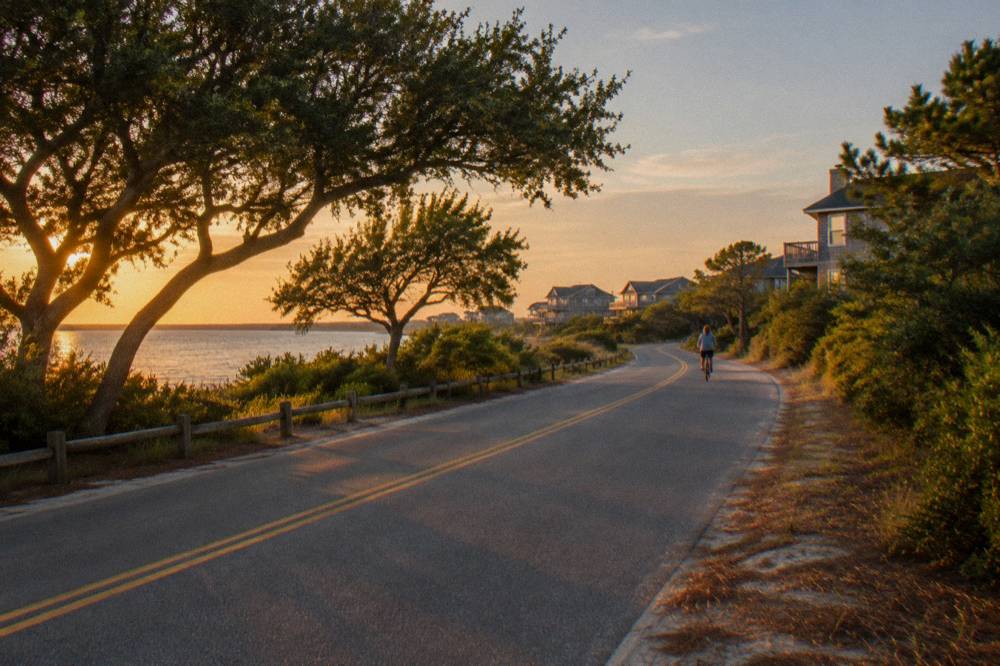
The drive is not unpleasant, to be fair. NC-12 between the towns crosses maritime forest and sound views, and the Currituck Sound side lights up at golden hour. Many Duck-based visitors turn tour day into a northern loop: the morning truck tour, lunch in Corolla village, the lighthouse or the horse museum in the afternoon, then the drive back before dinner. That loop is a genuinely good day. It is simply a different product from waking up inside horse country.
What About Seeing Horses Without A Tour From Each Town?
From Corolla you can look for horses without a tour by driving your own 4WD vehicle up the sand road or visiting the Fund's free sighting channels, while from Duck the only no-tour route is the same drive north plus either a self-drive beach run or luck at the fence line; no horses come south of the Corolla boundary, so Duck itself offers zero chance of a sighting. The seeing the horses without a tour guide covers the free methods in depth, and the county's rules apply wherever you stand.
The self-drive option deserves a caution here, once. The beach north of the pavement is public road, but the refuge and the county both state plainly that it is 4WD only, that drivers should hold a slow steady speed, and that the 50-foot rule around horses applies to every person and vehicle, tour truck or not. Two horses died in 2025 after being struck by vehicles, and the Fund asks anyone who sees dangerous behavior to report it to Currituck County dispatch. A guided tour outsources the driving, the spotting and the compliance to a licensed operator, which is why many Duck visitors conclude the truck tour is the safer use of their one horse day.
Corolla Or Duck For Families With Kids?
Families with children five and over generally do better basing in Corolla, where the minimum-age tour restriction (no children under five or 40 pounds) pairs with lighthouse climbing, the horse museum and the beach for a full kid itinerary; families with toddlers often prefer Duck's calm sound access and walkable village, saving the truck tour for a future year. The age rule comes straight from the listing terms and it is firm, so it should shape the base-town decision before anything else.
For school-age kids, the open-air truck ride itself is the memory: two hours of sand, surf and scanning the dune line for the Colonial Spanish Mustangs, which the state of North Carolina adopted as its official horse in 2010. The horse tours with kids guide covers packing, timing and what to prep children for, including the etiquette rules. Duck's family strengths, playgrounds, calm-water paddle time and ice cream walks, are real but horse-free, so a Duck family is planning the same northbound excursion as everyone else.
The mixed-age family question comes up constantly, and the honest answer is a split strategy. Book the adults-and-older-kids onto a morning departure, let one adult take the little ones to the Corolla village beach or the museum, reunite for lunch, and everyone gets their day. That plan works from either base town, but it works with less friction when the base is Corolla and the meeting lot is five minutes away rather than a highway hop south of the whole operation.
Can You Combine Both Towns In One Trip?
Yes, easily: the towns sit on the same island road, so a single vacation can sleep in Duck, spend a horse day in Corolla, or split a week between the two, and many returning visitors do exactly that, using Duck for the first half and Corolla for the second once the tour and 4x4 beach days arrive. There is no ferry, no toll and no boundary formalities between them, just NC-12 and traffic. The three day Outer Banks itinerary with a horse tour shows one way to sequence the towns, the lighthouse and the truck tour.
The split-week approach solves the comparison problem rather than answering it. Days one to three in Duck deliver the boardwalk evenings and sound sunsets; the move north puts the family inside horse country for the tour morning, a self-drive or beach afternoon, and the museum stop before heading home. The main cost is the midweek pack-and-move, which with a beach house full of gear is not nothing. Travelers who move once and only once tend to report the best of both towns without feeling like they lived out of the car.
For shorter stays, three nights or less, splitting is false economy; pick one town. A rule of thumb for splitting the stay: if the horse tour is the reason for the trip, sleep in Corolla and drive south to Duck for an evening; if it is one item on a list, sleep in Duck and drive north once. The featured 2-hour tour, at 4.8 across 2,871 reviews and from $65 per person, is bookable from either address; only the commute changes. The Corolla Wild Horse Fund's FAQ is worth a read before either version of the trip, for the sighting etiquette and reporting numbers alone.
| Itinerary style | Base | Horse tour plan | Trade-off |
|---|---|---|---|
| Horse-first week | Corolla | Multiple slots possible, morning preferred | Fewer walkable dinners |
| Village week, one tour day | Duck | Single pre-booked departure, drive up | Commute on tour morning |
| Split week | Duck then Corolla | Tour in the Corolla half | One midweek move |
| Long weekend | Either, one town | One departure, book early | No second chance if weather bites |

The bottom line is that the question "which is better, Duck or Corolla?" resolves on priorities, not quality. Both towns deliver excellent Outer Banks weeks. But the herd, the fence line, the sand road and the 1148 Ocean Trail departure are all Corolla facts, and no lodging choice in Duck changes them. Choose the town that matches what the trip is for, then Corolla North Carolina Horse Tours is here for the part that happens on four-wheel drive.
Common Questions About Corolla Vs Duck
Which is better for a wild horse trip, Duck or Corolla?
For a wild horse trip, Corolla is better: the herd lives at and north of the Corolla fence line, the horse tours depart from 1148 Ocean Trail in Corolla village, and the 4x4 beach begins where the pavement ends. Duck is better for walkable shops, dining and a more central position on the northern Outer Banks.
Which town in the Outer Banks is best for a vacation?
There is no single best town. Duck suits visitors who want a walkable village with a sound-side boardwalk; Corolla suits visitors built around the wild horses, the Currituck Beach Lighthouse and the 4WD beach. Many families split a week between the two.
Can you see wild horses from Duck, NC?
No. The wild horses live north of where NC-12 ends in Corolla, and the boundary fence keeps them out of the developed areas to the south. From Duck you must drive to Corolla and then take a guided 4WD tour or drive your own four-wheel-drive vehicle up the beach road.
How far is Duck from the Corolla horse tours?
Roughly twenty minutes of driving in light traffic between Duck and the tour meeting point at 1148 Ocean Trail in Corolla village, with summer weekends running longer. Plan extra margin for morning departures.
Do any horse tours pick up in Duck?
No. The featured 2-hour open-air 4WD truck tour lists no hotel pickup or drop-off, and all licensed Corolla horse tour operators work from the Corolla end of the island where the beach road begins.
Is parking hard near the Corolla tour meeting point?
The tour meets at 1148 Ocean Trail, sharing a lot with the Beer Garden in Corolla, and summer demand fills village-area lots early. Arriving ahead of your departure time is the standard advice for any tour slot.