Driving The Corolla 4x4 Beach Yourself Vs A Guided Tour
The sand north of Corolla is a public road with no pavement, no ranger station and no guardrails, and the horses that live there do not move out of the way for anyone. Here is what self-driving really asks of you, and what a guided seat covers instead.
Short answer
Yes, you can drive the Corolla 4x4 beach yourself: the beach north of the paved end of NC-12 is public road, open to anyone with a 4WD vehicle. No official source lists a visitor permit or fee for the beach. The trade-off is real: soft sand, tides, and a County ordinance that puts the 50-foot rule on you personally, while tour vehicles are County-licensed and their guides carry the local knowledge.
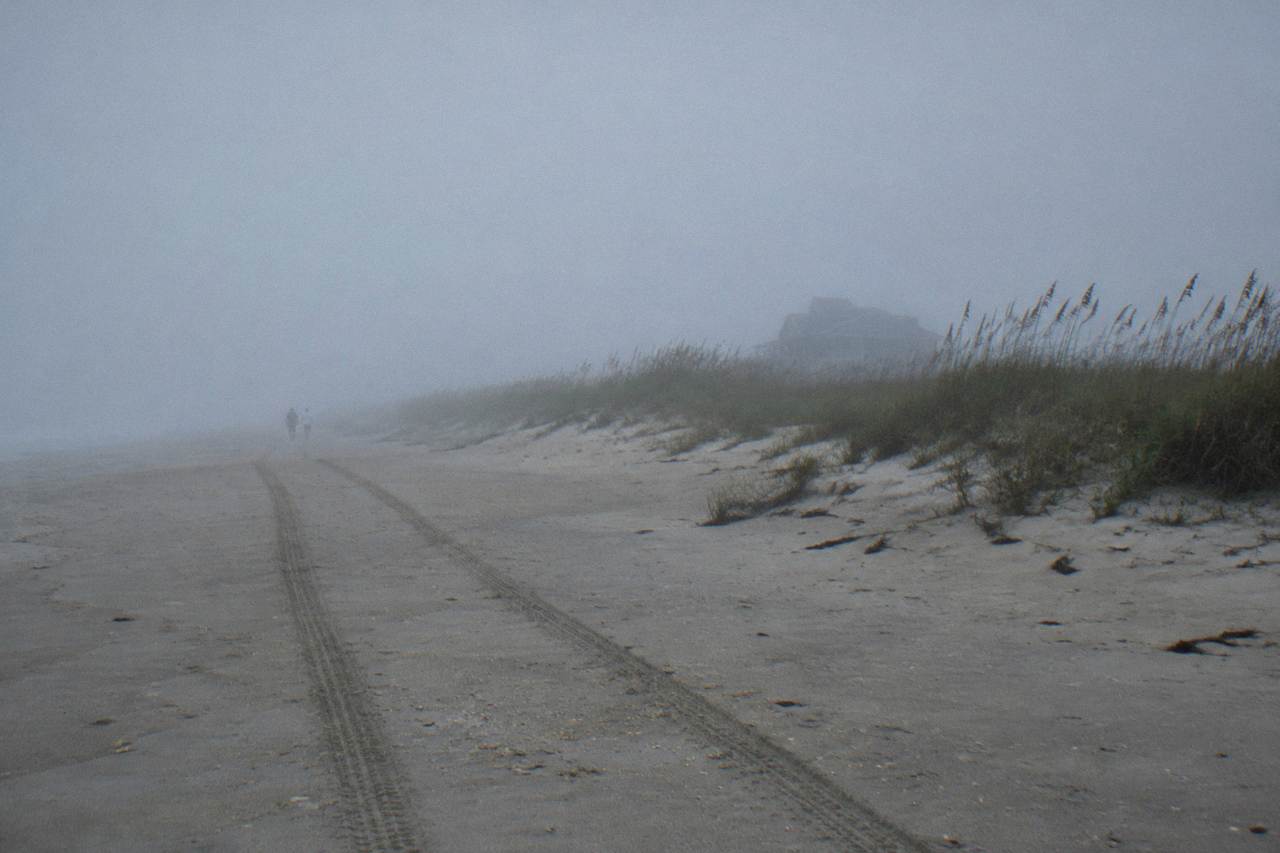
The paved road ends in Corolla, and everything north of that point runs on sand. The strip known as the 4x4 area, which includes Carova Beach, North Swan Beach and Swan Beach, is reached by driving the beach itself, and the Corolla Wild Horse Fund's history page describes that beach as public road, open to the public and the only access for residents and their guests staying up there. That single fact is the fork in the road for most visitors: rent or bring a four-wheel-drive vehicle and go up yourself, or take a seat in a licensed tour truck with someone who drives that sand for a living. Before you pick a side at that fork, it helps to understand exactly what the off-road zone is, and the guide to the 4x4 area north of Corolla covers everything from where the sand begins to the rules about the wild horses.
Both routes put you in the same landscape, the same 7,544 acres the Corolla North Carolina Horse Tours site covers throughout its guides, under the same County ordinance. The difference is who carries the risk. Driving on yourself means engaging 4WD at the ramp and holding a slow, steady speed, per County beach rules. Fish and Wildlife Service's refuge access guidance and the live listing facts for the featured guided tour, so you can decide which side of that fork you belong on.
Can You Drive The Corolla 4x4 Beach Yourself?
Yes, any member of the public can drive it. The Fund's history page states the beach north of the paved road is considered public road and open to the public, the only access for Carova, North Swan Beach and Swan Beach. There is no gate, and no official source publishes a visitor permit or fee for driving the beach. What stands between you and the sand is the vehicle requirement and your own judgment, not paperwork.
The access itself is unglamorous. Route 12 runs north to its terminus in Corolla, and the U.S. Fish and Wildlife Service describes what happens next plainly: traffic is diverted onto the beach, and four-wheel drive is required. Refuge access beyond the beach is by 4WD vehicle or boat only, with vehicle traffic restricted to the beachfront. So the beach is the road, for everyone, all the way to the Virginia line roughly eleven miles north.
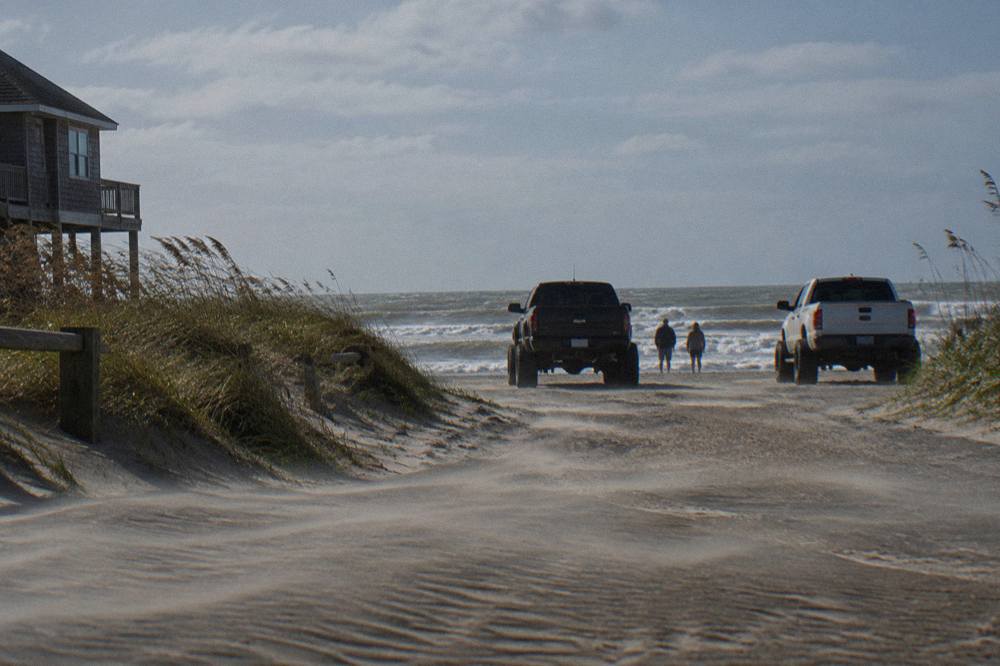
What that means in practice depends on the day. Soft sand near the ramp, a rising tide, loose dry sand up top and the constant presence of other trucks, pedestrians and, occasionally, horses in the roadway: these are normal conditions, not exceptions. County guidance asks drivers to use 4WD when entering the ramp and to maintain a slow, steady speed, and it says plainly that if your vehicle is not equipped with four-wheel drive you should not attempt to drive on the beach. No official source publishes a numeric speed limit, permit requirement or fee for beach driving, so check with the county before you go.
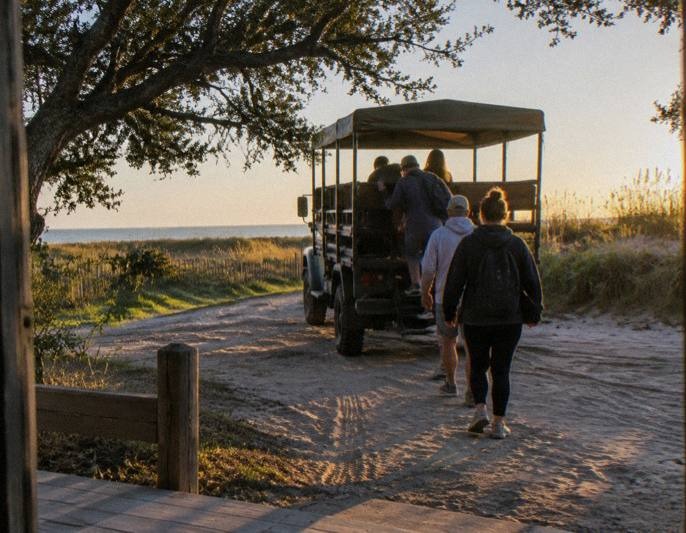
Plenty of visitors do it, and plenty of rental agencies in the area lease properly equipped trucks for exactly this trip. The self-drive option is genuinely open to you. The question is whether you want to be the one responsible for reading the sand, the tide and the ordinance at the same time, or whether you would rather hand that responsibility to a licensed guide on the 2-hour open-air 4WD truck tour that runs out of Corolla village.
What Does Driving Carova Beach Actually Require?
A true four-wheel-drive vehicle, engaged at the ramp, driven slowly and steadily, and no other official requirements have been published. No official source publishes a visitor permit, fee, tide rule or numeric speed limit for the beach. Two-wheel-drive vehicles are told not to attempt it at all. Everything beyond that is skill and conditions, which is exactly what makes the self-drive question a real one.
Start with the hardware. Four-wheel drive means a system the driver engages, not all-wheel drive tuned for rain-slick pavement. Deep dry sand defeats the second kind quickly. County guidance is blunt, and the towing companies up there repeat it all summer: use 4WD entering the ramp, keep a slow, steady speed, and stay off the beach entirely without it. The Fund's history page adds the legal frame: the beach north of the paved road is considered a public road and is open to the public.
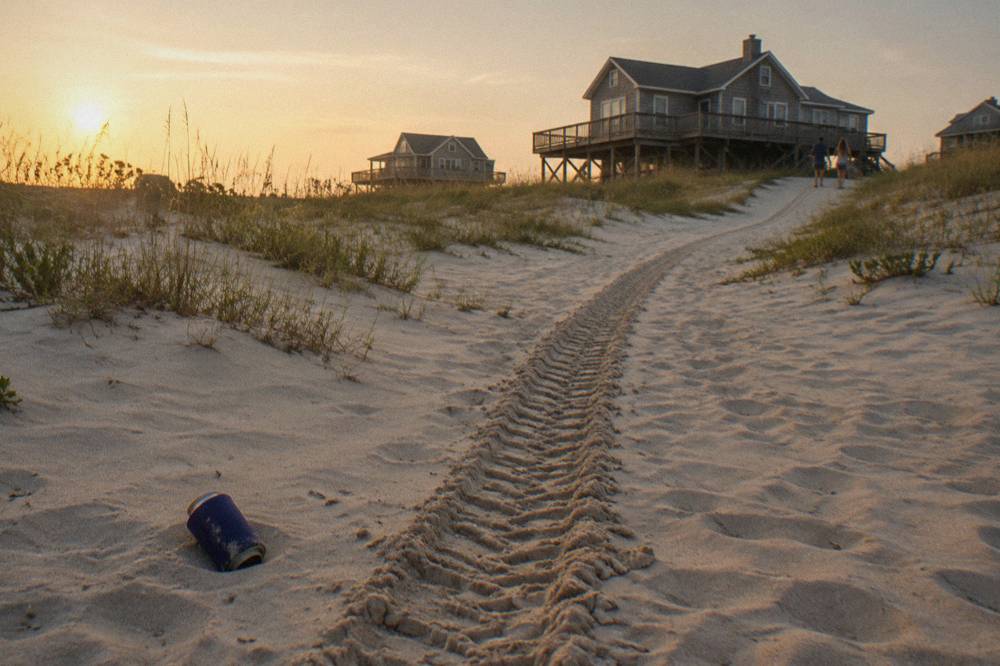
Then comes judgment. Where do you drive? Low on the wet sand near the water, where the surface is firm, but never so low you are surprised by a wave. When do you go? Around the lower half of the tide, when the usable strip is widest. What do you do when horses stand in the track? Stop, wait, give them far more room than feels natural, and never coax them along. Each of those is a decision you make alone, with no guide beside you and no county employee posted on the sand. Two horses died in 2025 after being struck by vehicles, part of four horses struck that year, a reminder that the road up there is shared with animals that have nowhere else to go.
| Self-drive requirement | What the official sources say | Source |
|---|---|---|
| Four-wheel drive | Required at the NC-12 terminus; do not attempt without it | USFWS visit page, county guidance |
| Driving style | Slow, steady speed, 4WD engaged entering the ramp | County guidance |
| Permit or fee | None found on any official page fetched | County, Fund and USFWS pages |
| Numeric speed limit | Not published | No official page states one |
| Legal status of the beach | Public road, open to the public | Fund history page |
The cost picture is lopsided in a way people often miss. A self-drive day involves the vehicle, whether that is a rental premium or wear on your own truck, fuel, and the risk price of a recovery or a tow off the sand, which is where a cheap morning gets expensive. The guided 2-hour open-air 4WD truck tour runs from $65 per person per the listing, with a maximum of 12 travelers per truck and a meeting point at 1148 Ocean Trail in Corolla, and the booking page shows the live price for your date. Neither number tells the whole story, but one of them includes a professional driver who already knows where the horses tend to be, and the other does not.
How Does A Guided Corolla Horse Tour Compare To Self-Driving?
A guided tour swaps your steering wheel for a licensed truck, a driver who works that beach daily, and a guide who knows the herd's habits, from $65 per person on the featured listing. Self-driving keeps your schedule free and your group private, but hands you the sand, the tides and the full weight of the ordinance. Tours also operate under County rules most visitors never hear about.
The County licenses its tour operators, and the rules are on the County's own horse tours page. Tour vehicles must display a valid North Carolina license tag, the company name, and a County-issued yearly identification, so an unmarked truck offering rides up the beach is not a licensed operation. Tours west of the dune line in the four-wheel-drive area may not run before 8 a.m. or after 8 p.m., amplified sound is prohibited there at all times, and tour vehicles themselves must stay at least 50 feet from the wild horses. Violations bring citations, and repeated citations can suspend an operator's license, which is why licensed companies take the distance rule seriously.
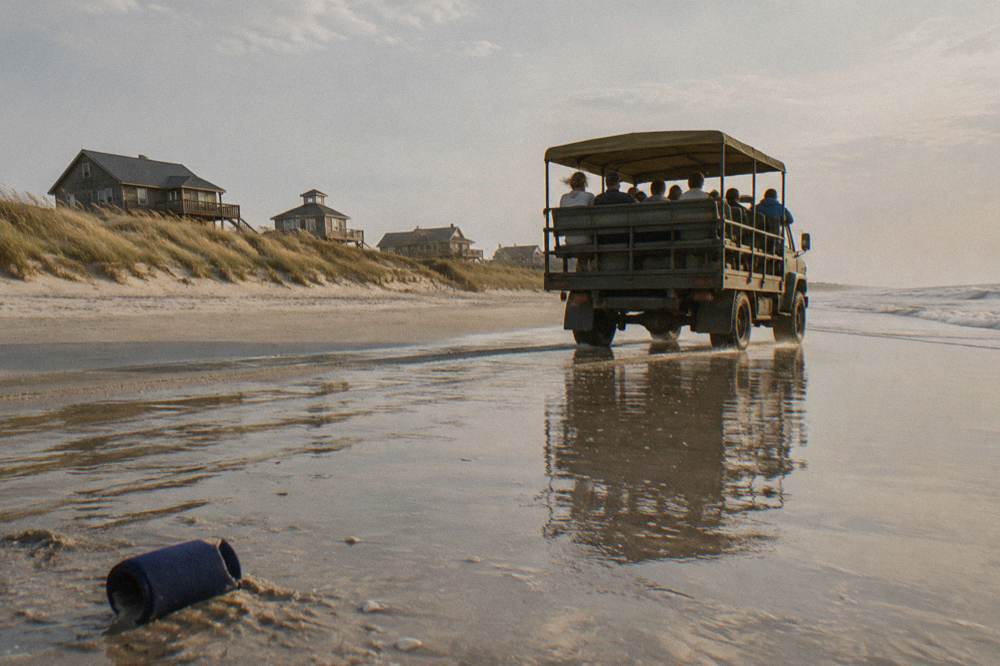
The featured tour fits that frame. The listing names Benders Beach Services as supplier, describes transport by open-air 4-wheel drive truck with no ATVs, includes a friendly professional horse guide, and runs about two hours. It excludes food, drinks and hotel pickup, it is not wheelchair accessible, it is not recommended for travelers with back problems, it asks moderate physical fitness, and it cannot accommodate children under five years or 40 pounds. Those limits matter more than most families expect, and the details sit in plain sight on the tour page.
| Factor | Self-drive | Guided 4WD truck tour |
|---|---|---|
| Vehicle needed | Your own or rented true 4WD | None; open-air tour truck |
| Cost shape | Rental, fuel, recovery risk | From $65 per person, listing price |
| Sand and tide judgment | Entirely yours | Guide's and driver's |
| Ordinance compliance | Your personal responsibility | Operator is County-licensed and audited |
| Schedule | Fully yours | Fixed departures, about 2 hours |
| Group size | Your vehicle only | Up to 12 travelers per truck |
| Kids | Any age you decide | No children under five or 40 pounds |
| Finding horses | Luck, local knowledge or research | Guide's daily herd knowledge |

The honest case for self-driving is not about money alone. Some visitors want the whole day up there, not a two-hour loop: a rented house in Carova, a cooler, a fishing rod, hours on an empty beach. A tour seat cannot give you that, and a three-day Outer Banks itinerary with a horse tour treats the two as different products. The honest case for the guided side is that the hard parts, the sand, the law and the search, are exactly the parts the tour removes. For a deeper look at that trade, see driving the Corolla 4x4 beach yourself versus a guided tour's sibling guides on Carova access, and the comparison in Corolla wild horse tour operators compared.
What Rules Apply To You Once You Are On The Sand?
All of them. The County's wild horse ordinance applies to every person on the beach, not just to tours: it is unlawful to lure or entice a horse within 50 feet of you, and unlawful to feed, ride or pet any wild horse. The Fund states plainly that getting within 50 feet is punishable by law, and that when horses approach you, staying 50 feet away is your responsibility. Driving yourself changes nothing about this.
The wording that matters comes from the Fund's page on the County ordinances: feeding the wild horses or getting within 50 feet of them is punishable by law, and cruelty, enticing, harboring, luring, seizing and failure to report an injury are all unlawful. The FAQ adds that the ordinance makes it illegal to come within 50 feet regardless of the person's experience, which closes the loophole every confident visitor reaches for. The Fund also asks that dangerous behavior be reported to Currituck County dispatch, and injured horses to the Fund directly.
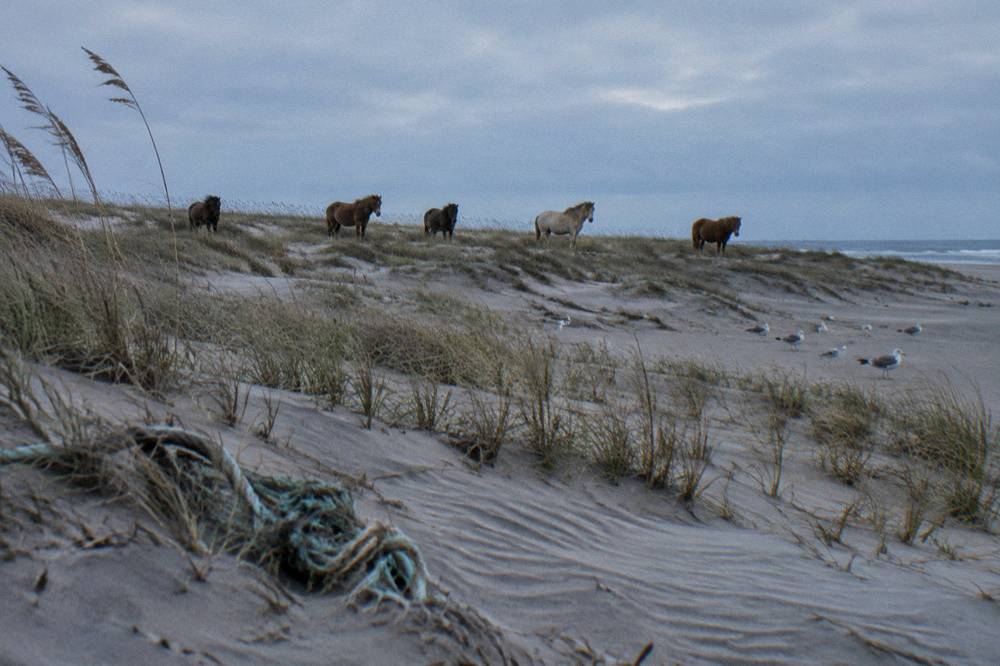
On a guided truck, the same rule is enforced by professionals whose license depends on it. Tour vehicles must stay at least 50 feet from the horses under the County's operator rules, and drivers who crowd them risk citations and suspension. In practice the guide also manages the human side: nobody leans out, nobody calls to the herd, nobody hands a horse anything. Self-driving, you are the enforcement. Your passengers, your kids, the friend who wants a closer photo, all of that is yours to police, and a moment of enthusiasm is all it takes.
| Rule on the 4x4 beach | Who it binds | Stated by |
|---|---|---|
| Stay at least 50 feet from wild horses | Every person, tour vehicles included | County ordinance via the Fund |
| No feeding, riding or petting a horse | Every person | County ordinance via the Fund |
| No luring or enticing a horse closer | Every person | County ordinance via the Fund |
| No harming, approaching or feeding on refuge land | Every person on the refuge | USFWS refuge rules |
| Tours only between 8 a.m. and 8 p.m. west of the dune line | Licensed tour operators | County horse tours page |
| No amplified sound west of the dune line | Everyone, at all times | County horse tours page |
| Licensed tag, company name, County ID displayed | Tour vehicles only | County horse tours page |
There is a federal layer too. On the Currituck National Wildlife Refuge, the U.S. Fish and Wildlife Service states it is unlawful to harm, approach, feed or kill any wild horse, and the refuge page describes the horses as feral mammals that must only be viewed from a distance. The refuge sits north of Corolla in six units between the village and the state line, with the first tract about three-quarters of a mile up the beach, so a self-drive far enough north can put you beside land where federal rules stack on top of the County's. More detail on all of this lives in the guide to the 50-foot rule and wild horse etiquette.
Where Does The Paved Road End And The 4x4 Area Begin?
At the northern terminus of NC-12 in Corolla. From that point traffic diverts onto the beach, which the Fund describes as public road and the only access to Carova, North Swan Beach and Swan Beach, running roughly eleven miles north to the Virginia state line. The ordinance even bars bringing outside horses into that whole stretch. The boundary is a physical one, not a checkpoint.
The history behind the fence line explains the geography. Between 1985, when the road between Duck and Corolla was paved, and 1989, eleven horses were hit and killed on Highway 12, and the horses frequenting Corolla were moved north of the paved road onto what locals call the north beach or the 4x4 area. The Fund was organized in 1989 to manage them, incorporated as a nonprofit in 2001, and today manages the herd across 7,544 acres of mixed habitat that includes roughly 700 houses, a mix the Fund describes as 70 percent private land and 30 percent public use, according to its herd management page.
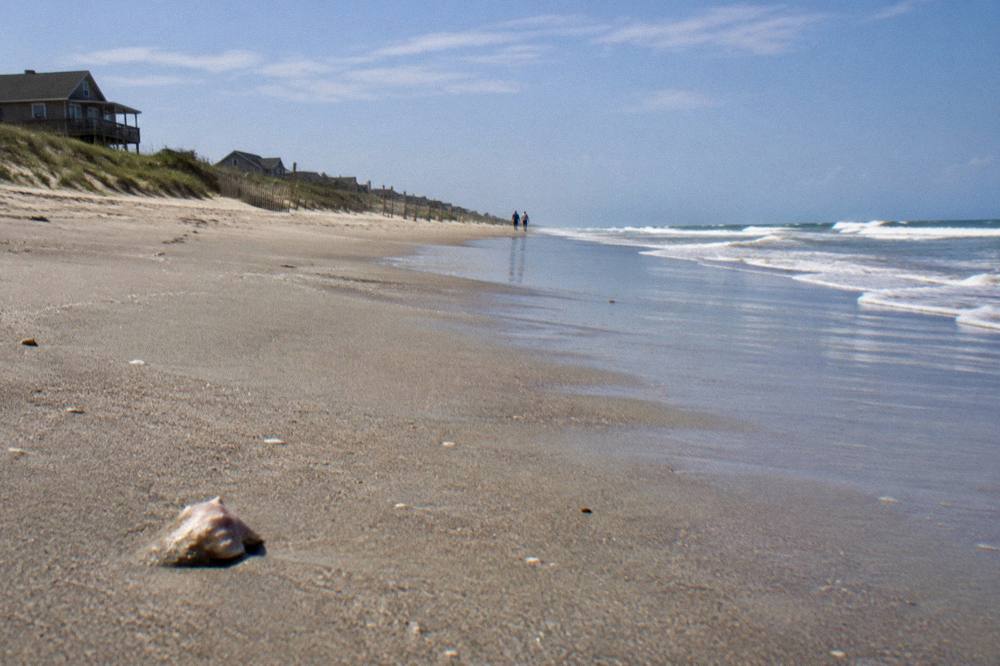
For a self-driver, that geography is the route plan. You enter at the terminus, drive north on the firm sand, and everything to your left beyond the dune line is private land and refuge units you cannot cross. The refuge itself has no developed facilities, no roads, trails or restrooms, and is open sunrise to sunset, per the USFWS visit page. For a tour passenger, the same geography is simply the route the driver takes, and the meeting point at 1148 Ocean Trail puts you a short drive from the sand. The County's own horse tours page is the primary source for the operator rules quoted through this guide, worth a read if you want to see the licensing framework yourself.
| Landmark or zone | What it is | What it means for a driver |
|---|---|---|
| NC-12 terminus, Corolla | Where pavement ends and beach traffic begins | Engage 4WD before the ramp |
| The beach itself | Public road, the only access north | Ordinary road law applies |
| Carova, North Swan Beach, Swan Beach | Communities reachable only by sand | No alternate vehicle route in |
| Dune line | Boundary for tour hours and sound rules | County rules differ west of it |
| Currituck National Wildlife Refuge | Six units to the state line, no facilities | Federal wildlife rules apply on foot |
| Virginia state line, about eleven miles north | Northern end of the horse range | The horses may not be taken past it |
Which Choice Fits Your Trip?
Choose self-drive if you have a proper 4WD, want a full day or a week in the 4x4 area, and accept the ordinance as your own responsibility. Choose the guided truck if you want horses found for you, sand and tide handled by a licensed driver, and a fixed from-price of $65 per person instead of open-ended risk. Many visitors do both on one trip, and the order rarely matters.
The practical tiebreakers are age and vehicle. If anyone in your party is under five years or under 40 pounds, the featured tour cannot take them, so a self-drive or the free viewing spots in the see the horses without a tour guide become the plan. If you flew in and hold no 4WD, the tour is not the better choice so much as the only one, since County guidance says outright not to attempt the beach without four-wheel drive. Between those poles, budget and temperament decide.
| Your situation | The better fit | Why |
|---|---|---|
| No 4WD vehicle available | Guided tour | County guidance says do not attempt the beach without it |
| Child under five or 40 pounds | Self-drive or free viewing | The listed tour cannot accommodate them |
| Staying a week in Carova | Self-drive | You need sand access daily, not a two-hour loop |
| One day in Corolla, want horses | Guided tour | Guide finds the herd; you keep the day simple |
| Nervous on soft sand | Guided tour | A stressed driver is a poor horse spotter |
| Confident off-roader wanting solitude | Self-drive | The beach day is yours end to end |
Be honest about the second one. Some people find driving soft sand the best hour of their vacation. Others white-knuckle it to Carova and dread the drive back, and a stressed driver is a worse observer of horses than a relaxed passenger. The listing for the featured tour describes exactly what the relaxed version looks like: an open-air truck, a professional guide, about two hours, up to 12 travelers, rated 4.8 across 2,871 reviews. If you want that seat, check availability on the Corolla 4WD wild horse tour page.
Whichever way you go, the rules do not bend. Fifty feet, no feeding, no petting, no luring, slow steady driving, and a report to the Fund at 252-453-8002 or County dispatch after hours if a horse is hurt or someone is behaving dangerously around the herd. The horses have run that beach for centuries; the least any of us can do is read the ordinance before we drive on it.
Common Questions About Driving The Corolla 4x4 Beach
Can you drive to see wild horses in the Outer Banks yourself?
Yes. The beach north of the paved end of NC-12 in Corolla is public road and open to the public, and it is the only vehicle access to Carova, North Swan Beach and Swan Beach. Four-wheel drive is required, and County guidance says not to attempt the beach without it.
Do you need a 4x4 to get to Carova Beach?
Yes. The U.S. Fish and Wildlife Service states that at the terminus of NC-12 traffic is diverted onto the beach and four-wheel drive is required, with refuge access by 4WD vehicle or boat only. No official source publishes a visitor permit or fee for beach driving.
Does the 50-foot rule apply if you are driving yourself?
It applies to everyone. The Fund states that getting within 50 feet of a wild horse, feeding, riding or petting one is punishable by law under Currituck County's wild horse ordinance, regardless of the person's experience, and that when horses approach you it is your responsibility to stay back.
Why are tour trucks allowed closer to the horses than you?
They are not. County rules require tour vehicles to stay at least 50 feet from the wild horses, the same distance demanded of everyone, and licensed operators risk citations and license suspension for violations. Tours simply have drivers who practice the rule daily on a known route.
Is it cheaper to drive yourself than take a guided tour?
Sometimes, and sometimes very much not. The guided open-air 4WD truck tour runs from $65 per person on the listing, while a self-drive day carries fuel, rental premium and the risk cost of a recovery off the sand, with no fixed ceiling.
What are licensed Corolla tour operators required to do?
Per the County's horse tours page, they must display a valid North Carolina tag, company name and County-issued yearly identification, avoid operating west of the dune line before 8 a.m. or after 8 p.m., never use amplified sound there, and keep their vehicles at least 50 feet from the horses.