Which Is Better, Duck Or Corolla NC?
Duck and Corolla sit twenty minutes apart on the northern Outer Banks but deliver very different trips. Here is how the two towns compare for beaches, wild horses, access, and lodging.
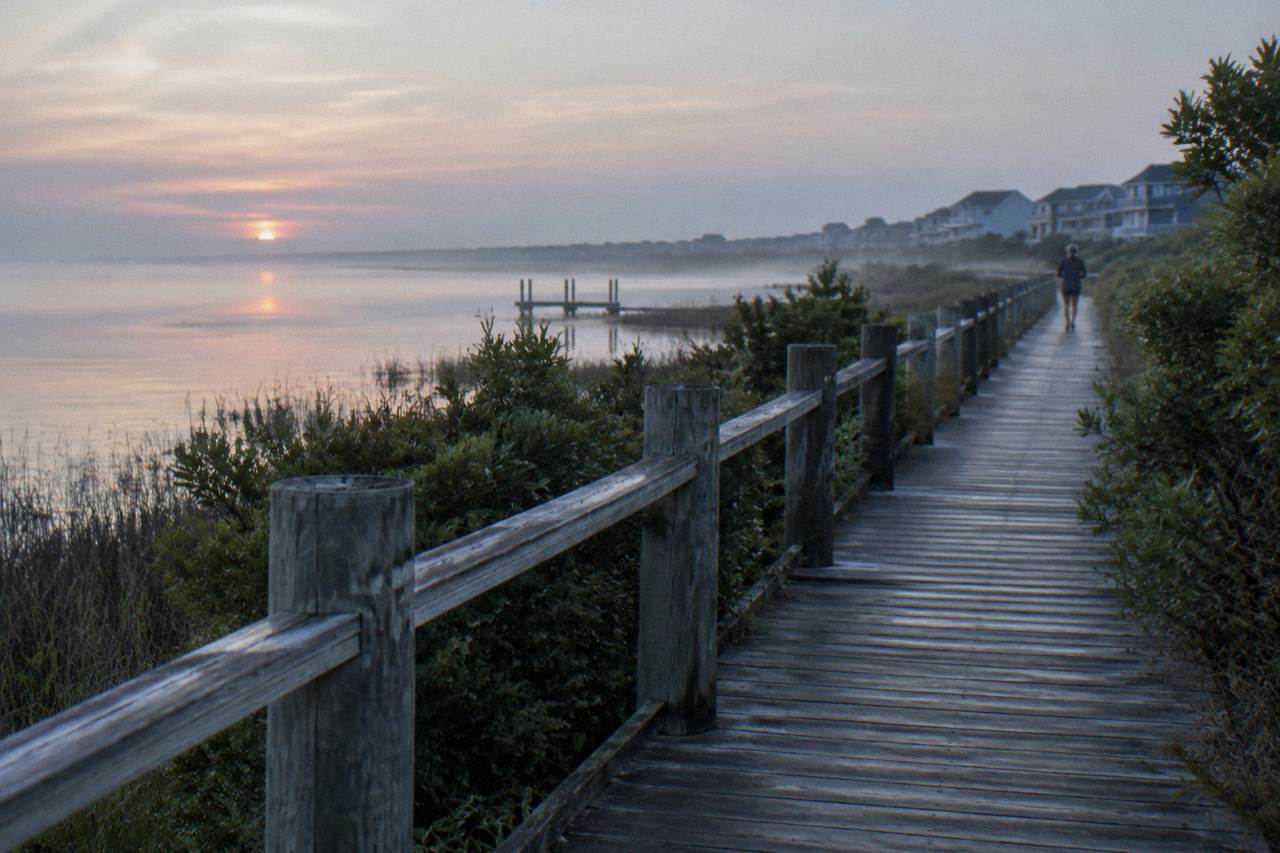
Duck and Corolla sit about twenty minutes apart on the northern Outer Banks of North Carolina, and first-time visitors routinely treat them as interchangeable. They are not. Duck is a compact village town with a paved road, a soundside boardwalk, and a walkable shopping and dining core. Corolla is the end of the paved road, the gateway to the four-wheel-drive beach, and the home range of the wild horses that draw most of the region's attention between spring and fall.
The short version of the answer: if your trip centers on the wild horses, Corolla wins on geography, because the herd lives north of where the pavement ends and Duck sits well south of it. If your trip centers on walkability, restaurants, and a tamer beach town experience, Duck wins on comfort. The two towns suit different trips. Corolla sits among the wild horses on the northern Currituck beaches, while Duck offers a walkable village with shops and soundfront boardwalks. Match the town to the trip you actually want.
Which OBX Town Should You Stay In?
Corolla is the better base if seeing the wild horses is the point of the trip, because the herd roams the 7,544 acres north of where NC-12's pavement ends, and Duck sits roughly twelve paved miles south of that line. Duck is the better base for a walkable village, soundside sunsets, and dining, with no four-wheel-drive planning at all. Plenty of visitors split the difference with a day trip north.
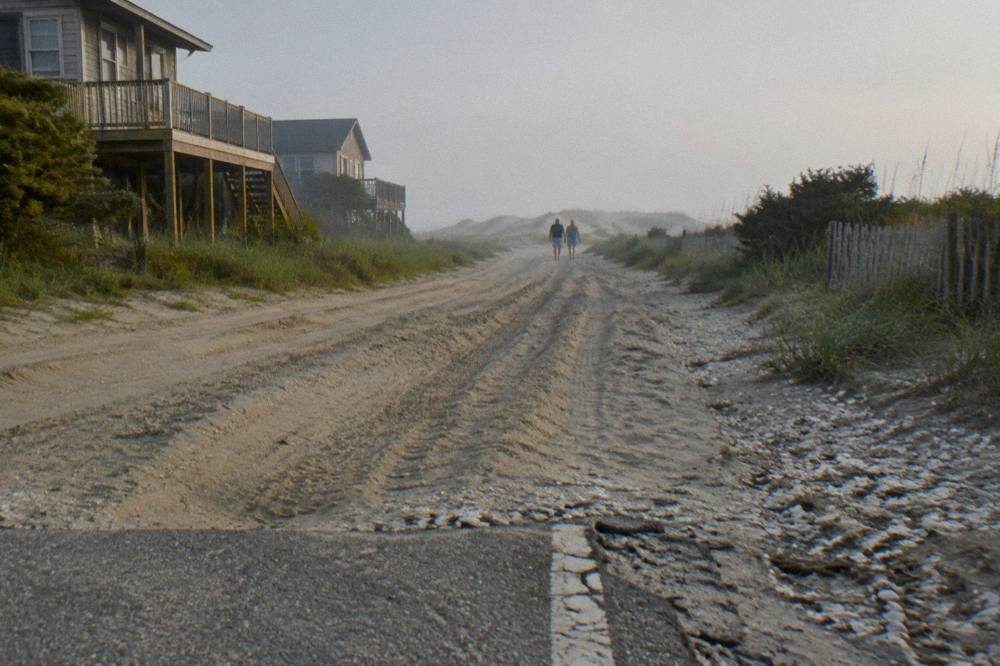
The geography is the whole story. The Corolla Wild Horse Fund, the nonprofit that manages the herd, describes the horses' range as 7,544 acres of habitat stretching from the end of the paved road in Corolla roughly eleven miles north to the Virginia state line. The Fund's history pages note that horses once frequented the Corolla village area itself, but after eleven horses were hit and killed on Highway 12 between 1985, when the road between Duck and Corolla was paved, and 1989, the animals frequenting Corolla were moved north of the paved road to what locals call the north beach or the 4x4 area. A fence at the paved road's end keeps the herd on that side today.
Duck sits south of Corolla, past Pine Island and Sanderling, entirely on the paved section of the Outer Banks. No wild horses roam Duck's beaches. That is not a knock on Duck, it is simply where the fence line falls. A visitor staying in Duck who wants to see the horses has two realistic options: drive north to Corolla and take a guided tour, or drive north and self-drive the four-wheel-drive beach with the right vehicle and preparation. Both options are covered in our guide to seeing the Corolla wild horses without a tour.
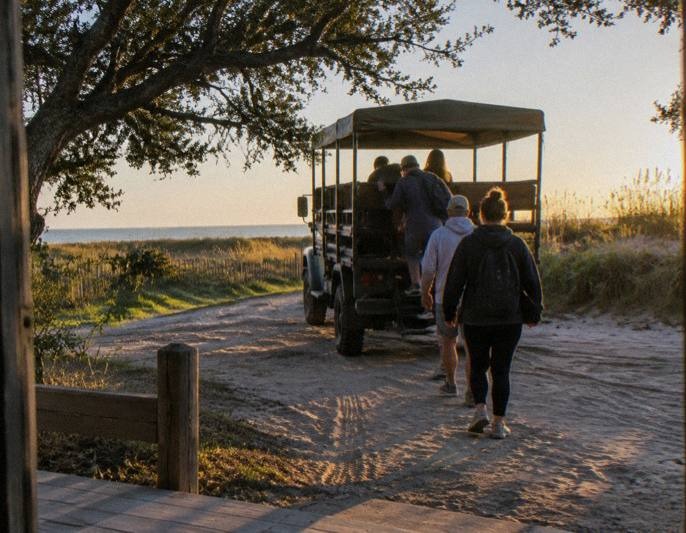
For most Duck-based visitors, the guided tour is the practical choice. The 2-hour Outer Banks Wild Horse Tour by 4WD Truck is rated 4.8 across 2,871 reviews and runs from $65 per person, departing from a meeting point at 1148 Ocean Trail in Corolla. That is a drive of roughly twenty to twenty-five minutes from central Duck, which makes a morning or late-afternoon horse tour an easy add-on to a Duck vacation rather than a relocation.
Where The Wild Horses Actually Live
The herd lives north of Corolla in the four-wheel-drive beach area between the end of NC-12 and the Virginia line, on a mix of private and public land with hundreds of houses built into it. Corolla village is the staging point for every guided tour. Duck has no horses at all, only the drive north.
The Fund's herd-management page describes the range in unusually concrete terms: 7,544 acres of diverse habitat including roughly 700 houses, thousands of people and vehicles, with the accessible land a mix of 70 percent private and 30 percent public use. This is not a park with a gate and a viewing deck. It is a lived-in barrier island where the horses move between maritime forest, dunes, and the sand beach itself, responding to insects, heat, and wind rather than to any schedule.
That movement is seasonal and predictable in a way that matters for planning. Fresh reporting on the 2026 season described the pattern plainly: in spring, biting flies and shifting winds push horses out of secluded areas onto the open beach, and summer heat stress does the same thing later in the season. The horses are not multiplying in high summer, they are relocating into the open where people can see them. Our page on the best time of day to see the Corolla wild horses breaks that down hour by hour.
For the Duck-versus-Corolla question, the implication is simple. Staying in Corolla puts you minutes from the tour departure point and, if you are in the 4x4 area itself, sometimes within sight of the horses from a rental deck. Staying in Duck means every horse experience starts with a drive. Neither is wrong. But if the horses are the reason for the trip, the geography argues for Corolla.
| Factor | Corolla | Duck |
|---|---|---|
| Wild horses in town | No, but adjacent: herd lives just north at road's end | None; herd is a 20 to 25 minute drive north |
| Guided tour departure | Tours depart from Corolla meeting points | Drive to Corolla required |
| Road type | Paved road ends in Corolla; 4x4 beach begins | Fully paved access |
| Best for horse-focused trips | Strong fit | Workable as a day trip |
Beach Driving, Access, And The Paved Road
Duck requires no special vehicle or planning: every rental and restaurant sits on a paved state road. Corolla splits into two worlds, a paved village section and, north of the NC-12 terminus, a beach that is legally a public road where four-wheel drive is required. That second world is where the horses are.
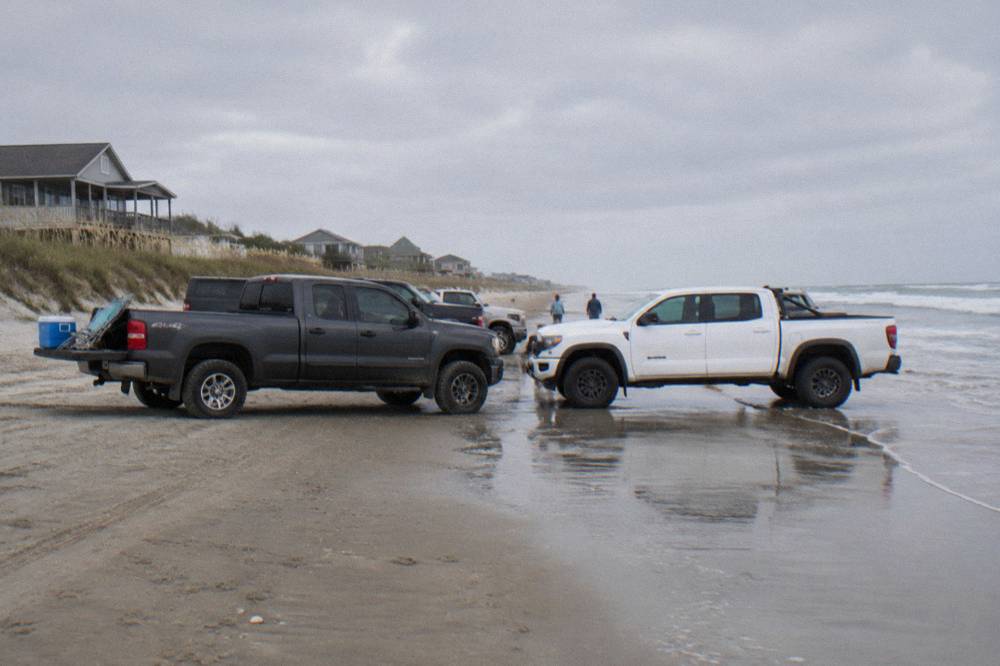
The US Fish and Wildlife Service, which manages the Currituck National Wildlife Refuge north of Corolla, states it directly on its visit page: follow NC Route 12 north to its terminus in Corolla, where traffic is then diverted to the beach, and four-wheel drive is required. The Fund's history page adds that this beach is considered public road, open to the public, and that it is the only access for residents and guests staying in Carova, North Swan Beach, and Swan Beach. County guidance asks drivers to engage four-wheel drive at the ramp and keep a slow, steady speed, and to not attempt the beach at all in a two-wheel-drive vehicle.
This is the practical dividing line between the two towns as bases. A Duck vacation never asks you to think about tides, tire pressure, or sand. A Corolla vacation might, but only if you choose to drive the 4x4 beach yourself or stay in one of the Carova-area houses up there. Most Corolla visitors never drive the sand either: they take a guided tour in an open-air truck and let a professional driver handle it. Our comparison of driving the Corolla 4x4 beach yourself versus a guided tour walks through the trade-offs in detail.
The guided option has real advantages beyond convenience. Currituck County regulates tour operators directly: its horse-tours page requires tour vehicles to display a valid North Carolina tag and County-issued identification, bars tour operation west of the dune line before 8 a.m. or after 8 p.m., prohibits amplified sound in that zone at all times, and instructs tour vehicles to stay at least 50 feet from the wild horses. A licensed tour is, in effect, a driver who already knows the rules and the sand.
For Duck visitors weighing the same question, the calculus is nearly identical except for the drive. The featured 2-hour open-air 4WD truck tour carries a maximum of 12 travelers, does not admit children under five years or under 40 pounds, and is described on the listing as requiring moderate physical fitness, so families with very small children should check the age terms before booking from either town. The listing's cancellation terms are shown on the booking page, which also displays the live price.
Lodging, Dining, And Town Feel
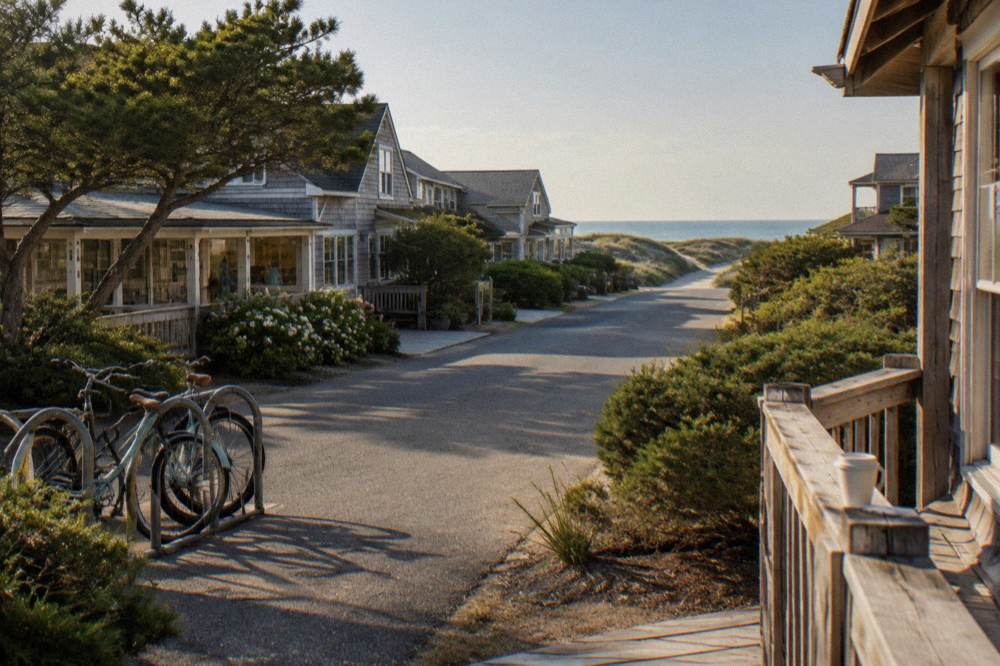
Duck is the more walkable and village-like of the two, built around a soundside boardwalk, clustered shops, and restaurants reachable on foot or by bike. Corolla is more spread out, anchored by the lighthouse, the Whalehead club, shopping plazas, and large rental-house neighborhoods, with a quieter, end-of-the-road character.
Duck's town core is its defining feature. The Duck Boardwalk runs about a mile along the Currituck Sound, linking waterfront restaurants, a park, and retail, and the town's design encourages leaving the car parked. Corolla's attractions are spread along NC-12 and the side roads behind it: the Currituck Beach Lighthouse, the historic Whalehead house, the Corolla Wild Horse Fund's museum and gift shop on Corolla Village Road, and a handful of shopping centers. Everything is reachable, but mostly by car.
Neither town is a nightlife destination, and neither is cheap in peak season; both are dominated by large weekly house rentals rather than hotel rows. The honest difference is density and pace. Duck feels like a planned village. Corolla feels like the last town before the wilderness, which, given that the wilderness in question is the wild horse range, is exactly its appeal to many visitors. Readers weighing where to sleep can dig into our guide on where to stay in Corolla for wild horse tours, including the 4x4-area rental question.
One Corolla-specific draw deserves mention. The Corolla Wild Horse Fund's museum and gift shop at 1130E Corolla Village Road, reachable at (252) 453-8002, operates seasonal hours, and the Fund's FAQ page carries the current schedule. It is a small stop, but it pairs naturally with a horse tour morning and gives the trip context the beach alone does not. Duck has nothing equivalent, because Duck has no horses to interpret.
Rules That Follow You To Either Town
Whichever town you sleep in, the same county ordinance governs the horses once you reach them: it is illegal to come within 50 feet of a wild horse, and feeding, riding, petting, or enticing them is punishable by law. Staying in Duck does not exempt you, and staying in Corolla does not make you a local.
The Fund's pages state the rule without decoration: feeding the wild horses or getting within 50 feet of them is punishable by law, and the ordinance applies regardless of a person's experience with horses. If horses approach you, the Fund says it is your responsibility to keep the 50-foot distance, because the horses are not bound by it. The federal side adds weight: on the Currituck National Wildlife Refuge, the US Fish and Wildlife Service states it is unlawful to harm, approach, feed, or kill any wild horse.
This matters for the town comparison in one specific way. Duck visitors arriving for a day in Corolla sometimes arrive with beach-town instincts: approach, feed, pose. The ordinance makes all of that illegal, and the Fund has pointedly warned that getting too close stresses the animals and can separate foals from their mothers, noting that foals are extremely impressionable in their first months and must not become accustomed to humans. A guided tour handles compliance for you, since licensed tour vehicles are instructed to hold their own 50-foot distance. Visitors going independently onto the 4x4 beach carry the full responsibility themselves, which is one more reason many travelers book the truck.
It also shapes what you can plausibly do. There is no riding, petting, or feeding of these animals under any arrangement, in either town, from any operator. Our page on the Corolla wild horse 50-foot rule and etiquette covers the details, including how to report an injured horse to the Fund at 252-453-8002 or, after hours, to Currituck County dispatch.
Which Town Fits Which Trip
Choose Corolla for a horse-centered trip, a first Outer Banks visit built around the lighthouse and the tour, or any stay in the 4x4 area. Choose Duck for a walkable, restaurant-forward village vacation with the horses as one planned day trip. Families with children under five should weigh Corolla plus a self-drive or museum visit against the tour's age minimum.
A few pairings make the decision concrete. A couple planning one long weekend around the horses should stay in Corolla: book the open-air 4WD truck tour, add the lighthouse climb and the Fund's museum, and skip the commute. A multigenerational family renting a big house for a week, with restaurants and a boardwalk as the evening anchor, will likely be happier in Duck and can drive up for a tour morning. Travelers who want to wake up inside the herd's range, in a Carova or Swan Beach rental reachable only by four-wheel drive, have no Duck equivalent at all; that experience exists only north of Corolla, as our overview of the 4x4 area in the Outer Banks explains.
Budget behavior is similar in both towns, with one exception worth naming. Tour pricing does not change based on where you sleep. The featured listing runs from $65 per person for the two-hour truck tour regardless of your base, and the independent Corolla operators sell direct at their own posted rates, which we cover in our guide on how much Corolla wild horse tours cost. What changes with your town choice is car time, not ticket price.
| Trip type | Better base | Why |
|---|---|---|
| Wild horses are the main goal | Corolla | Tours depart there; herd lives minutes north |
| Walkable dining and boardwalk evenings | Duck | Village layout, soundside boardwalk |
| 4x4-area rental house stay | Corolla (north) | Only accessible from Corolla's road end |
| Mixed week, horses as one day | Duck | Tour is an easy 20 to 25 minute drive |
| Small children under five | Corolla, with planning | Tour excludes under-fives; museum and self-drive options remain |
The single most common mistake is treating the choice as aesthetic. It is geographic. The horses live where Corolla's pavement ends, and every practical question about seeing them starts from that fact: Corolla North Carolina Horse Tours covers the rest. Duck is a lovely town that happens to be on the wrong side of the fence line for horses, and a perfectly good base for a day trip north. Corolla is the town the trip is about.
Common Questions About Duck Or Corolla
Which is better, Duck or Corolla NC?
Corolla is better when the wild horses are the point of the trip, since the herd lives just north of where Corolla's paved road ends and every guided tour departs from there. Duck is better for a walkable village with a soundside boardwalk and clustered dining, with the horses as one easy day trip north.
Can you see wild horses from Duck, NC?
No. The herd's range begins north of the fence at the end of the paved road in Corolla, roughly a twenty to twenty-five minute drive from central Duck. Duck-based visitors see the horses by taking a guided tour from Corolla or driving the four-wheel-drive beach themselves.
Is Duck or Corolla better for families?
Both work. Duck suits families who want walkable amenities and calm sound access. Corolla suits families centered on the horses and the lighthouse. Note that the featured two-hour 4WD truck tour does not admit children under five years or under 40 pounds, so families with toddlers may prefer Corolla's museum or a self-drive beach visit.
Is Corolla NC worth visiting if we stay in Duck?
Yes. The Currituck Beach Lighthouse, the Whalehead historic house, the Corolla Wild Horse Fund's museum and gift shop, and the wild horse tours all sit in Corolla, and a single morning or afternoon covers a tour plus one or two of the stops.
Do you need a four-wheel-drive vehicle to enjoy Corolla?
No. Corolla village, the lighthouse, and the tour departure points are all on the paved road. Four-wheel drive is only required to drive the beach north of the NC-12 terminus, and most visitors leave that driving to a licensed tour operator instead.