The 50-Foot Rule: Corolla Wild Horse Law And Etiquette
Currituck County's wild horse ordinance puts 50 feet between you and the Corolla herd, and it bans feeding, petting, riding and luring outright. Here is what the rule says, what the Fund asks of visitors, and how a licensed tour handles the distance for you.
Short answer
Currituck County's wild horse ordinance makes it unlawful to come within 50 feet of a wild horse, or to lure one closer, and it bans feeding, riding and petting outright. Violations are punishable by law. Licensed tour trucks also keep 50 feet back. A guided 2-hour 4WD tour, from $65, keeps you compliant by design.
Currituck County's wild horse ordinance is unusually blunt for a beach town: it is unlawful to come within 50 feet of a wild horse, or to lure, attract or entice one closer, and feeding, riding or petting is banned without exception. The Corolla Wild Horse Fund, the nonprofit that manages the herd on 7,544 acres of mixed private and public land at the northern end of the Outer Banks, restates the rule on nearly every page it publishes because it is the single line of law that keeps this herd alive. The horses roam free across that stretch of barrier island, among roughly 700 houses and the vehicles that serve them, and every close call a tourist creates is a close call the County remembers. Given how strict those rules are, you may be wondering whether any horseback riding is allowed on these beaches at all, and our guide to riding horses on the beach in the Outer Banks explains exactly what the law permits.
This guide lays out the rule as the County and the Fund state it, then covers the practical half of the question: what to actually do when a horse walks toward you, why the County restricts tour hours and amplified sound west of the dune line, and who to call when a horse is hurt. A guided option like the 2-hour open-air 4WD truck tour handles the distance rules for you, which is one of the quiet arguments for booking a seat rather than driving the beach yourself. If you want the broader lay of the land first, the Corolla horse tour comparison on the homepage from Corolla North Carolina Horse Tours is the place to start. If you'd rather skip the guide entirely, the guide to seeing the Corolla wild horses on your own explains where the law lets you look and when going solo stops making sense.
What Is The 50-Foot Rule For Corolla Wild Horses?
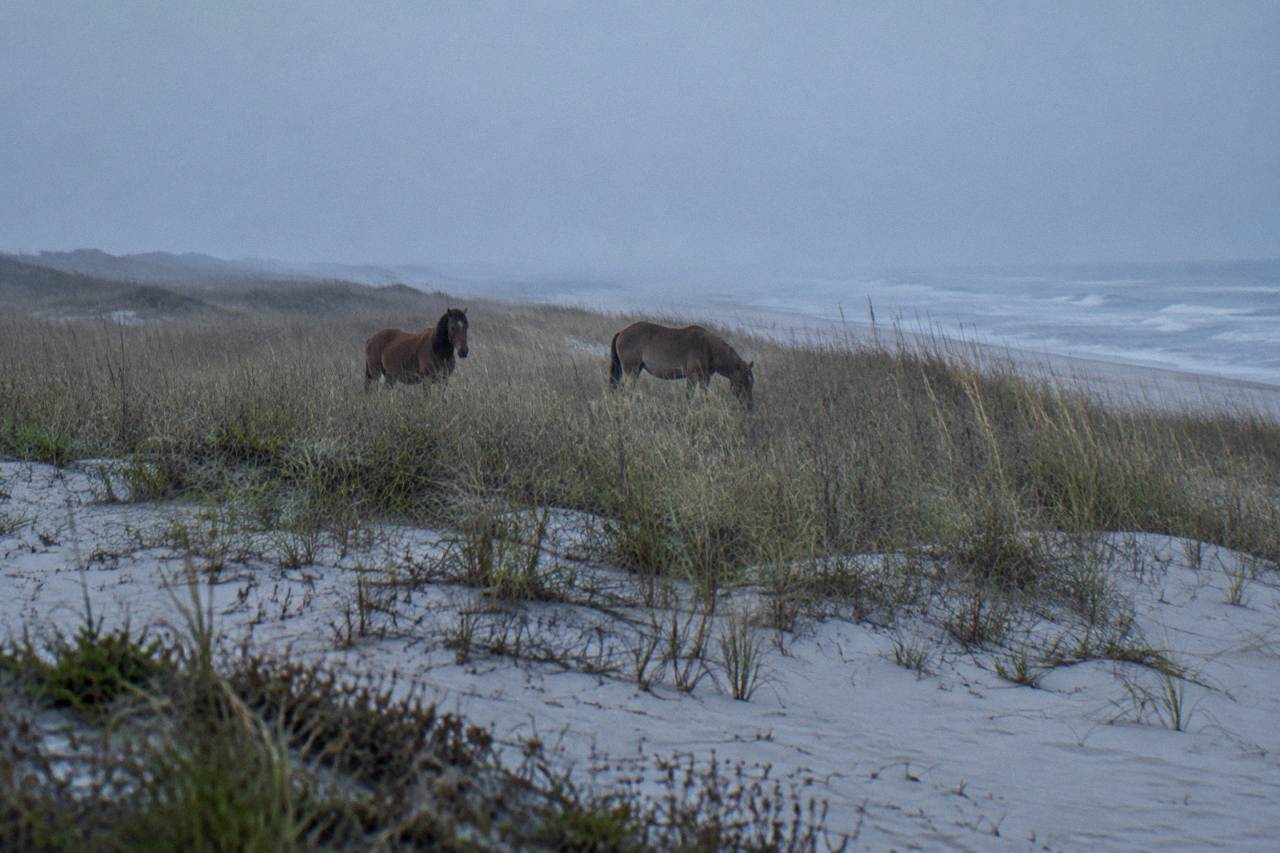
The 50-foot rule is Currituck County's wild horse ordinance: it is unlawful for any person, other than an animal control officer, law enforcement officer, sanctuary officer or treating veterinarian, to intentionally come within 50 feet of a wild horse, and it is equally unlawful to lure, attract or entice a horse to come within 50 feet of you. The Fund summarizes it plainly: feeding the wild horses or getting within 50 feet of them is punishable by law.
The rule runs in both directions, and that is the part most visitors miss. You violate it by walking toward a horse, and you also violate it by dangling a carrot or bucket so the horse walks toward you. Luring is treated as seriously as approaching, because a horse that learns to approach people for food becomes a management problem and, eventually, a dead horse. The County Code also bars bringing any horse into the area between the end of the paved portion of NC Highway 12 and the Virginia state line, a clause that protects the wild herd from introduced animals and disease.
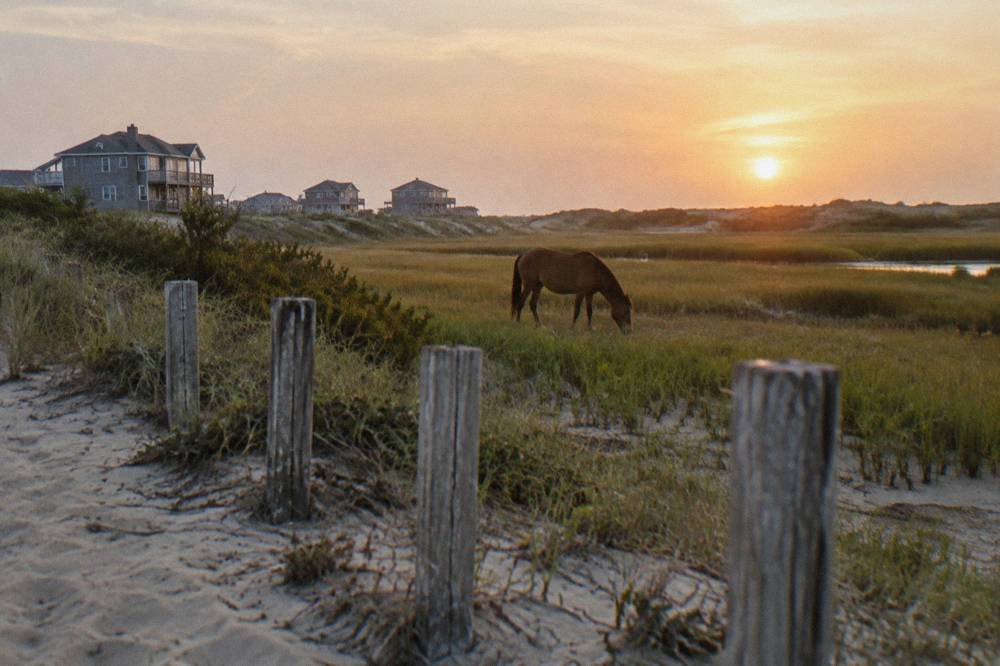
The Fund's ordinance page adds the behaviors that surround the distance rule: cruelty, enticing, harboring, luring, seizing and failure to report an injury are all unlawful under Currituck County's wild horse ordinance. The Fund's FAQ puts the same point in plainer words, noting that a county ordinance makes it illegal to come within 50 feet of the horses regardless of the person's experience with horses. That clause exists because experienced riders are among the most common offenders, confident that a lifetime around saddle horses translates to free-roaming ones. It does not.
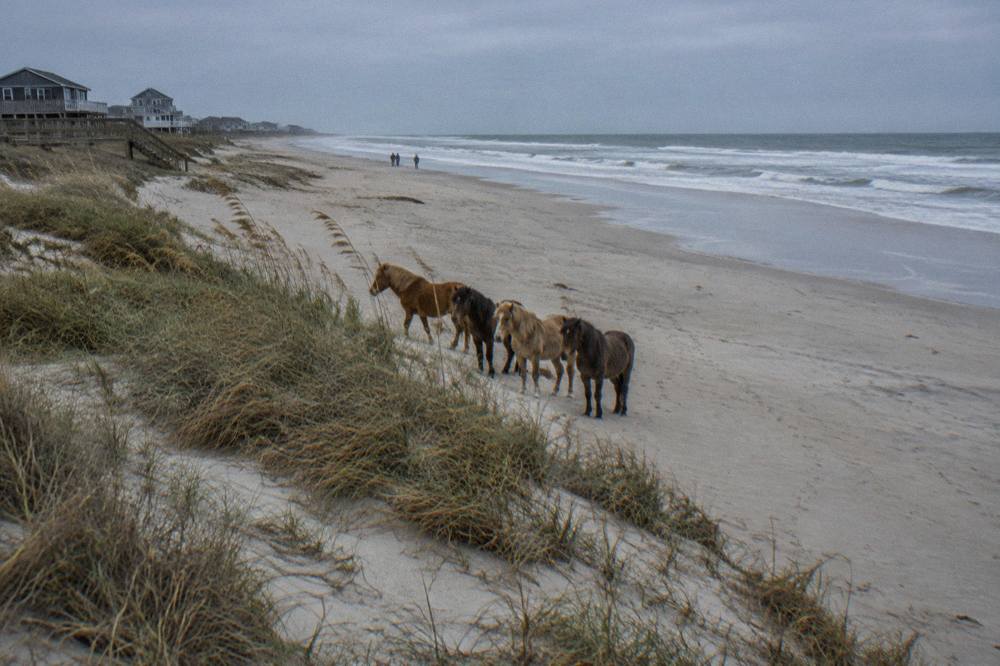
Fifty feet is farther than most people estimate. It is roughly six parked cars end to end, or the length of a bowling lane and a half, or the distance from the dune line to a mid-beach towel line on a summer afternoon. If you can toss a ball and hit the horse, you are inside the rule. If you can read the horse's expression, you are inside the rule. Zoom lenses exist for a reason, and the photos that come from 50 feet back with a long lens are better than anything taken at arm's length with a phone anyway.
Can You Touch The Wild Horses In Outer Banks?
No. Touching a wild horse in the Outer Banks is prohibited by Currituck County's wild horse ordinance, which makes it unlawful to feed, ride, pet or approach with intent to feed, ride or pet any wild horse. There is no exception for gentle-looking horses, foals, or visitors with horse experience, and violations are punishable by law. The federal refuge adds its own layer: it is unlawful to harm, approach or feed any wild horse on the refuge.
Petting is not a gray area, it is a named prohibition. The same statute that sets the 50-foot buffer lists the contact behaviors separately, which means a person who somehow touches a horse without closing the distance themselves, a horse brushing past a stationary beachgoer who then reaches out, is still outside the law the moment intent enters. The practical reading the Fund asks for is simple: keep your hands down and your distance open, always.
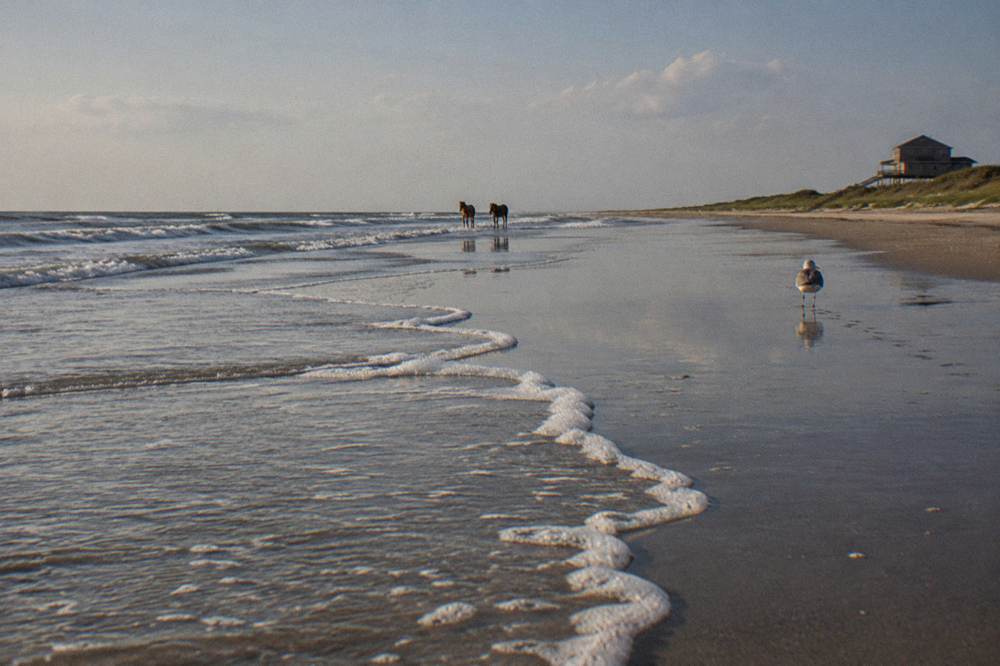
The wildlife refuge north of Corolla states the federal side of this on its visitor information page: it is unlawful to harm, approach, feed or kill any wild horse on the refuge. The refuge also describes the horses as feral mammals that are not a natural component of the barrier island, are occasionally seen, and must only be viewed from a distance. Two levels of government, one consistent instruction.
Here is the rule set in one place, stated as the County and the Fund state it:
| Rule | What it bans | Who states it |
|---|---|---|
| The 50-foot buffer | Intentionally coming within 50 feet of a wild horse | Currituck County wild horse ordinance |
| The luring clause | Attracting or enticing a horse to come within 50 feet of you | Currituck County wild horse ordinance |
| Contact behaviors | Feeding, riding, petting, or approaching with intent to do any of them | Currituck County wild horse ordinance |
| Failure to report | Not reporting an injured horse | County ordinance, restated by the Fund |
| Refuge conduct | Harming, approaching or feeding any horse on the refuge | US Fish and Wildlife Service |
| Tour vehicle conduct | Tour trucks must stay at least 50 feet from the horses | Currituck County horse tour rules |
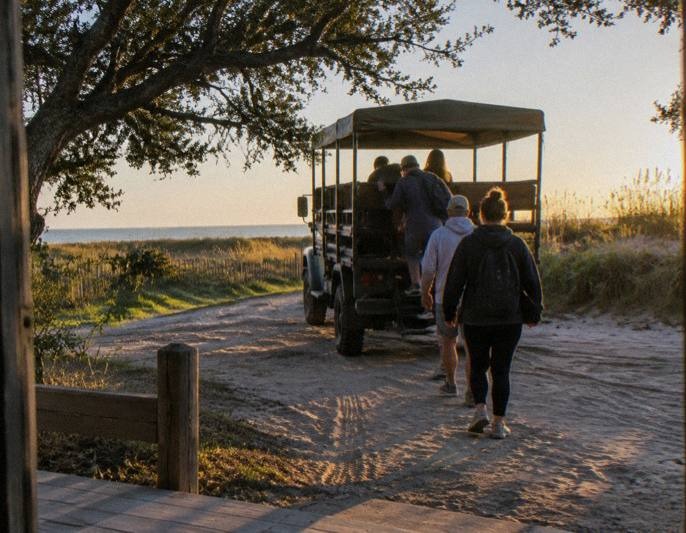
A guided tour is the simplest way to satisfy all of this without thinking about it. The 2-hour Outer Banks Wild Horse Tour by 4WD Truck, rated 4.8 across 2,871 reviews and listed from $65 per person, runs in an open-air four-wheel-drive truck driven by a guide who holds the licenses and knows the buffer by eye. The listing caps each truck at 12 travelers, small enough that the guide can watch the group, and the booking page shows the live price and the next available departures.
What Should You Do When A Wild Horse Approaches You?
When horses approach you, the Fund's instruction is that staying 50 feet away becomes your responsibility: move calmly back, give the animal the right of way, never touch or feed it, and gather children and pets close. Do not stand between a mare and her foal. Call Currituck County dispatch at 252-453-3633 if the horse will not disengage or if someone is behaving dangerously around it.
The horses are not tame, but they are not fleeing animals either. They have shared this beach with houses, trucks and tourists for generations, and in summer conditions they deliberately use the open sand: in April 2026 biting flies and shifting winds pushed horses out of secluded areas and onto the beach, and through the summer heat stress did the same work the insects had done earlier, forcing horses out of cover and into the open. Encounters, in other words, are routine, and the ordinance anticipates them by putting the moving obligation on you.
The right sequence, drawn from the Fund's guidance, looks like this:
| Situation | What to do | Why |
|---|---|---|
| A horse walks toward your spot on the sand | Calmly gather your things and retreat, keeping 50 feet | The law makes the distance your responsibility, not the horse's |
| A horse comes near your vehicle | Stay inside, do not offer food, wait for it to move on | Feeding is banned and teaches the horse to approach cars |
| You are between a mare and her foal | Move out of the gap immediately, without sudden motion | Protective mothers are the most predictable source of kicks |
| A horse blocks the beach track | Stop and wait; do not honk, rev or nudge past | County guidance asks drivers to keep a slow, steady speed and give way |
| Someone else is petting or feeding | Do not join in; report dangerous behavior to dispatch at 252-453-3633 | The Fund asks that dangerous behavior be reported |
One fresh detail from the Fund's 2026 educational update is worth repeating to any group you travel with: foals are extremely impressionable in their first months, and the Fund's managers are explicit that they must not become too accustomed to humans. A foal that learns to walk up to people for attention grows into a hundred-pound-then-eight-hundred-pound animal that does the same, and the ordinance's penalties exist to stop that cycle before it starts. The same update stresses that close human contact can stress horses and separate foals from their mothers, which is the animal-welfare reason behind the legal one.
Photography works within the rule if you let it. Stay put, stay quiet, and let the horse's own travel open and close the distance; a long zoom from well outside 50 feet captures far more behavior than a chase ever will, because a chased horse gives you its hindquarters and nothing else. Drones, selfie sticks extended toward the animal and food props all count as approach or lure in practice, even when nobody says so out loud. For what to carry on the sand itself, the packing guide to what to wear and bring on a Corolla 4x4 horse tour covers the practical list.
How Do Licensed Horse Tours Keep Their Distance?
Licensed tour operators work under the same 50-foot rule plus a County rulebook of their own: Currituck County requires tour vehicles to stay at least 50 feet from the wild horses, to display a valid North Carolina license tag with the company name and County-issued yearly identification, and to run only between 8 a.m. and 8 p.m. west of the dune line, with amplified sound prohibited at all times.
That is why a guided truck is the compliance-easy option. The driver of the 2-hour open-air 4WD truck tour you can book here holds a County-issued identification, drives a licensed vehicle, and manages the buffer professionally while a guide narrates the herd's history and behavior. Riders get the viewing and the storytelling without once having to judge whether they are 40 feet or 60 feet from a mare, which is genuinely hard to estimate on an open beach with no landmarks. The wider set of guides lives on Corolla North Carolina Horse Tours.
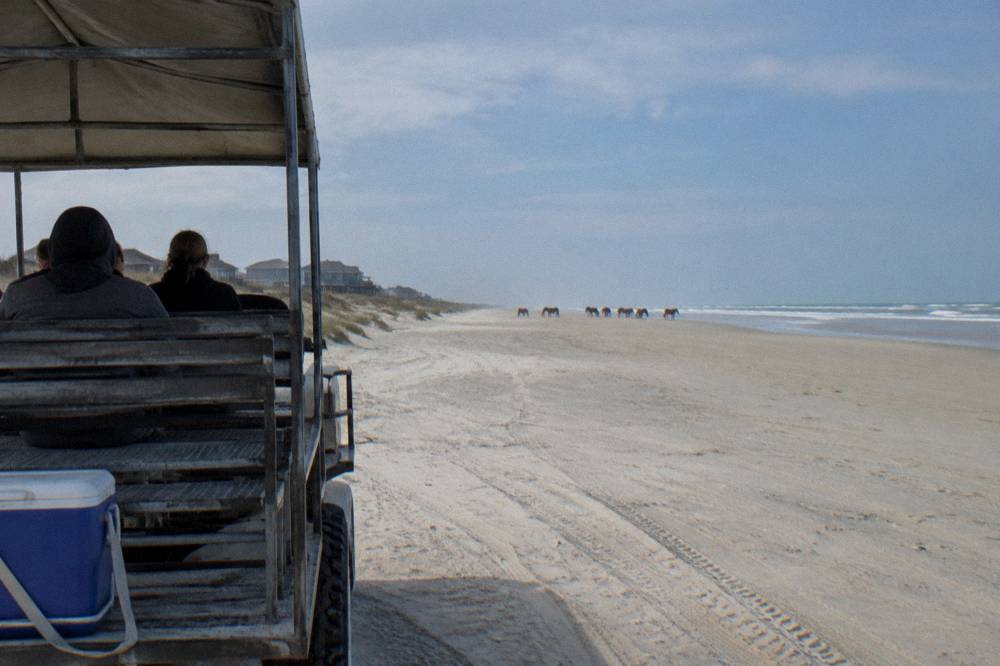
The County's horse tour rules page also explains the enforcement model: violations bring a citation, and multiple citations can suspend an operator's license. A licensed operator therefore has a direct commercial interest in keeping distance that an individual visitor does not, and the yearly identification on each vehicle makes it easy for County staff to check who is who on the beach. When you ride with a licensed truck you inherit that discipline.
It is worth being honest about the alternative. Self-driving the beach is legal, the sand north of the paved road is considered public road and open to the public, and plenty of visitors do it, but it transfers every obligation in this article onto you: the 50-foot judgment, the slow steady speed, the patience when a horse stands in the track. The comparison of driving the Corolla 4x4 beach yourself versus a guided tour works through that trade in detail, and the Corolla 4x4 beach access rules guide covers the vehicle side.
Who Do You Call About An Injured Or Endangered Horse?
For an injured horse, call the Corolla Wild Horse Fund at 252-453-8002, or after hours call Currituck County dispatch at 252-453-3633. Failure to report an injured horse is itself unlawful under the County's wild horse ordinance, so making the call is not optional goodwill, it is part of the rule set. Have a location landmark ready, and stay back while you wait.
The Fund's FAQ lists both numbers, and its 2026 educational update repeats the dispatch line specifically for dangerous behavior, which covers people harassing horses as well as animals in distress. Describing a location on the northern beach is harder than it sounds, since there are no street numbers past the end of the pavement, so note the last mile marker or landmark you passed, the state of the tide, and anything distinctive about the animal, color and markings are how the Fund identifies herd members in the first place.
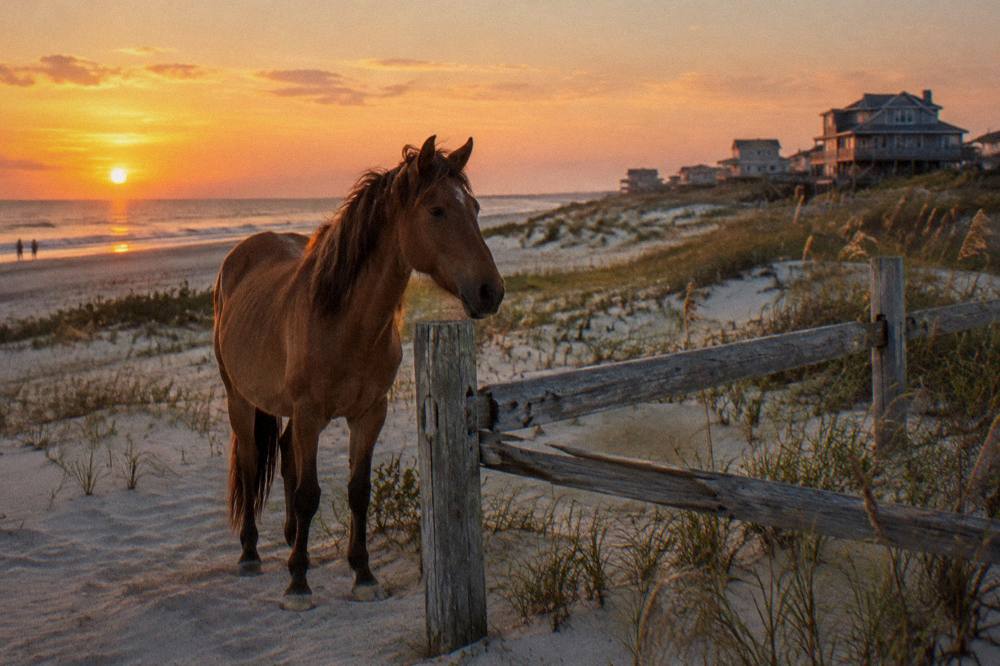
Two incidents from the fresh reporting show the range of what gets reported. Two horses died in 2025 after being struck by vehicles, out of four horses struck that year, which is the grimmest version of why speed and attention matter on the sand. In June 2026 a foal on Corolla Beach became entangled in old fencing and freed itself before help arrived, the kind of event a reporting visitor can turn from a tragedy into a rescue. The system only works when people on the beach use it.

What Does Beach Etiquette Add Beyond The Written Rule?
Good etiquette on the horse beach is a handful of habits the written rule only implies: keep food completely hidden rather than merely unoffered, leash and hold pets, keep noise down since amplified sound is banned west of the dune line, fill in holes and flatten sandcastles before you leave, and give horses the right of way in every conflict. Each habit maps to a real incident type the Fund and the County deal with every season.
Food is the sharped edge. A cooler left open, a bag of chips on a towel, a toddler waving a sandwich: each is a lure under the ordinance's logic, because a horse that scores food from a person once will seek people again. The Fund's 2026 update on horses approaching people was written precisely because this happens, and the educational point it returns to is that foals learn fast and unlearn never. Treat every item of human food on that beach as something a horse must never associate with people.
| Etiquette habit | The written hook it hangs on |
|---|---|
| Hide all food and trash | The luring clause bans attracting a horse within 50 feet |
| Leash pets and hold children's hands | The 50-foot duty is yours, and the county asks drivers and groups to stay controlled |
| Keep sound low on the beach | Amplified sound is prohibited west of the dune line at all times |
| Flatten castles, fill holes at day's end | Unstated courtesy that prevents injury to horses and vehicles alike |
| Park parallel and keep the track clear | The beach is a public road; county guidance asks for slow, steady driving |
| Report, do not intervene | Only officers, sanctuary staff and treating vets may handle a horse |
Etiquette also extends to how you talk about the herd afterward. The Fund notes that horses are identified by color, markings and home territory rather than branded or microchipped, and that the herd is managed with immunocontraception and counted by helicopter aerial survey, so casual claims about "the herd growing" or specific animal counts travel further than the data supports. Sharing a sighting location widely in real time can also concentrate people and pressure, which is the opposite of what the buffer is for. Enjoy the memory, keep the pin to yourself.
How Does The 50-Foot Rule Shape A Whole Corolla Visit?
Planning around the rule changes three things: you pick viewing situations where distance is built in, you book the guided 4WD truck tour if you want the buffer managed professionally, and you time your beach hours around the 8 a.m. to 8 p.m. tour window when the sand is busiest. Visitors who treat the rule as a design constraint rather than a restriction report better sightings, because patient, distant observers are the ones horses ignore.
The deeper background helps too. The Fund was organized in 1989 and incorporated as a nonprofit in 2001, after eleven horses were hit and killed on Highway 12 between the paving of the road in 1985 and 1989, and the horses frequenting Corolla village were moved north of the paved road into what is now the 4x4 area. Every clause of the ordinance in force today descends from that history: the buffer, the fence, the ban on feeding, the licensed tour system, all of it engineered to stop a repeat. For the full background, the history of the Corolla wild horses covers how the herd came to live here, and the Fund's own FAQ page answers the practical questions in the Fund's words.
For anyone weighing whether the guided route fits their trip, the honest summary is this: the ordinance asks every visitor to make dozens of small, correct judgments per hour on an open beach, and a licensed tour compresses those judgments into one decision made at booking. A Corolla wild horse tour has plenty to recommend it beyond the scenery, and from a rules standpoint the case is unusually clean.
The rule set is not long, and none of it asks much: fifty feet, no food, no touch, patience when the herd takes the right of way, a phone call when something goes wrong. Follow it and the Corolla horses go on doing what they have done on this beach for centuries, which is the entire point.
Common Questions About The Corolla Wild Horse 50-Foot Rule
Can you touch the wild horses in Outer Banks?
No. Currituck County's wild horse ordinance makes it unlawful to feed, ride, pet or approach with intent to feed, ride or pet any wild horse, and violations are punishable by law. The federal wildlife refuge adds that it is unlawful to harm, approach or feed any wild horse on the refuge.
How far away do you have to stay from the Corolla wild horses?
Fifty feet, measured intentionally in either direction. It is unlawful to come within 50 feet of a wild horse and equally unlawful to lure, attract or entice a horse to come within 50 feet of you, regardless of your experience with horses.
What should I do if a wild horse walks up to me?
Move calmly back and keep the 50 feet open yourself; the Fund states it is your responsibility to stay at least 50 feet away if horses approach you. Never touch or feed the animal, gather children and pets close, and avoid standing between a mare and her foal.
Who do I call about an injured wild horse in Corolla?
Call the Corolla Wild Horse Fund at 252-453-8002, or after hours call Currituck County dispatch at 252-453-3633. Failure to report an injured horse is unlawful under the county ordinance, so the call is part of the rules, not an extra.
Do tour trucks have to follow the 50-foot rule too?
Yes. Currituck County requires tour vehicles to stay at least 50 feet from the wild horses, to carry a valid license tag with County-issued yearly identification, and to operate only between 8 a.m. and 8 p.m. west of the dune line, with no amplified sound at any time.
Can I feed the wild horses if they look hungry?
No, and the Fund is explicit about why: feeding teaches horses to approach people and vehicles, stresses the animals, and can separate foals from their mothers. Two horses died after vehicle strikes in 2025 alone, and food-habituated behavior is a leading cause of those encounters.