Can You Ride Horses On The Beach In Outer Banks, NC?
No: riding the Corolla wild horses is illegal in Currituck County, and bringing a horse onto the beach north of NC-12 is barred by ordinance. Here is what the law says and what you can do instead.
Is Horseback Riding Allowed On Corolla's Beaches?
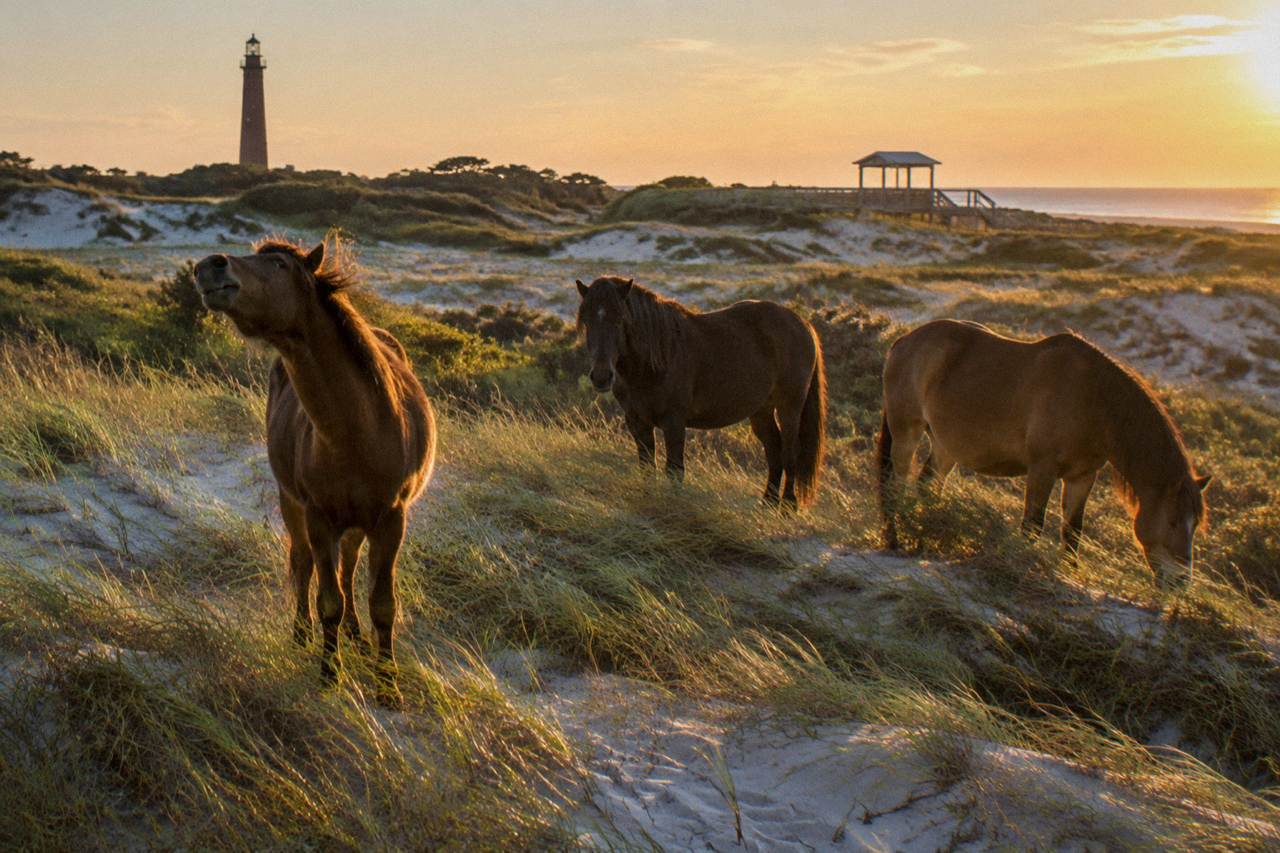
No. Riding the wild horses of the Outer Banks is illegal, and in Currituck County the ban is broader than most visitors expect. The ordinance not only makes it unlawful to feed, ride, pet or approach a wild horse, it also bars riding or bringing any horse at all into the beach area from the end of the paved NC-12 north to the Virginia line. Watching from a guided 4WD truck is the legal way to see the herd. While you're in town, our guide to what makes Corolla famous beyond its horses covers the lighthouse, the drive-on beaches, and how a tour fits into your visit.
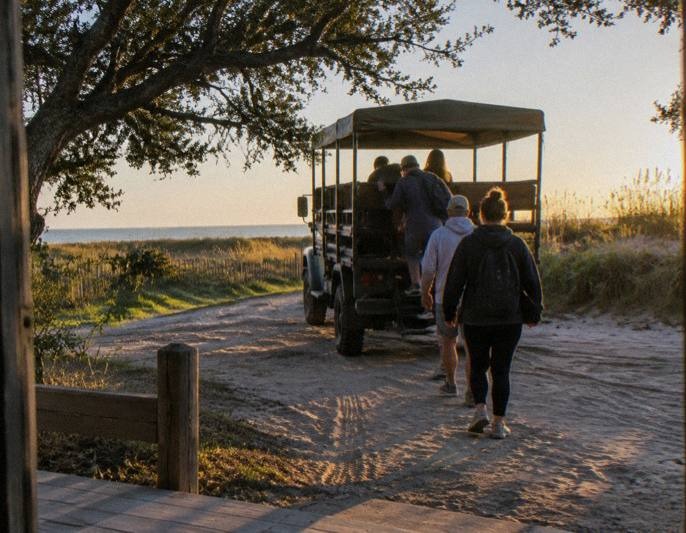
The question comes up constantly, and it is easy to see why. The Corolla horses look like the sort of animals you might saddle up at a vacation stable: calm, sturdy, standing in the sand a few dozen yards from a beach house. They are not that. They are wild animals descended from colonial Spanish stock, managed on 7,544 acres of mixed private and public land, and the law protects them from exactly the kind of contact a ride would require. The Corolla North Carolina Horse Tours site exists to explain this herd and the one legal, guided way most visitors experience it up close: an open-air 4WD truck tour along the northern beach.
That tour, the 2-hour Outer Banks Wild Horse Tour by 4WD Truck, is rated 4.8 across 2,871 reviews and runs from $65 per person, with a meeting point at 1148 Ocean Trail in Corolla and a maximum of 12 travelers per truck. It is worth being blunt about why that format exists: the truck is how you get legally close. A licensed tour vehicle, a professional guide, and the fifty-foot distance the county requires of everyone else.
What Currituck County Law Actually Says
Currituck County's wild horse ordinance makes it unlawful to feed, ride, pet or approach any wild horse, and it prohibits luring or enticing a horse to come within 50 feet of a person. The same body of rules bars riding or bringing a horse into the area from the terminus of the paved NC-12 to the Virginia state line. Violations are punishable by law. If you were hoping to get close enough for a photo or a quick pat, our guide to whether visitors can touch the Outer Banks wild horses explains what the rules allow and safer ways to see the herd.
The Fund's summary of the county rules is direct: "feeding the wild horses or getting within 50 feet of them is punishable by law," and cruelty, enticing, harboring, luring, seizing and failure to report an injury are all unlawful. The FAQ adds a line that surprises people who grew up around horses: "There is a county ordinance that makes it illegal for people to come within 50 feet of the horses, regardless of the person's experience." Experience does not carve out an exception. Neither does good intentions, and neither does a horse walking toward you: the Fund states plainly that if horses approach you on the beach, it is your responsibility to stay at least 50 feet away.
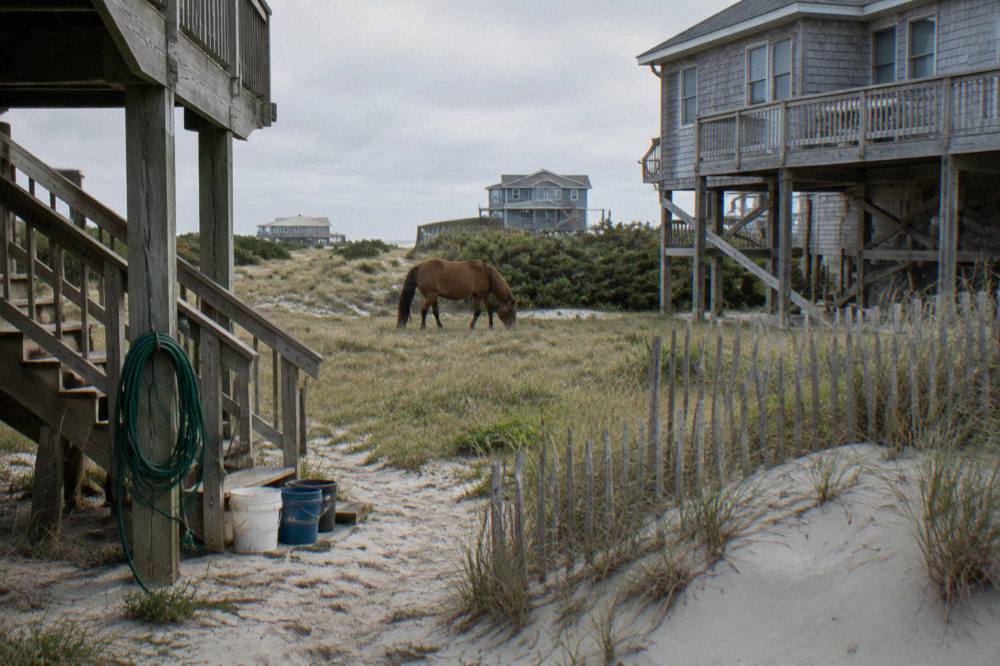
The no-riding rule extends past the wild herd itself. The county code, as the Corolla Wild Horse Fund quotes it, bars keeping or bringing a horse into the area "from the terminus of the paved portion of N.C. State Highway 12 to the Virginia state line." So even a domestic horse trailered in for a beach ride cannot legally be ridden on that stretch of sand. It is not a permit problem or a seasonal restriction; the activity itself is barred.
Where The Rules Apply: The 4x4 Beach North Of Corolla
The restrictions cover the four-wheel-drive beach north of where NC-12 ends in Corolla, up to the Virginia line, roughly eleven miles of sand, marsh and maritime forest. The beach itself is considered public road, the only access for the hamlets of Carova, North Swan Beach and Swan Beach, and it is where the herd actually lives.
This geography matters because visitors sometimes assume the rules only apply on a protected reserve. They do not. The horses roam the same corridor that passenger trucks, houseguests and tour vehicles use. The beach north of the paved road is a public road by the Fund's own description, and the Currituck National Wildlife Refuge pages note that after NC-12's terminus, traffic diverts onto the beach and four-wheel drive is required. On the refuge itself, federal rules add their own layer: it is unlawful to harm, approach, feed or kill any wild horse, and the refuge describes the horses as animals that "must only be viewed from a distance."
The county also regulates how tour operators behave in that corridor, which is why a licensed tour is different from walking up to a horse. Per Currituck County's tour rules, tour vehicles must display a valid North Carolina tag and county-issued identification, tours west of the dune line may not run before 8 a.m. or after 8 p.m., amplified sound is banned on that stretch at all times, and tour vehicles themselves must stay at least 50 feet from the horses. The rules that bind a licensed operator are close to the rules that bind you.
| Rule | Who it applies to | What it means in practice |
|---|---|---|
| No feeding, riding, petting or approaching a wild horse | Everyone | Applies regardless of horse experience |
| 50-foot minimum distance | Everyone | If a horse approaches you, you back away |
| No luring or enticing a horse closer | Everyone | Includes food, calls and bait of any kind |
| No bringing or riding a horse into the area north of NC-12's end | Everyone | Bars trailered-in domestic horses on the 4x4 beach |
| Tours only between 8 a.m. and 8 p.m. west of the dune line | Licensed tour operators | Sets the operating window for guided trucks |
Can You Pet Or Feed The Corolla Wild Horses?
No. Feeding and petting are unlawful under the same ordinance that bans riding, and the Corolla Wild Horse Fund treats close contact as a welfare problem, not just a legal one. Getting too close stresses the animals and can separate foals from their mothers, which is why the Fund asks visitors to report dangerous behavior to county dispatch.
The welfare logic is worth understanding, because it explains the severity of the rule. In a 2026 educational update about wild horses approaching people, the Fund wrote that "foals are extremely impressionable and it's critical that in these first few months of life they do not become too accustomed to humans." A foal that learns to walk toward people for food or attention grows into a thousand-pound animal that does the same thing near trucks, fences and crowds. The herd lost animals to vehicle strikes in recent years, and habituation is one of the pathways there.
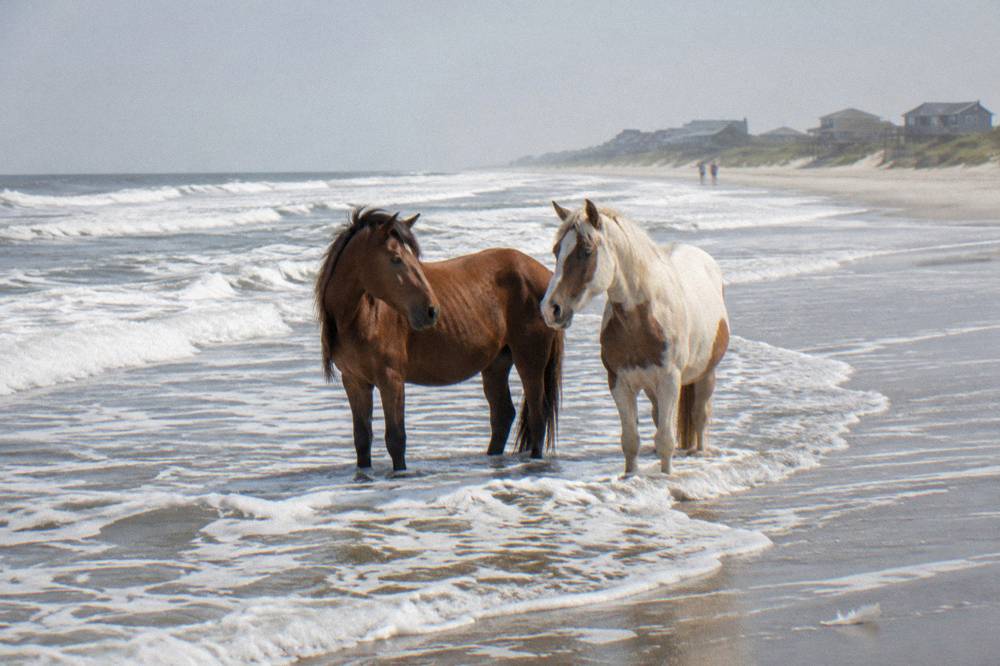
The 2026 season underlined why distance rules stay strict. The herd welcomed at least twelve healthy foals by late summer, seven fillies and five colts, and spring sightings near the southern fence drew large crowds as biting flies and heat pushed horses out of cover and onto the open beach. More visible horses means more temptation to close the gap, which is precisely when the Fund's guidance matters most. If you spot an injured horse, the reporting numbers are the Fund at 252-453-8002 or, after hours, Currituck County dispatch at 252-453-3633.
What You Can Do: Watch The Herd From A Guided 4WD Truck
The legal alternative to riding is viewing, and the main guided option is a two-hour open-air 4WD truck tour along the beach north of Corolla: from $65 per person, rated 4.8 across 2,871 reviews, with a professional guide, a 12-traveler cap and a meeting point at 1148 Ocean Trail. The truck does the driving on sand you would otherwise need your own four-wheel drive for.
This is the honest pitch. You cannot ride, touch or feed these horses, and you should be skeptical of anyone offering otherwise (see Touching Wild Horses). What the guided 4WD tour sells is access: the northern beach is soft sand reachable only by four-wheel drive, the guides know the herd's seasonal patterns, and the licensed vehicle keeps the distance the county requires while still putting you close enough to watch. The listing describes a friendly, professional horse guide, transport by open-air 4-wheel drive truck with no ATVs, and a moderate fitness requirement, with no children under five years or 40 pounds.
A few practical notes from the listing worth knowing before you book. Food, drinks and hotel pickup are not included; the tour is not wheelchair accessible and is not recommended for travelers with back problems, given the ride over unpaved sand. The booking page shows the live price and the current departure schedule.
| Featured tour detail | What the listing shows |
|---|---|
| Tour | 2-hour Outer Banks Wild Horse Tour by 4WD Truck |
| Rating | 4.8 across 2,871 reviews |
| Price | From $65 per person; live price on the booking page |
| Vehicle | Open-air 4-wheel drive truck, no ATVs |
| Group size | Maximum 12 travelers |
| Meeting point | 1148 Ocean Trail, Corolla, NC 27927 |
| Age minimum | No children under five years or 40 pounds |
For readers weighing whether the experience justifies the price, the longer treatment in are Corolla wild horse tours worth it works through the value question in detail, and the cost guide for Corolla horse tours compares what the various direct operators in town charge for similar two-hour trips.
Are There Riding Stables Anywhere In The Outer Banks?
Nothing in the county's rules or the Fund's materials points to any legal way to ride a horse on the Corolla beach, and no operator currently offers beach rides in the wild horses' range. Any riding stable elsewhere in the region would be outside the herd's habitat and would need to be booked directly with that stable.
No one can promise a horse sighting, so plan the trip for the ride itself. Claims about specific riding stables circulate in vacation forums, but no official source publishes names, prices or locations, so check directly with any stable before you plan a ride. The boundary is firm: the wild horse area north of the paved end of NC-12 is closed to ridden horses entirely. If a trail-riding operation exists elsewhere in the Outer Banks, it operates well south of that line, on its own land or trails, and has nothing to do with the wild herd.
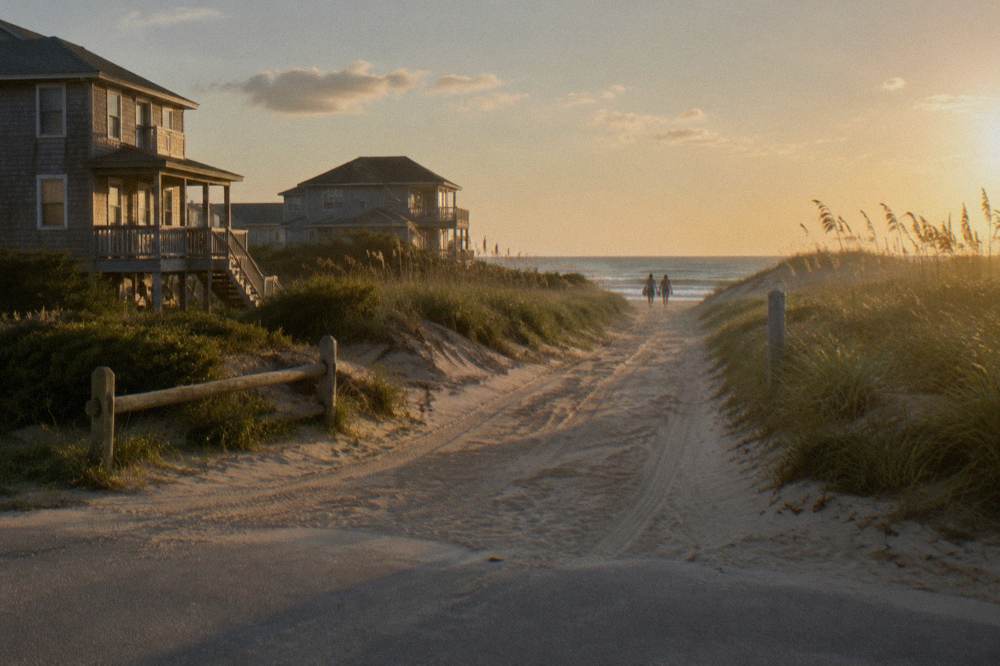
If your heart is set on horseback specifically rather than on the wild herd, the practical advice is to call ahead to stables in the wider Outer Banks region and confirm directly what they offer. If your heart is set on the Corolla horses specifically, the guided 4WD truck tour is the experience that actually exists: the same animals, the same beach, watched from the distance the law, and the herd's welfare, demand. The full rundown of Corolla wild horse tour options covers what is included, what is not, and who the tour fits.
Why The Rules Are So Strict
The protections exist because this herd survived by staying wild. The horses were moved north of the paved road after vehicles killed eleven of them on Highway 12 between 1985 and 1989, the Fund was organized in 1989 and incorporated as a nonprofit in 2001, and every contact rule since has been built around keeping people and horses apart on shared sand.
The history explains the present. When the road between Duck and Corolla was paved, the horses that frequented the village were relocated north of it into what locals call the 4x4 area, and the fence at the northern end of the paved road still marks the boundary today. The herd is managed rather than left entirely alone: the Fund identifies horses by color, markings and home territory rather than branding, uses immunocontraception to manage population growth, and conducts aerial counts by helicopter, reporting to the county's advisory board. In 2010 the North Carolina General Assembly named the Colonial Spanish Mustang the state's official horse, which is the level of regard this animal carries locally.
Given that backstory, the no-riding rule is not bureaucratic caution. It is the reason there is still a herd. Every year the Fund has to remind new visitors of the same facts: do not approach, do not feed, do not lure, and give the animals the fifty feet the ordinance requires. The guided tour industry, operating under county license inside an 8 a.m. to 8 p.m. window, is the sanctioned compromise between human curiosity and horse safety.
Common Questions About Riding Horses In The Outer Banks
Can you ride horses on the beach in Outer Banks, NC?
No. Riding a wild horse is unlawful in Currituck County, and the ordinance also bars riding or bringing any horse into the area from the end of paved NC-12 north to the Virginia line. The legal way to see the herd is from a guided 4WD truck tour.
Can you touch or feed the Corolla wild horses?
No. Feeding, petting and approaching wild horses are all unlawful, and the 50-foot distance rule applies to everyone regardless of horse experience. If a horse walks toward you, the Fund states it is your responsibility to move away and keep the distance.
Can you bring your own horse to the 4x4 beach?
No. The county ordinance bars riding or bringing a horse into the wild horse area from the terminus of the paved portion of NC-12 to the Virginia state line, so a trailered domestic horse cannot legally be ridden on that beach.
What happens if you get too close to a wild horse in Corolla?
Violations of Currituck County's wild horse ordinance are punishable by law, and each day a violation continues can count as a separate offense. Beyond the legal exposure, close contact stresses the animals and can separate foals from their mothers.
What is the legal way to see the Corolla wild horses?
Book a guided tour in a licensed 4WD vehicle, such as the 2-hour open-air truck tour from $65 per person, or watch from a lawful distance if you drive the 4x4 beach yourself in your own four-wheel-drive vehicle. The same 50-foot rule applies either way.