Can You Drive To See Wild Horses In Outer Banks?
Yes, if you have four-wheel drive: the paved road ends in Corolla and the beach becomes the road north. Here is what driving the Outer Banks 4X4 beach involves, and when a guided 4WD tour is the easier answer.
Where Can You Drive On The Beach To Find Them?
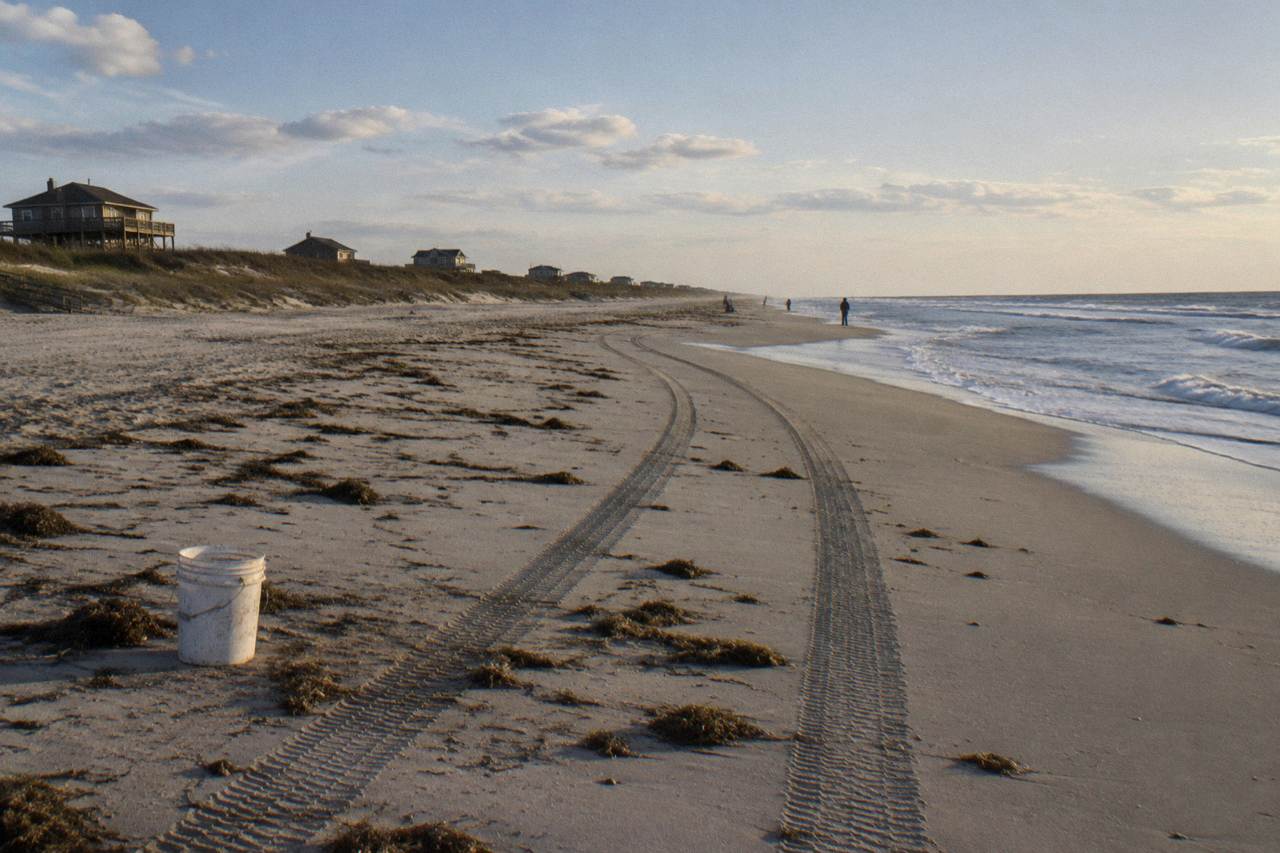
Yes, you can, and the condition is simple: your vehicle needs four-wheel drive. North Carolina Route 12 ends in Corolla, and north of that terminus the beach sand is the public road, the only access to Carova and the horse range. The U.S. Fish and Wildlife Service states plainly that four-wheel drive is required there, so a standard two-wheel-drive car stops where the pavement does.
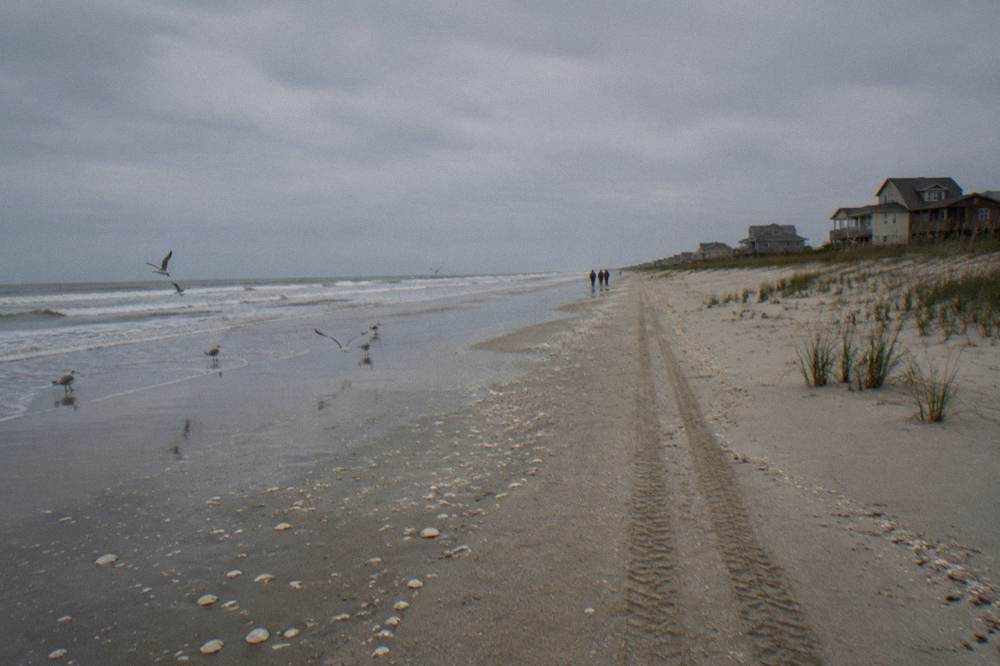
That single sentence answers the question most visitors arrive with, but the practical detail sits underneath it. The beach north of Corolla village is, in the words of the Corolla Wild Horse Fund, "considered public road, and it is open to the public." It is the only way in for residents and guests staying in Carova, North Swan Beach and Swan Beach, which means you share it with locals, delivery trucks, other visitors and, on many days, the horses themselves. Driving it is legal, ordinary and done every day, but it is a different kind of driving than most people do on vacation, and it rewards preparation. Once you understand the beach rules, a quick look at everything else this small town offers, from the lighthouse to the wild herds, is covered in our guide to what makes Corolla famous beyond the sand.
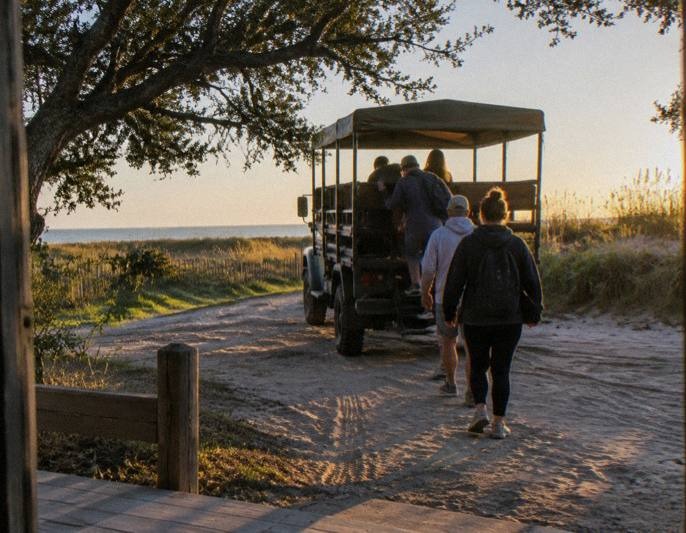
For travelers who arrive without a 4WD vehicle, or who would rather not learn sand driving on a barrier island, the guided alternative exists for exactly this reason. The 2-hour Outer Banks Wild Horse Tour by 4WD Truck puts you in an open-air four-wheel-drive truck with a guide who drives the beach for a living, rated 4.8 across 2,871 reviews and priced from $65 per person. Whether you drive yourself or ride along, the destination is the same stretch of sand and the same herd. Before you pick a way in, it helps to understand where the paved road ends and the sand begins, and the guide to Corolla's off-road 4x4 beach area explains exactly that.
Where Does The Paved Road End In Corolla?
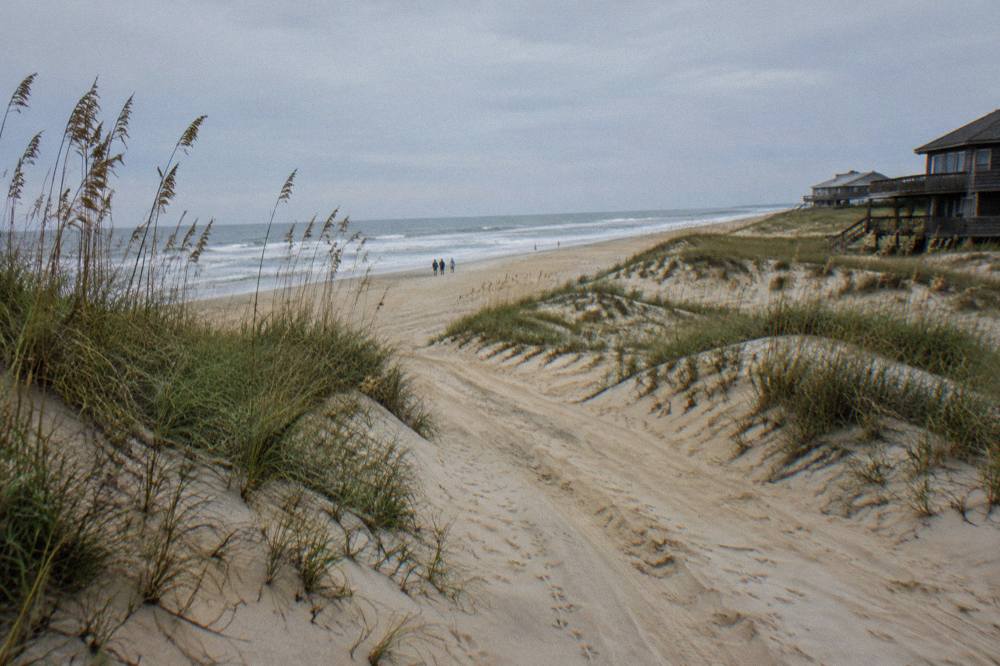
NC-12's northern terminus is in Corolla village, and from there traffic is diverted directly onto the beach, where the refuge and the horse range begin. The U.S. Fish and Wildlife Service describes the route: follow NC-12 north to its terminus, where traffic shifts to the sand and four-wheel drive is required. Everything north of that point, roughly eleven miles up to the Virginia line, is the area locals call the 4X4 beaches.
The transition is abrupt. One moment you are on a paved two-lane road past the Currituck Beach Lighthouse and the village shops; the next, the asphalt simply stops and vehicles drop down onto the sand at the ramp. The Fund's history pages note the northern fence sits approximately eleven miles north at the Virginia state line, and that the horses were moved north of the paved road decades ago, after eleven were struck and killed on Highway 12 between 1985 and 1989. That history is why the herd lives where the pavement ends, and why the question of driving there is inseparable from the question of seeing them. To understand how Colonial Spanish Mustangs ended up on these beaches in the first place, read how the wild horses got to the Outer Banks.
Not every vehicle can make that drop. County guidance asks drivers to use four-wheel drive when entering the ramp and to maintain a slow, steady speed, and it is blunt about the alternative: if your vehicle is not equipped with four-wheel drive, do not attempt to drive on the beach. Rental agreements for many standard cars exclude beach driving entirely, and recovery from soft sand is expensive. There is more on the practical side in our guide to driving the Corolla 4X4 beach yourself, including what to do when the sand softens.
A practical comparison helps frame the choice between bringing your own 4WD and booking a seat on a guided truck:
| Factor | Driving yourself | Guided 4WD tour |
|---|---|---|
| Vehicle needed | Your own 4WD vehicle, aired-down and fueled | None; the operator supplies the truck |
| Route knowledge | You find the horses, or you don't | Guide chooses the route based on the day |
| Legal distance from horses | You are responsible for the 50-foot rule | Licensed tour vehicles follow the same rule, with a driver who applies it daily |
| Time commitment | Open-ended; the beach is eleven miles long | Roughly two hours, fixed departure |
| Typical cost | Fuel, wear, and any recovery costs | From $65 per person on the featured listing |
| Risk | Soft sand, tides, inexperience | Rough open-air ride; not for serious back problems |
What Does Driving The Corolla 4X4 Beach Involve?
In practice it means soft sand, shared space and self-reliance: there are no services, no restrooms and no developed facilities on the northern beach or the refuge behind it, and drivers are expected to keep speeds low and yield to horses and people. The U.S. Fish and Wildlife Service notes the refuge has no roads, trails, restrooms or visitor station, and the beach is the corridor everyone uses.
The driving itself is slow and steady rather than technical, most of the time. County guidance is the standard to follow: engage four-wheel drive at the ramp, hold a slow steady speed, and stay on the beachfront where vehicle traffic belongs. The wildlife service restricts vehicle traffic to the beach itself, so the temptation to wander off along a sound-side track is not an option anyway. Drivers who want the full rulebook, including access details for the Carova end of the beach, will find them in our Carova Beach 4X4 access rules guide.
The shared-space part matters more than most first-time visitors expect. The horses cross the beach, stand in the shade line behind the dunes and sometimes walk directly along the sand corridor vehicles use. Fresh reporting on the herd notes that in 2025 four horses were struck by vehicles on the northern beaches and two of them died, which is the clearest argument there is for the slow, steady speed the county asks of every driver. The herd relocates seasonally and predictably in response to insects and heat, moving out of cover and into the open, so the odds of a horse near the vehicle corridor rise in summer. Everything else covered here is indexed on Corolla North Carolina Horse Tours.
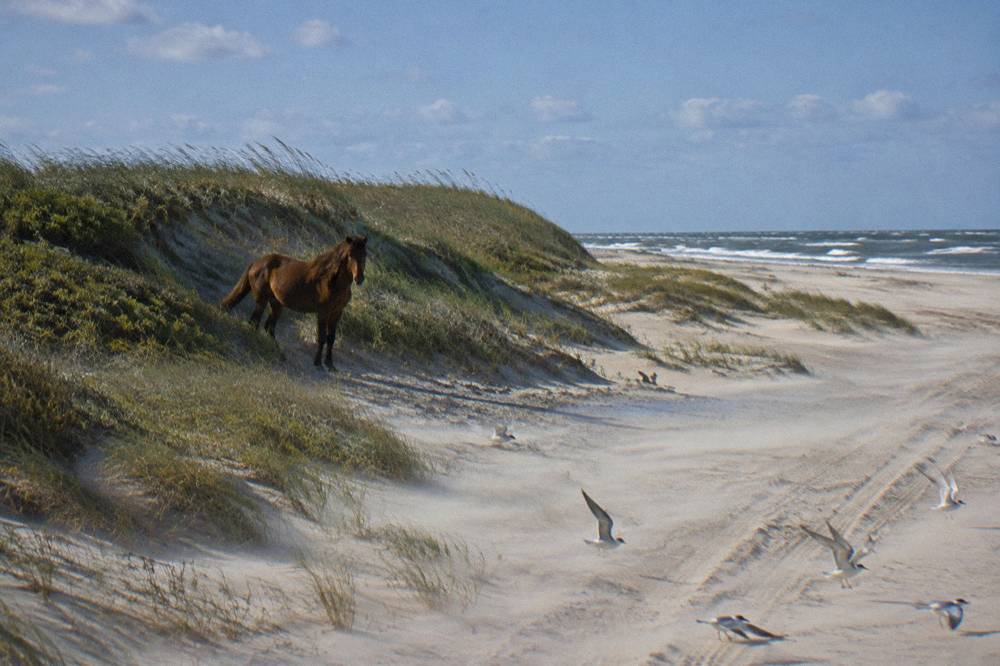
This is the point where many drivers reconsider. Driving the beach is doable, but doing it while also scanning for horses, keeping fifty feet of distance, watching the sand and minding other vehicles is genuinely a lot of simultaneous tasks. The guided 4WD truck tour solves the division of labor: the guide drives and watches for the herd, and the passengers watch the horses. The listing for the 2-hour open-air 4WD truck tour caps the group at 12 travelers, which keeps sightlines open from the truck bed.
What Rules Apply When You Drive Near The Horses?
The core rules are the county's fifty-foot distance, a ban on feeding, petting, riding or luring the horses, and tour-specific hours that keep commercial vehicles off the beach before 8 a.m. and after 8 p.m. west of the dune line. The county's horse-tour page states tour vehicles must stay at least fifty feet from wild horses, and the Fund confirms that getting within fifty feet or feeding them is punishable by law.
Those rules bind everyone, not just commercial operators. The Fund's FAQ is explicit that the county ordinance makes it illegal to come within fifty feet of the horses "regardless of the person's experience," and if a horse approaches you on the beach it remains your responsibility to keep the distance. For a driver, that translates into a concrete habit: when you see horses ahead, slow well down, give them a wide berth along the wet sand, and never position your vehicle to cut off their path or lure them closer with food. The Currituck County horse tour rules page adds the operating window, no amplified sound west of the dune line at any time, and licensed, tagged tour vehicles.
The federal side reinforces the county's. On the Currituck National Wildlife Refuge, the wildlife service states it is unlawful to harm, approach, feed or kill any wild horse, and its pages describe the horses as animals that "must only be viewed from a distance." A self-drive trip that turns into a close approach for a photograph breaks county and federal rules at once. If you want the etiquette in full, our Corolla wild horse 50-foot rule guide covers it, including what to do when horses walk toward your vehicle.
| Rule | Who it applies to | Source |
|---|---|---|
| Stay at least 50 feet from wild horses | Everyone, regardless of experience | Currituck County ordinance, via the Fund |
| No feeding, petting, riding or luring | Everyone | County ordinance, via the Fund |
| No tours before 8 a.m. or after 8 p.m. west of the dune line | Licensed tour vehicles | Currituck County horse-tour rules |
| No amplified sound west of the dune line | Everyone in the 4WD area | Currituck County horse-tour rules |
| No harming, approaching or feeding horses on refuge land | Everyone on the refuge | U.S. Fish and Wildlife Service |
Is A Guided 4WD Truck Tour The Easier Answer?
For most visitors without a 4WD vehicle, yes: the guided tour trades the rental gamble, the sand-driving risk and the herd-finding challenge for a fixed two-hour ride with a guide who drives that beach daily. The featured listing, supplied by Benders Beach Services, runs from $65 per person, is rated 4.8 across 2,871 reviews and carries a maximum of 12 travelers per truck.
The economics are not lopsided either way, they simply answer different needs. A family that already owns or rented a 4WD SUV pays only fuel to drive the beach, but carries all the risk of soft sand and all the work of finding horses across eleven miles of habitat. A party on the guided 4WD truck tour pays the per-person rate shown on the listing, meets at 1148 Ocean Trail in Corolla, shares a lot with the Beer Garden, and lets someone else read the sand and the herd. The booking page shows the live price and remaining departures.
Know the fine print before you book a seat rather than a steering wheel. The listing excludes food, drinks and hotel pickup, the open-air truck is not wheelchair accessible, the ride is not recommended for travelers with back problems, and children under five years old or 40 pounds cannot be accommodated. Moderate physical fitness is the stated expectation, which mostly means climbing into and out of a truck bed and riding over uneven sand. Riders report that the open-air format is the point: unobstructed views and photographs without glass in the way.
There is a middle path, too. Some visitors drive the beach themselves on one day and ride the guided 4WD truck tour on another, using the guide's route knowledge to learn where the herd tends to gather before exploring on their own. Whether that is worth it depends on how many days you have; our are Corolla wild horse tours worth it breakdown walks the value question in detail.
What About The Currituck National Wildlife Refuge?
The refuge sits immediately north of Corolla village, and the wildlife service confirms its tracts are reachable only by four-wheel-drive vehicle or boat, with visitors parking on the beach and walking in. It is open daily from sunrise to sunset year-round, with no developed facilities, no restrooms and no entry procedure beyond driving the sand to get there.
The refuge is not a zoo and the horses are not its exhibit. The wildlife service describes the land as maritime forest and brackish marsh in six units between Corolla and the state line, and its pages treat the horses cautiously, as animals occasionally seen and only viewed from distance. Feeding wildlife, including the horses, is prohibited, as are all commercial activities and pets off-leash. Practical details for a visit are on the refuge's visit page, including the four-wheel-drive requirement at the NC-12 terminus.
For a driver, the refuge reframes the trip. The beach corridor you drive is public road; the land behind it is a mix of private lots and protected tracts, and the horses move across all of it. The Fund manages the herd on 7,544 acres of habitat that includes roughly 700 houses, and its herd management page describes aerial counts by helicopter as part of how the population is tracked. What that means on the ground: the horses can be anywhere from the dune line to the marsh edge, and a driver who only watches the sand in front of the bumper will miss most of the range.
Practical Checklist For A Self-Drive Horse Trip
Bring a genuine 4WD vehicle, air down for the sand, fuel up before the pavement ends, and plan for zero services once you are on the beach: no restrooms, no water, no assistance unless you bring it or call it. Go with a full day ahead of you rather than at dusk, keep the county's slow steady speed, and treat the fifty-foot rule as the one line you never cross.
The failures on this beach are predictable ones. Drivers arrive in vehicles that are four-wheel-drive in name but not in engaged practice, discover the sand at the ramp is softer than it looked, and dig in. Others drive fast, both because the open beach invites it and because they are chasing daylight, and speed near horses is exactly what the county's guidance and the 2025 vehicle strikes argue against. The checklist below compresses the essentials; the fuller version, including what to pack, sits in our what to wear and bring guide.
| Before you drive onto the beach | Why it matters |
|---|---|
| Confirm real four-wheel drive, engaged at the ramp | County guidance says not to attempt the beach without it |
| Fuel, water, snacks, phone charged | No services north of the pavement |
| Check the daylight window | The beach is eleven miles; turning back in the dark is no place to learn sand driving |
| Plan your distance rule in advance | Fifty feet from any horse, enforced by habit, not improvisation |
| Know the reporting numbers | Fund at 252-453-8002; county dispatch at 252-453-3633 |
One honest caveat belongs here rather than buried in a FAQ: nobody can promise you a horse. The herd roams a vast acreage, weather and tides and insects move them daily, and the Fund itself never guarantees sightings, only that the horses are out there living their own calendar. A guided tour stacks the odds with local knowledge, and the operator's cancellation terms on the booking page let you plan around weather, but the sighting itself is always the horses' decision. If you would rather not drive at all, our piece on seeing the Corolla wild horses without a tour covers the walk-in and village options.
Common Questions About Driving To See Outer Banks Wild Horses
Can you drive to see wild horses in Outer Banks?
Yes. The paved road, NC-12, ends in Corolla and the beach becomes the public road north toward Carova and the Virginia line. A four-wheel-drive vehicle is required once the pavement stops, per the U.S. Fish and Wildlife Service, and the horses roam the dunes and marsh along that whole stretch.
Do you need a 4X4 to see the wild horses in Corolla?
To drive yourself, yes: county guidance says not to attempt the beach without four-wheel drive. If you do not have a 4WD vehicle, a guided open-air 4WD truck tour covers the same beach with a driver who handles the sand.
Can you drive on the beach at Carova?
Yes, the beach north of Corolla is public road and the only vehicle access for Carova, North Swan Beach and Swan Beach. Vehicle traffic stays on the beachfront, and drivers keep a slow, steady speed with four-wheel drive engaged.
How close can your car get to the wild horses?
Fifty feet, by county ordinance, regardless of your experience with horses. Feeding, petting, riding or luring the horses is unlawful, and on the refuge it is unlawful even to approach them. If a horse walks toward your vehicle, the responsibility to keep the distance stays with you.
Is it better to drive yourself or take a tour?
It depends on your vehicle and confidence. Self-driving costs less in cash but carries soft-sand risk and no herd-finding help. A guided 4WD truck tour, from $65 per person on the featured listing, puts a local guide behind the wheel and covers roughly two hours of the horse range.