What Is Corolla NC Known For?
Corolla is known for three things above all: the wild Colonial Spanish Mustangs that roam its northern beaches, the red-brick Currituck Beach Lighthouse, and the four-wheel-drive-only stretch of sand that starts where the paved road ends.
Short answer
Corolla, North Carolina is a village at the northern end of the Outer Banks known for its free-roaming wild horses, the Currituck Beach Lighthouse, and the 4WD-only beaches north of town. The horses live on 7,544 acres of mixed habitat, and the usual way most visitors look for them is a guided 2-hour 4WD truck tour, from $65 per person, rated 4.8 across 2,871 reviews.
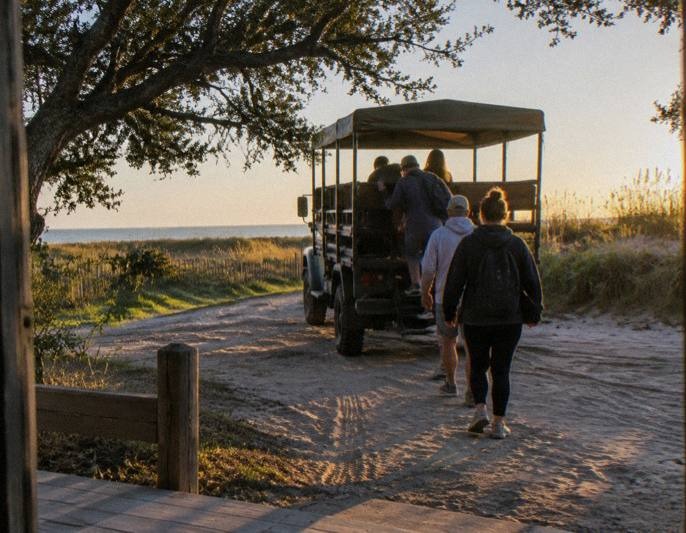
Corolla sits at the northern end of North Carolina's Outer Banks, where the paved road stops and the sand keeps going. The village is small, but its reputation is not: people plan entire vacations around one unpainted red-brick lighthouse and a herd of wild horses that has lived on this barrier island longer than any of the houses. The guided 2-hour open-air 4WD truck tour through the northern beaches anchors almost everything else there is to say about the town. If you're wondering exactly where those horses tend to hang out, our guide to finding the Corolla wild horses explains how the answer changes with the seasons.
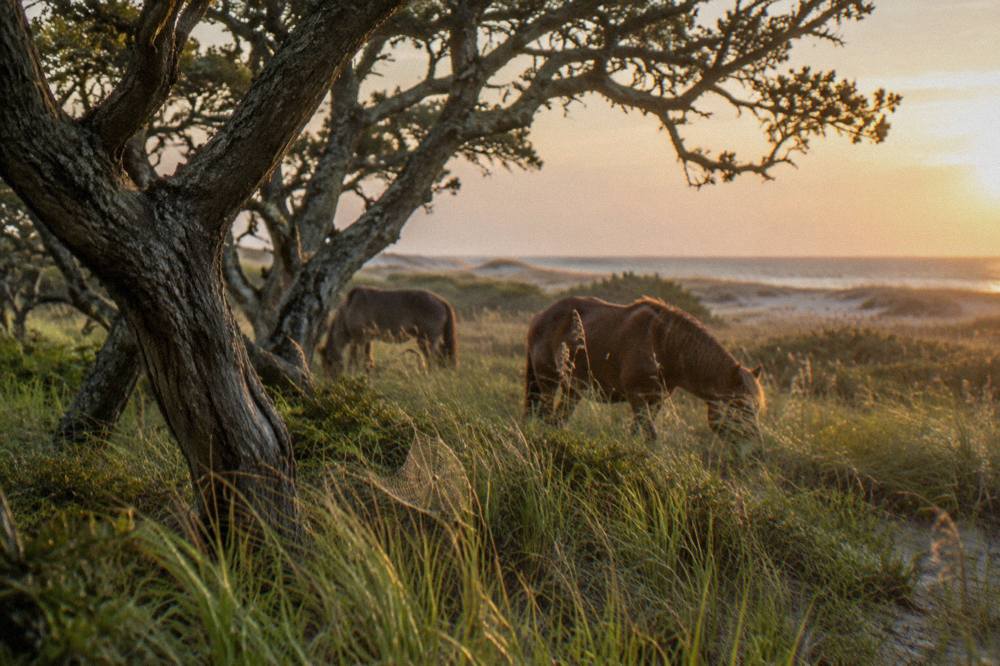
The Corolla Wild Horse Fund, the nonprofit that manages the herd, describes the animals as Colonial Spanish Mustangs, descendants of horses brought to the coast centuries ago. In June 2010 the North Carolina General Assembly adopted the Colonial Spanish Mustang as the Official Horse of the State of North Carolina, which tells you how much the state itself leans on this herd as an identity. The horses roam 7,544 acres of diverse habitat that the Fund describes as including roughly 700 houses, thousands of people and vehicles. This is not a park with a fence and a gate. It is a working residential beach, and the horses walk through it.
What Is Corolla NC Known For?
Corolla is known for its wild horses, the Currituck Beach Lighthouse, the 4WD-only beaches north of town, and the quiet, undeveloped character of the northern Outer Banks. The horses are the headline: they roam 7,544 acres of habitat between the end of the paved road and the Virginia line, and the 2-hour 4WD truck tour that tracks them down is the town's signature activity, from $65 per person. Seeing them from a tour truck often sparks the obvious question, and our guide to whether you can ride horses on the beach in the Outer Banks explains what local law actually allows.
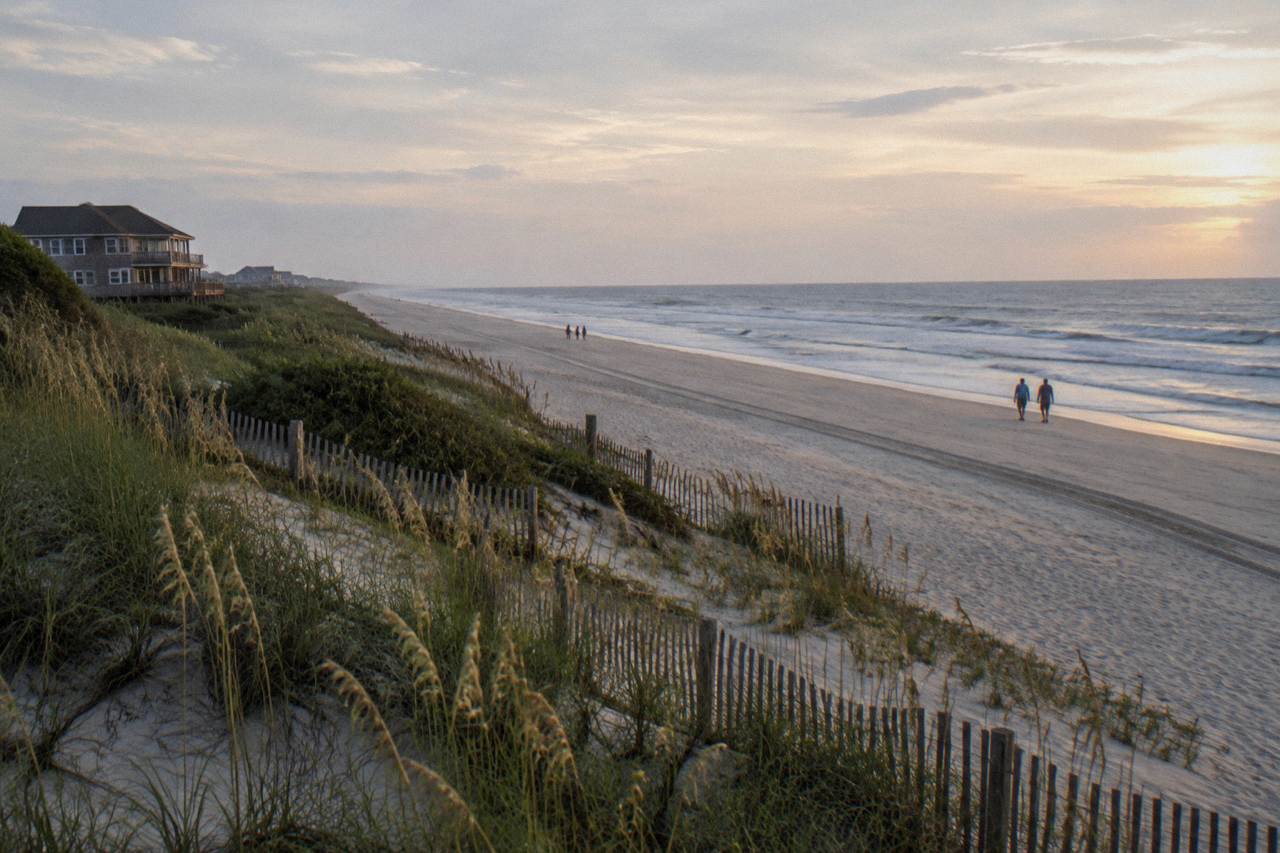
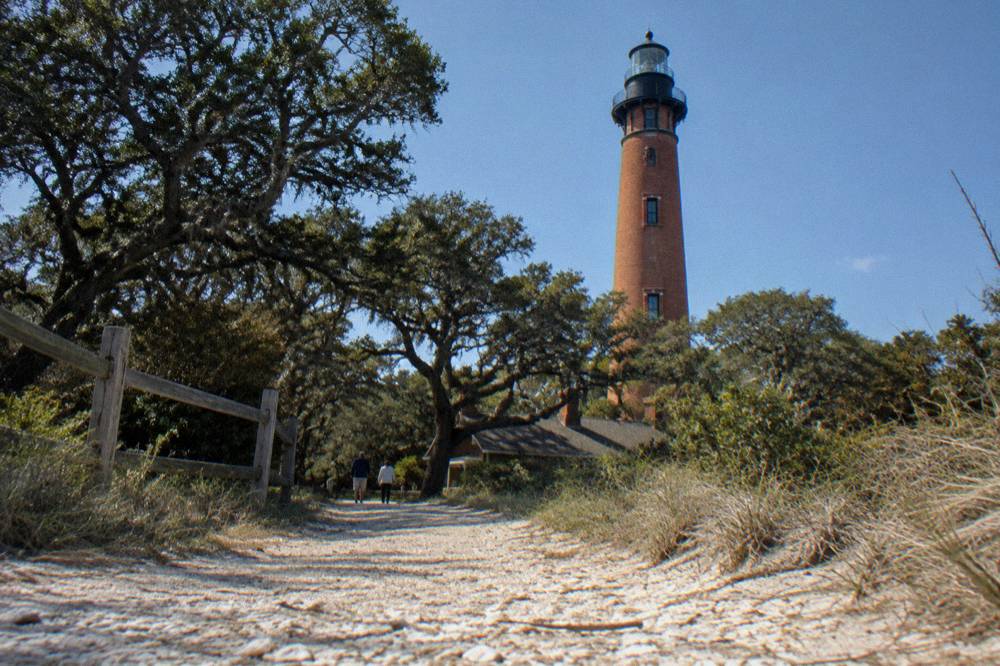
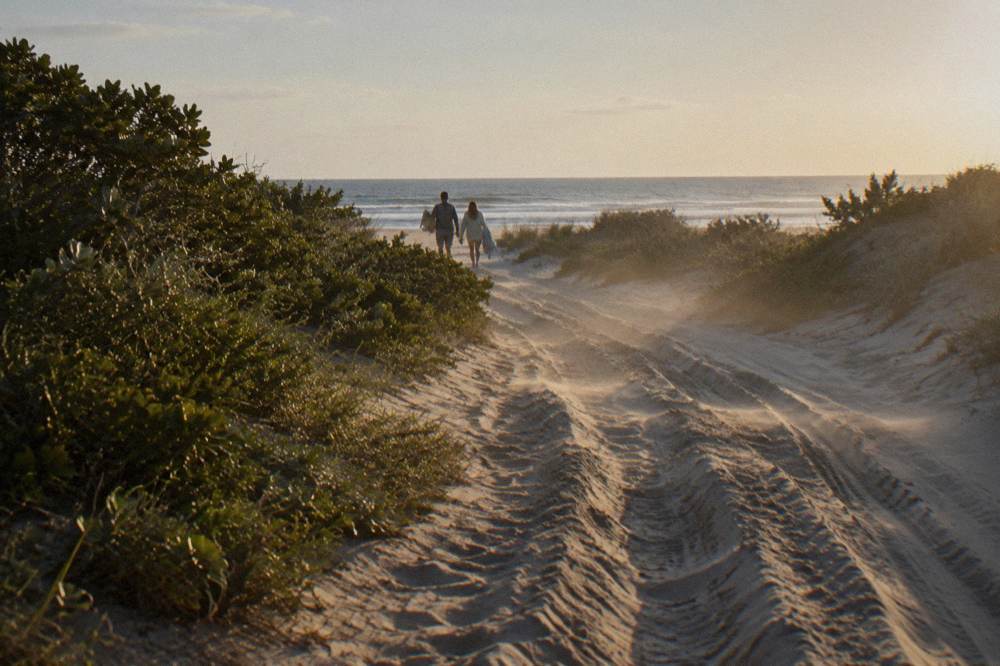
The name recognition runs in that order. Ask someone who has been to the Outer Banks what Corolla means to them and the answer is almost always the horses first. Then comes the lighthouse, an unpainted red-brick tower on the village's ocean side that you can climb for a view over Currituck Sound and the Atlantic. Third is the beach itself: everything north of the end of NC-12 is sand-only, four-wheel-drive territory where there is no road at all, just eleven miles of shoreline between the pavement and the Virginia state line.
There is also a quieter, fourth answer that locals give. Corolla, unlike the more built-up towns to the south, kept much of its scale. The Fund's history pages note that only 25% of the northern beaches' 3,150 platted lots are currently developed. A visitor driving through the village passes maritime forest, sound-side marsh, and stretches where the woods close in on the road. The town's fame rests on what it still has, not on what it built.
For practical purposes, the three famous things feed each other. The lighthouse gives you the overview, the village gives you lunch and a museum, and the horses give you the reason you drove past everything else. Most itineraries built around the horses, like the ones in our Outer Banks three-day itinerary with a wild horse tour, fold the other landmarks in around the main event.
What Is Corolla NC Famous For?
The famous answer is the wild horses. Corolla's herd of Colonial Spanish Mustangs is a free-roaming herd, living unsupervised among houses and vacationers on the northern beaches. The state made the breed North Carolina's official horse in 2010, and the guided 4WD truck tour that finds them, rated 4.8 across 2,871 reviews.
Fame and being known for are nearly the same question here, but the emphasis shifts. The horses are famous in a way that reaches people who have never visited: they appear in regional news when a foal is born, as happened repeatedly through 2026, and the Fund's announcements about herd behavior get picked up by regional press every season. The ten foals of 2025 and the twelve of 2026 each made local headlines on their own.
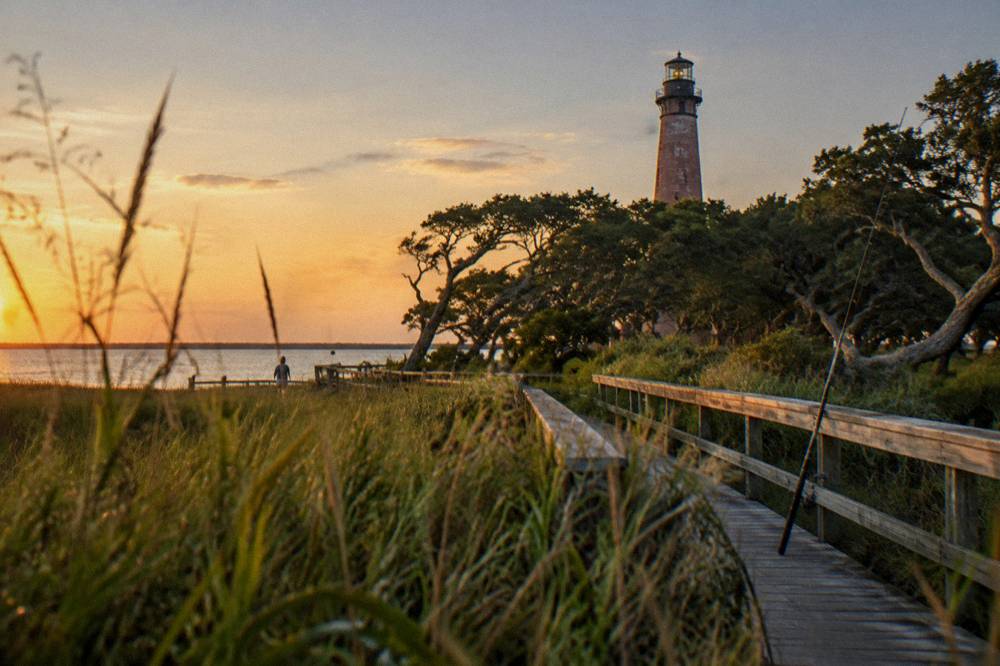
The lighthouse holds its own kind of fame among people who chase lighthouses. The Outer Banks chain of tall coastal towers, Currituck included, was built so that a ship at sea could always see at least one light, and Currituck Beach Lighthouse was deliberately left unpainted brick so its plain red surface would distinguish it from its painted neighbors by day. That is the sort of detail that travels.
The third famous thing is the drive itself. Ending a state highway on a beach where you shift into four-wheel drive and roll up the sand into a place with no streets is genuinely uncommon in the United States. The US Fish and Wildlife Service, describing access to the Currituck National Wildlife Refuge just north of town, states plainly that you follow NC-12 to its terminus in Corolla, where traffic is diverted onto the beach and four-wheel drive is required. That sentence alone draws a certain kind of traveler.
The table below puts the town's claims to fame side by side, with what each one actually involves.
| What Corolla is known for | What it is | Where it sits | How you experience it |
|---|---|---|---|
| Wild Colonial Spanish Mustangs | A free-roaming herd on 7,544 acres of mixed habitat | The 4WD beaches north of the paved road | Guided 4WD truck tour, or carefully on your own |
| Currituck Beach Lighthouse | An unpainted red-brick coastal tower in Corolla village | Corolla village | Climb it, view the sound and ocean from the top |
| The 4WD-only beach | Eleven miles of drivable sand with no paved road | From the end of NC-12 to the Virginia line | Your own 4WD vehicle, or a tour truck |
| The northern Outer Banks character | Only 25% of 3,150 platted lots developed | Corolla village and north | Slow drives, sound sunsets, few crowds |
If the horses are the reason you are reading this, the natural first move is the featured 2-hour open-air 4WD truck tour, which runs out of a meeting point at 1148 Ocean Trail in Corolla and takes up to 12 travelers into the 4WD area in search of the herd. You can also check availability on the operator's live listing once you have your dates, since summer seats fill first.
Where Do The Wild Horses Live Around Corolla?
The horses live on 7,544 acres of the northern Outer Banks, a strip running about eleven miles from the end of the paved road at Corolla to the Virginia state line. The habitat is roughly 70% private land and 30% public use, threaded with around 700 houses, and the beach itself is considered a public road, the only access for the communities of Carova, North Swan Beach and Swan Beach.
That geography explains almost everything about how Corolla works. The Fund's herd-management pages describe a landscape of maritime forest, dunes, swales and back-barrier marsh, and the horses use all of it, shifting with the seasons. In spring, biting flies push them out of the secluded areas and onto the open beach. In summer, heat does the same thing. The pattern repeats every year, which is why a guide who works the beach daily has a real advantage over a visitor scanning the dunes from a parking area.
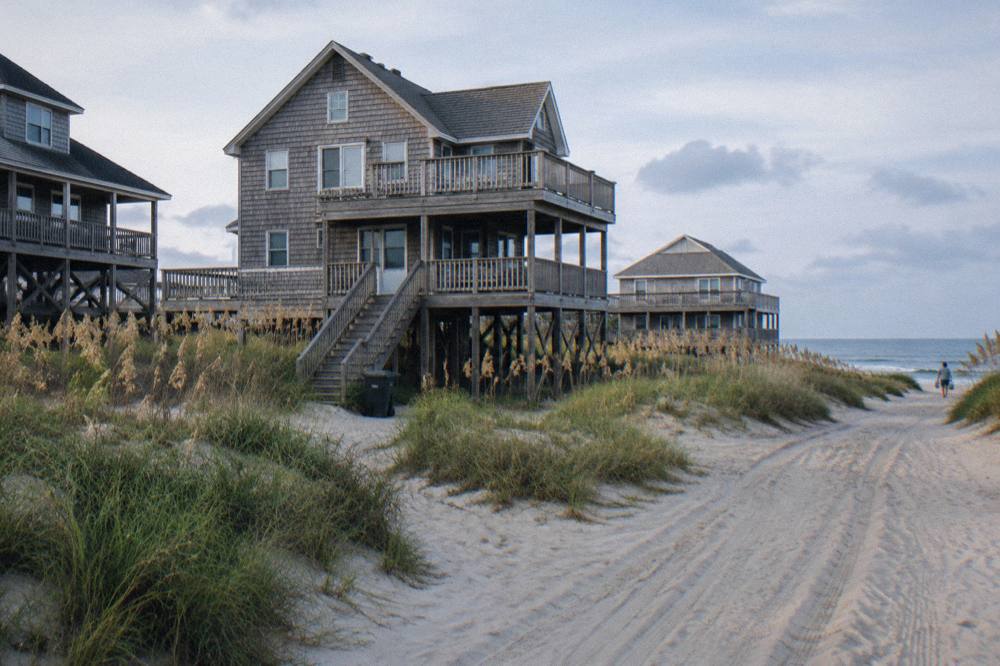
The presence of houses matters too. These are not horses tucked behind a fence in a reserve; they walk through driveways, nap in yards and graze along sand tracks with vacation rentals on both sides. The Currituck County wild horse ordinance exists precisely because of that closeness: it is illegal to come within 50 feet of a wild horse, and feeding, petting or riding one is unlawful. Our Corolla wild horse 50-foot rule and etiquette guide covers the practical side of keeping that distance.
Currituck County also regulates the tours themselves. The county's horse tour page states that tour vehicles must display a valid North Carolina license tag and county-issued identification, that tour operation west of the dune line is prohibited before 8 a.m. and after 8 p.m., that amplified sound is banned in that zone at all times, and that tour vehicles should stay at least 50 feet from the wild horses. A licensed truck is not a loophole around the rules; it is a business built inside them, which is part of why the county issues those yearly identifications at all.

For anyone weighing whether to drive that zone alone, the choice has real trade-offs, and the comparison in driving the Corolla 4x4 beach yourself versus a guided tour walks through them. The short version: your own 4WD gives freedom, a licensed guide gives local knowledge of where the herd actually is that week.
What Are Some Of The Best Things To Do On The Outer Banks?
In Corolla specifically, the best things to do are the wild horse tour, climbing the Currituck Beach Lighthouse, visiting the Corolla Wild Horse Fund museum, exploring the 4WD beaches, and the quiet stretch of village beach and sound front. Farther south on the Outer Banks, the famous additions are the Wright Brothers memorial at Kitty Hawk and the dunes at Jockey's Ridge. The horse tour remains the anchor for most itineraries.
Start with the lighthouse, because it is the easiest landmark to fold into a horse day. It stands in Corolla village, a short drive from the horse tour meeting point on Ocean Trail, and climbing it rewards you with the clearest picture available of the geography: the sound on one side, the ocean on the other, and the thin green line of the 4WD area stretching north. Our Currituck Beach Lighthouse and Whalehead with a horse tour guide lays out the pairing hour by hour.
Next comes the Fund's museum and gift shop at 1130E Corolla Village Road, open seasonally Tuesday through Saturday, closed Sunday and Monday. It is small and worth the stop, especially with children, and it explains the herd's history in a way the beach cannot. Nearby, the restored Whalehead club house, a historic hunt club property on the sound, adds another layer of the area's past. For readers planning around those hours, the Corolla Wild Horse Fund museum and Mustang Mornings guide has the details.
| Activity | Where | Rough time needed | Best paired with |
|---|---|---|---|
| Wild horse tour by 4WD truck | 1148 Ocean Trail, Corolla | About 2 hours plus check-in | Lighthouse climb the same morning |
| Currituck Beach Lighthouse | Corolla village | 1 to 2 hours | Whalehead, nearby |
| Fund museum and gift shop | 1130E Corolla Village Road | 30 to 60 minutes | A village morning |
| Driving or walking the 4WD beach | North of the NC-12 terminus | Half day | A horse tour, same zone |
| Sound-side sunset | Anywhere on the west-facing shore | An hour | Dinner in the village |
Beyond Corolla, the Outer Banks widens. Kitty Hawk and the Wright Brothers National Memorial sit about forty minutes south, and the giant dunes of Jockey's Ridge State Park in Nags Head make a good second-day trip. But most visitors who ask what the area is known for have the horses in mind already, and the 2-hour 4WD truck tour is the guided way to see the herd. The listing describes a friendly professional guide, transport by open-air 4-wheel drive truck with no ATVs, and a maximum of 12 travelers per departure. Other pages covering the same trip are gathered on Corolla North Carolina Horse Tours.
Can You See The Corolla Horses Without A Tour?
Yes, sometimes. The horses roam freely across the 4WD area, and visitors with their own four-wheel-drive vehicle do spot them from the sand, though no one can promise a sighting on any given day. A guided tour improves the odds because guides track the herd daily, and the county's rules on distance apply to everyone, tour passenger or not.
The honest framing matters here. The Fund manages animals that move across thousands of acres in response to insects, heat and wind, and it states plainly that getting too close stresses them and can separate foals from their mothers. Whether you go alone or ride in the open-air truck, the 50-foot rule is the law. Our longer treatment of the question, free ways to see the Corolla wild horses, covers the no-cost angles, and can you see the Corolla wild horses without a tour answers it from the other direction.
What the tour buys is not access, since the beach is a public road anyone with 4WD may drive. It buys search efficiency and interpretation. A guide who has been on that sand all week knows which swales the harem bands are using and what the stallion's behavior means, and the truck's height helps you see over the dune line. The listing for the 2-hour tour notes it is rated 4.8 across 2,871 reviews, from $65 per person.
Families should also read the fine print before booking anything: the tour cannot accommodate children under five years of age or 40 pounds, it is not wheelchair accessible, and it is not recommended for travelers with back problems, since the ride over sand is genuinely bumpy. The Corolla horse tours with kids guide covers the age and comfort questions in detail.
When Is The Best Time To Visit Corolla?
Late April through June and September through October are the best windows: warm water, thinner crowds and good horse activity, since foals arrive in spring and the herd moves onto the open beach in summer heat. Summer is peak season and the busiest on the sand. Winter is quiet, cold, and the least reliable for sightings, though some operators run enclosed-vehicle tours then.
The herd's own calendar drives much of this. The 2026 season opened with four healthy foals spotted by late April and closed with at least twelve, and spring is when the Fund's announcements start flowing. Summer concentrates both horses and people on the beach: the same heat that pushes the animals out of cover brings the crowds, and tour seats in July and August are the hardest to get. The deeper treatment is in best time of year to see wild horses Outer Banks and best time of day to see Corolla wild horses.
One wrinkle worth knowing: county rules prohibit horse tour operation west of the dune line before 8 a.m. and after 8 p.m., so there are no true dawn or night departures, whatever a summer sunset on the sound might suggest. Morning and late afternoon remain the comfortable hours, and morning tours pair neatly with an afternoon lighthouse climb.
| Season | Crowd level | Horse viewing notes | Trade-offs |
|---|---|---|---|
| Spring, April to June | Moderate | Foal season, horses pushed beachward by flies | Water still cool, some services opening |
| Summer, July to August | Peak | Horses on the open beach in heat, easiest to spot | Heat, insects, tour seats sell out |
| Fall, September to October | Moderate | Herd settling back into routine, mild days | Water warm, evenings cooling |
| Winter, November to March | Quiet | Least predictable sightings | Cold wind, some operators closed or enclosed-vehicle only |
How Do You Plan A Corolla Trip Around The Horses?
Book the horse tour first, since summer departures fill before anything else in town, then build the lighthouse, museum and beach time around it. Stay in Corolla village or the 4WD area depending on whether you want walkability or solitude, pack for sun and sand, and keep the 50-foot rule in mind for any independent exploring. The tour's 2-hour length leaves most of a day free.
The order of operations is the part people get wrong. A common mistake is booking lodging and planning days, then discovering the tour times that fit are gone. The featured 4WD truck tour takes up to 12 travelers per departure and meets at 1148 Ocean Trail, which shares a parking lot with the Beer Garden in Corolla, a fact that makes the check-in easy to find. Once your seat is confirmed, everything else is flexible.
Where to stay splits cleanly. Corolla village puts the lighthouse, museum and restaurants within a short drive and suits families who want amenities; the 4WD area north of the pavement trades convenience for a chance of horses walking past the rental itself. The trade-offs are laid out in where to stay in Corolla for wild horse tours and, for the broader picture, Corolla versus Duck for a wild horse trip.
| Planning item | What to do | Why it matters |
|---|---|---|
| Book the horse tour | Reserve first, before lodging if dates are tight | 12 seats per departure, summer fills fastest |
| Choose lodging | Corolla village for amenities, 4WD area for solitude | The two areas feel like different trips |
| Pack for the tour | Sun protection, water, layers for wind | Open-air truck, no shade on the beach |
| Check the rules | Read up on the 50-foot ordinance | Applies to everyone, punishable by law |
| Add the landmarks | Lighthouse, Whalehead, Fund museum | All sit within a short drive of each other |
Packing deserves one honest paragraph. The truck is open-air, the sand reflects sun from below, and wind on the beach is a constant even on warm days. The what to wear and bring on a Corolla 4x4 horse tour guide covers the list item by item, including why a strap for glasses beats a hat you will spend two hours holding.
Common Questions About Corolla NC
What is Corolla, NC famous for?
Corolla is famous for its wild Colonial Spanish Mustangs, the unpainted red-brick Currituck Beach Lighthouse, and the 4WD-only beaches that begin where NC-12 ends. The state adopted the Colonial Spanish Mustang as North Carolina's official horse in 2010.
What Are Some of the Best Things to Do on the Outer Banks?
In Corolla, the list is the wild horse tour, the Currituck Beach Lighthouse climb, the Corolla Wild Horse Fund museum, Whalehead, and the 4WD beach itself. Farther south, the Wright Brothers National Memorial in Kitty Hawk and Jockey's Ridge in Nags Head are the marquee stops.
Can you see the wild horses without taking a tour?
Sometimes, yes. The horses roam freely and visitors in their own 4WD vehicles do encounter them, but sightings cannot be promised on any given day. A guided tour improves the odds because guides track the herd daily across the 7,544-acre habitat.
How close can you get to the Corolla wild horses?
Currituck County's wild horse ordinance makes it illegal to come within 50 feet of a wild horse, and feeding, petting or riding one is unlawful. If a horse approaches you on the beach, the Corolla Wild Horse Fund states it is your responsibility to keep the 50-foot distance.
How long does a Corolla horse tour take?
The featured tour runs about 2 hours aboard an open-air 4-wheel drive truck carrying up to 12 travelers. Food, drinks and hotel pickup are not included, and the meeting point is 1148 Ocean Trail in Corolla.
Is Corolla busy in summer?
Yes, July and August are peak season, and tour seats are hardest to get then. Late spring and early fall offer a better balance of weather, thinner crowds and reliable horse activity.