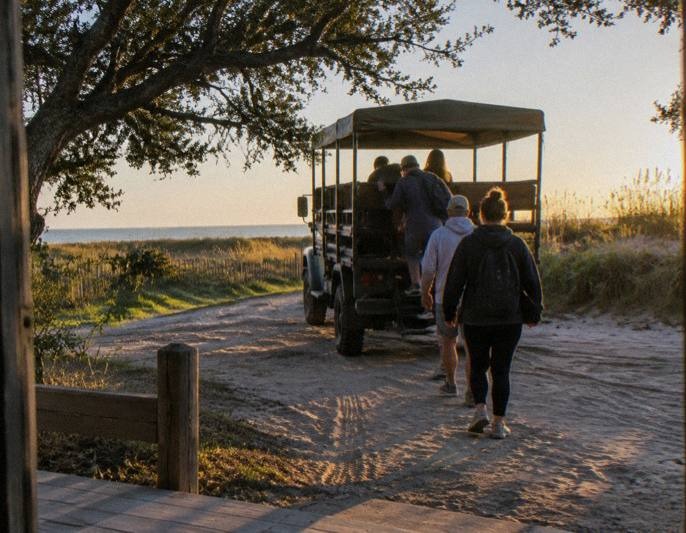
Outer Banks Three Day Itinerary With A Wild Horse Tour
Three days is enough to see the northern Outer Banks well if the wild horse tour anchors the middle of the trip and everything else is planned around it.
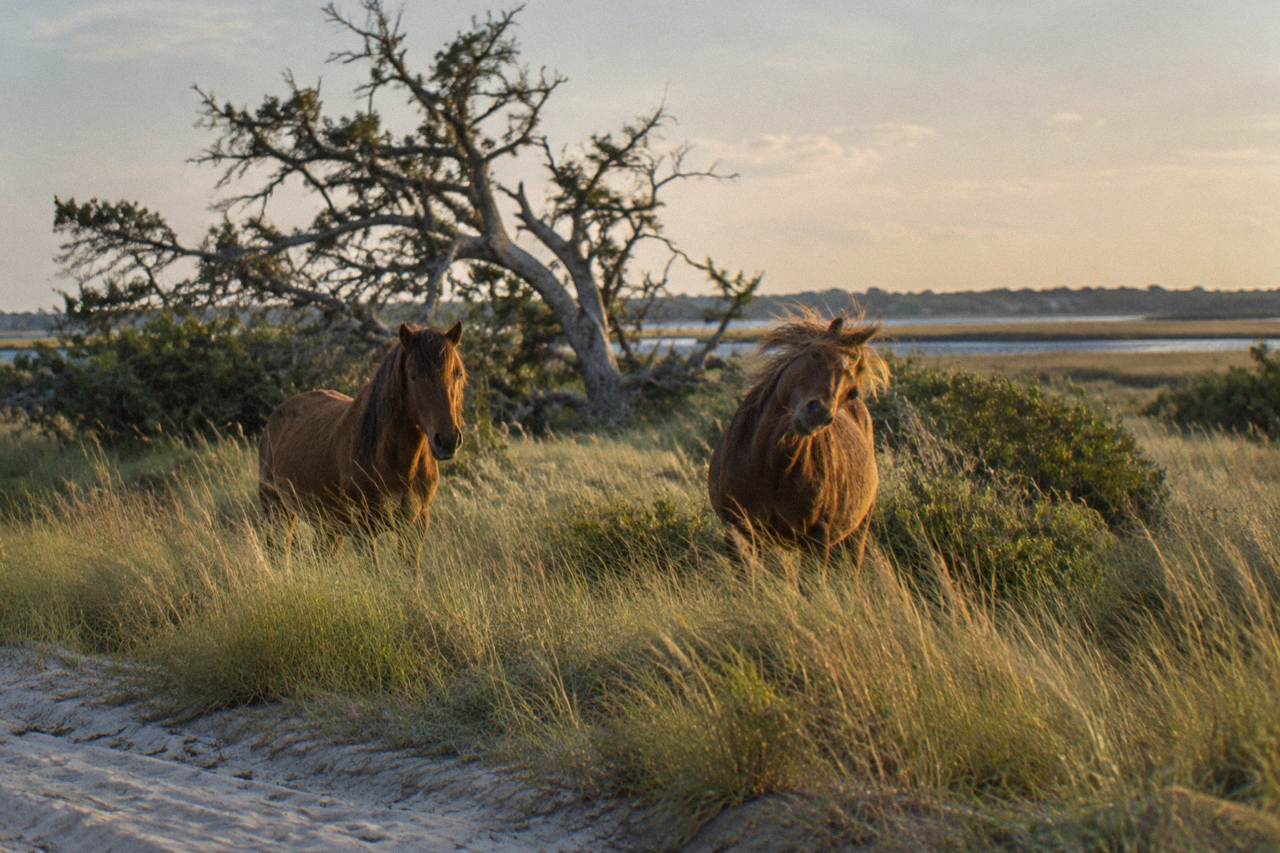
Short answer
A good three-day plan gives Corolla village and the lighthouse day one, the 2-hour open-air 4WD wild horse tour on day two, and the 4x4 beach plus a relaxed final morning on day three. The featured tour runs from $65 per person, is rated 4.8 across 2,871 reviews, and lasts about two hours.
Three days in the northern Outer Banks is a realistic amount of time, and it is enough to do the one thing most visitors come for: a guided trip into the 4x4 beaches where the wild horses live. The 2-hour Outer Banks Wild Horse Tour by 4WD Truck is the anchor this itinerary is built around, rated 4.8 across 2,871 reviews and listed from $65 per person, with a meeting point at 1148 Ocean Trail in Corolla. Everything else in the plan, the lighthouse, the village, the beach itself, is arranged so that the tour sits at the center of the trip rather than being squeezed in at the end. For travelers who want more animal encounters beyond the horses, the kayaking and wildlife add-ons near Corolla guide lays out how to build a full nature day around the tour.
The reason the tour belongs in the middle day is simple. The horses roam roughly 7,544 acres of the northern beaches, and a guided 4WD truck is the practical way to cover that ground in two hours without needing your own four-wheel-drive vehicle, air-down knowledge, or a recovery plan when the sand softens. Readers who want the full self-drive comparison can read our piece on driving the Corolla 4x4 beach yourself; this itinerary takes the guided route and plans around it.
It is worth saying what this plan is not. It is not a museum-hopping schedule or a drive-the-whole-banks marathon. Trying to compress Corolla, Duck, Manteo and Hatteras into seventy-two hours means hours of driving on a two-lane road with summer traffic, and the horses get treated as a checkbox. Anchoring on the northern beaches keeps every stop within a short drive of your lodging and leaves room for the unplanned parts of a barrier island trip, the long lunch, the extra hour on the sand, the sunset you did not schedule. If you have more than three days, stretch day three rather than adding distance.
What Is A Good 3-Day Itinerary For The Outer Banks?
A good three-day plan gives day one to Corolla village, the Currituck Beach Lighthouse and the northern beaches, day two to the 2-hour wild horse tour plus the 4x4 area, and day three to a relaxed morning, the museum or a last beach walk before the drive home. The featured tour anchors day two because it lasts about two hours, leaves the rest of that day free, and removes the need to drive the sand yourself.
The shape matters more than any single stop. Day one is arrival and orientation: get to Corolla, walk the village, climb the lighthouse if it is open, and get an early night because the horse tour rewards a morning start. Day two is the trip's engine, the guided ride up the beach behind the dune line where the herd lives, followed by an afternoon that can be as lazy or as full as you like. Day three is the buffer: a slow morning, the Corolla Wild Horse Fund museum and gift shop if you missed it, and a departure that avoids the worst of the outbound traffic.
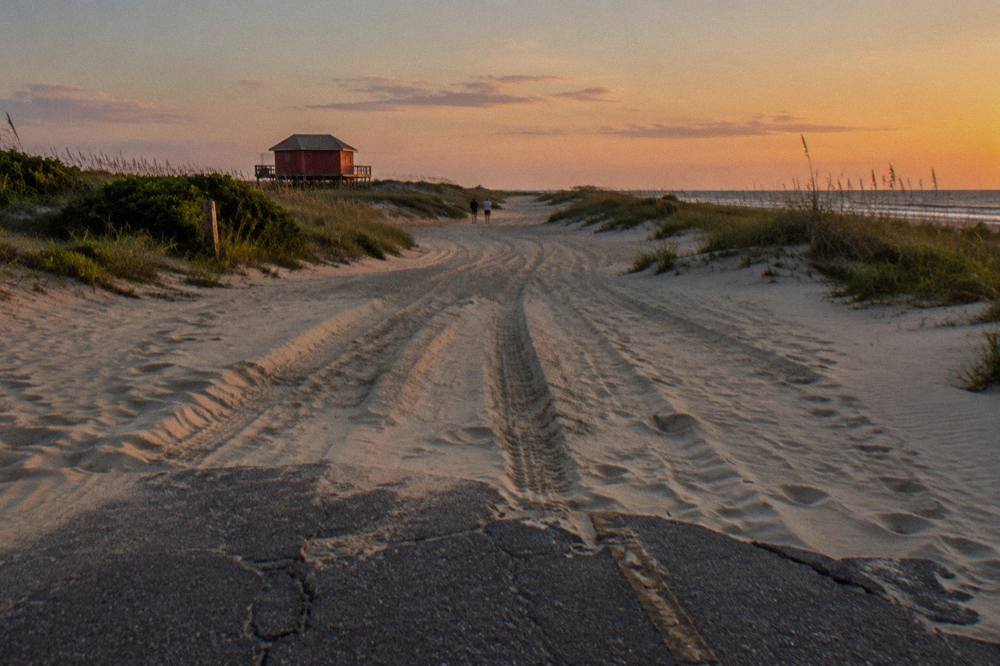
Here is the plan at a glance, with the tour fixed on day two:
| Day | Morning | Afternoon | Evening |
|---|---|---|---|
| Day 1 | Arrive, settle in, walk Corolla village | Currituck Beach Lighthouse and the Whalehead area | Early dinner, early night |
| Day 2 | The 2-hour 4WD wild horse tour | Beach time, the 4x4 beach on foot, or the museum | Casual dinner in Corolla |
| Day 3 | Slow morning, museum and gift shop if missed | Final beach walk, then depart | Drive home |
Two notes on that skeleton. First, the tour meeting point at 1148 Ocean Trail shares a parking lot with the Beer Garden in Corolla, so day-two logistics are genuinely easy: one parking spot, one departure, no vehicle of your own needed on the sand. Second, the tour caps groups at 12 travelers per truck, which is why day two can also absorb a second activity without the whole day being consumed.
A third note on travel order. If you are driving in from the north or the west, the arrival drive itself can eat half of day one, so treat the day-one afternoon list as a menu rather than a mandate. The village walk and the museum are the two stops that cost the least energy after a long drive, and the lighthouse can slide to day three's morning without breaking anything. The only immovable piece of the whole plan is the tour reservation on day two, and everything else can shuffle around it.
How Should You Plan Day One Around Corolla Village?
Day one should stay south of the 4x4 area entirely: arrive, check in, walk Corolla village, and spend the afternoon at the Currituck Beach Lighthouse and the Whalehead Club grounds, saving the northern beaches for the guided tour on day two. Nothing on day one requires four-wheel drive.
Corolla village is small and walkable, and it holds most of what a first-time visitor wants on an arrival day. The Corolla Wild Horse Fund's museum and gift shop sits at 1130E Corolla Village Road, open seasonally Tuesday through Saturday from 10 a.m. to 4 p.m., closed Sunday and Monday. It is a good primer for the tour the next morning, and the Fund's own pages carry the history of the herd and the management work behind it. If the timing does not work on day one, slot it into day three; the museum also functions as a weather backup because it is indoors.
The lighthouse and Whalehead grounds sit minutes from the village. Our companion guide to the lighthouse and Whalehead paired with a horse tour covers how the two stops combine with the tour into a single full day, which is the compressed version of this itinerary for anyone with only two days instead of three. Check hours and access details on the day; opening hours for those sites vary by season, so check before you go.
Day one evening should end early, and this is advice, not decoration. Tour departure times vary seasonally across all Corolla operators, and morning light, cooler sand and lighter vehicle traffic all favor the earliest slot you can book. A quiet first night is what makes a 9 a.m. truck departure painless rather than a chore.
There is also a shopping errand worth folding into day one: groceries, sunscreen, water and any layers you forgot. Corolla has a limited retail footprint, and prices run higher than on the mainland, so a mainland stop on the drive in saves both money and a morning errand on tour day. Since the tour includes no food or drinks, having breakfast supplies and filled water bottles ready the night before removes the one avoidable scramble from day two.
Where Does The Wild Horse Tour Fit On Day Two?
Day two belongs to the tour: book the earliest departure of the 2-hour open-air 4WD truck tour that fits your group, arrive at 1148 Ocean Trail ahead of the listed check-in, and plan nothing else before midday. The ride covers the beach north of the paved road, where the herd roams, and returns you to Corolla with the whole afternoon left.
The featured tour is the practical centerpiece of this itinerary because of what it removes. The beach beyond the end of NC-12 is reachable only by four-wheel drive; the U.S. Fish and Wildlife Service states plainly that at the route's terminus "traffic is then diverted to the beach (four-wheel drive is required)" for anyone continuing toward the refuge tracts and Carova. A guided truck means you get that terrain, the surf line, the dunes and the horses' range, without renting a 4x4 or learning beach driving on the spot.
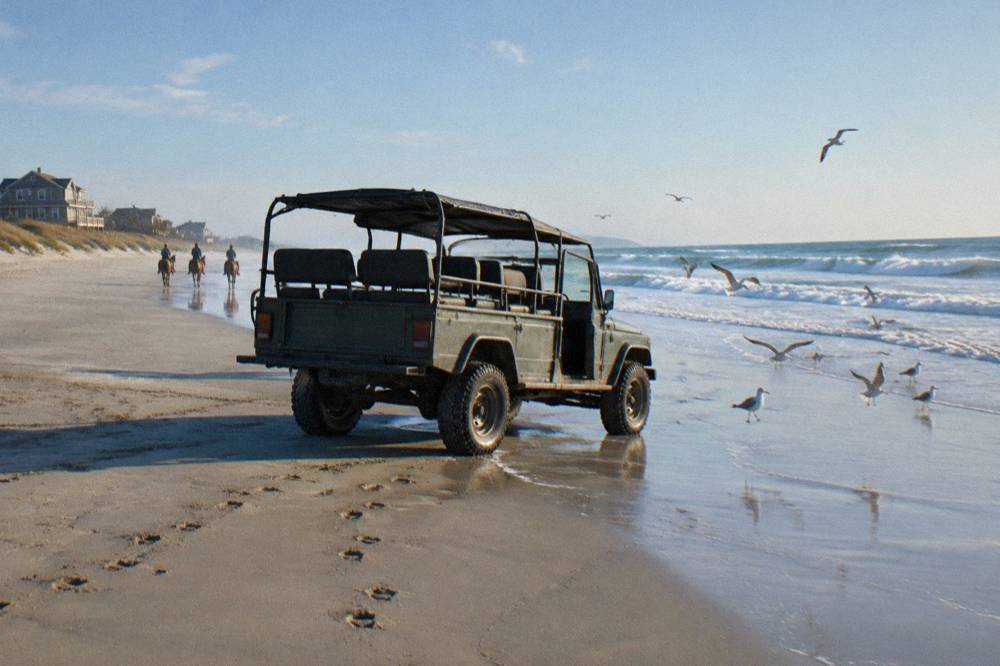
What the listing tells you, in plain terms:
| Detail | What the listing shows |
|---|---|
| Length | About 2 hours |
| Rating | 4.8 across 2,871 reviews |
| Price | From $65 per person |
| Vehicle | Open-air 4-wheel drive truck, no ATVs |
| Group size | Maximum 12 travelers |
| Meeting point | 1148 Ocean Trail, Corolla |
| Not included | Food and drinks, hotel pickup and drop-off |
| Age minimum | No children under five years or 40 pounds |
The tour is run with a professional guide, and the open-air truck format is the standard Corolla setup for the April-through-November stretch; at least one local operator runs an enclosed SUV version only in the winter months, per that operator's own page. The featured tour's listing notes moderate physical fitness is expected and that it is not recommended for travelers with back problems, since the ride crosses soft sand and the truck is open-air. Our piece on whether the horse tour is bumpy covers that in more depth, including accessibility limits.
After the tour, day two is yours. The afternoon options that pair naturally are a long beach walk on the public sand south of the 4x4 entrance, lunch in Corolla village, or a second pass through the museum if day one ran out of time. Riders who catch the horse bug often ask about seeing the herd again without a truck; our guide to seeing the Corolla wild horses without a tour explains when and where that is realistic, and when it is not.
One rule to carry onto any beach in the area, tour or not: Currituck County's wild horse ordinance makes it illegal to come within 50 feet of a wild horse, and feeding, riding or petting them is unlawful as well. The Fund states this plainly on its ordinance page, and tour trucks are held to the same 50-foot distance by county rules.
A practical note on the day's rhythm: because the truck is open-air and the ride crosses sun, wind and spray, most travelers are ready for shade and a real meal when it ends. Plan lunch as the first stop after the tour rather than an afterthought, then let the afternoon fill itself. Families with children under the tour's five-year, 40-pound minimum should split the day: one adult takes the tour while the other stays on the public beach, or use the museum and village as the alternate program. The itinerary still works with that split because day two has slack by design.
What Should You Do On Day Three After The Tour?
Day three should be deliberately light: a slow breakfast, the museum and gift shop if you skipped it, one last beach walk, and a departure timed before checkout congestion builds. Resist adding a second paid activity; the itinerary works because the final day absorbs delays rather than creating them.
The logic is defensive. Weather on the Outer Banks can shift a plan in an afternoon, and if your day-two tour is weather-affected, operators hold the cancellation and rebooking terms; day three is the slack that lets a moved tour still happen. Even in good weather, a departure day that starts calm is worth more than one more attraction. The wider set of guides lives on Corolla North Carolina Horse Tours.
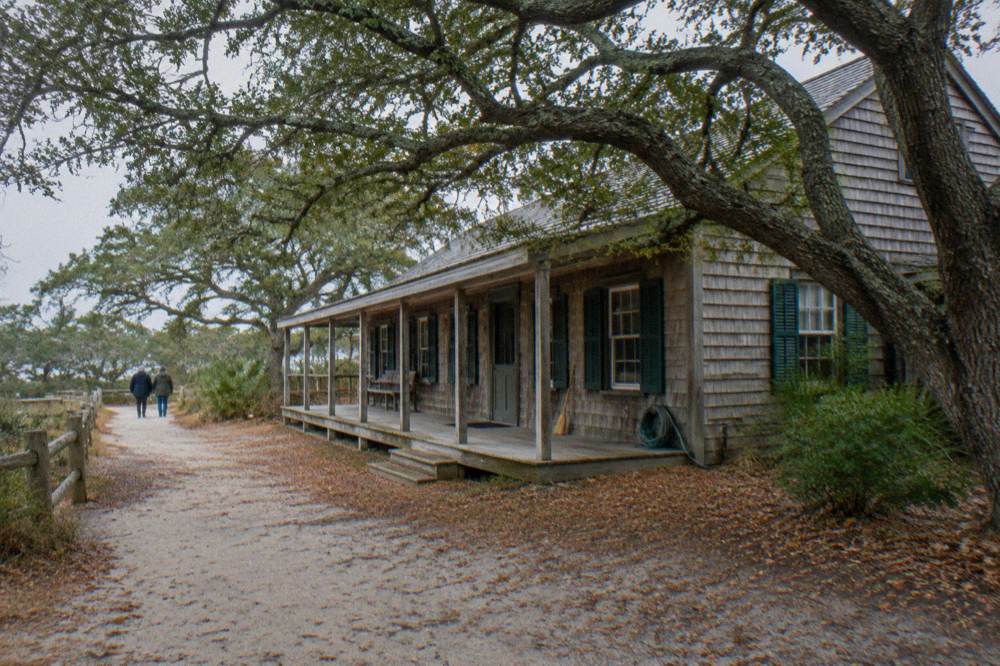
If day three is wide open and you want one more structured stop, the museum and the Fund's mainland presence are the natural choices. The Fund's rescue farm in Grandy runs its public Mustang Mornings program on summer Wednesdays; in 2026 the program ran May 27 through August 26, 9 a.m. to 1 p.m., with a suggested $10 per vehicle donation at the gate. That date range has passed for the 2026 season, so treat Mustang Mornings as a next-season possibility and check the Fund's calendar page before planning around it. The program also included a free screening of a 32-minute documentary about the herd with a question-and-answer session, which is worth knowing about if a Wednesday ever falls inside a future trip of yours.
For travelers driving home southbound, leaving mid-morning rather than mid-afternoon generally makes for an easier run off the banks. That is folk wisdom rather than a set figure, so weigh it against your own route and stops.
How Do You Time The Tour Around Weather And Seasons?
Book the earliest tour slot available and keep day two afternoon flexible, because heat, insects and vehicle traffic all push the horses' behavior around during the day. Seasonally, spring and fall offer cooler sand and thinner crowds, while summer offers the most tour departures but the most competition for seats.
The Corolla Wild Horse Fund's herd reporting gives a useful insight here: the horses move in response to conditions that repeat every summer, with biting insects in spring and heat later in the season pushing them out of secluded cover and toward the open beach and breeze. That is behavior the guides track, and it is one reason a professional tour outperforms a self-drive hunt on a hot afternoon: the operator spends every day reading where the herd has shifted. Our longer treatment is in the best time of day to see Corolla wild horses and the best time of year.
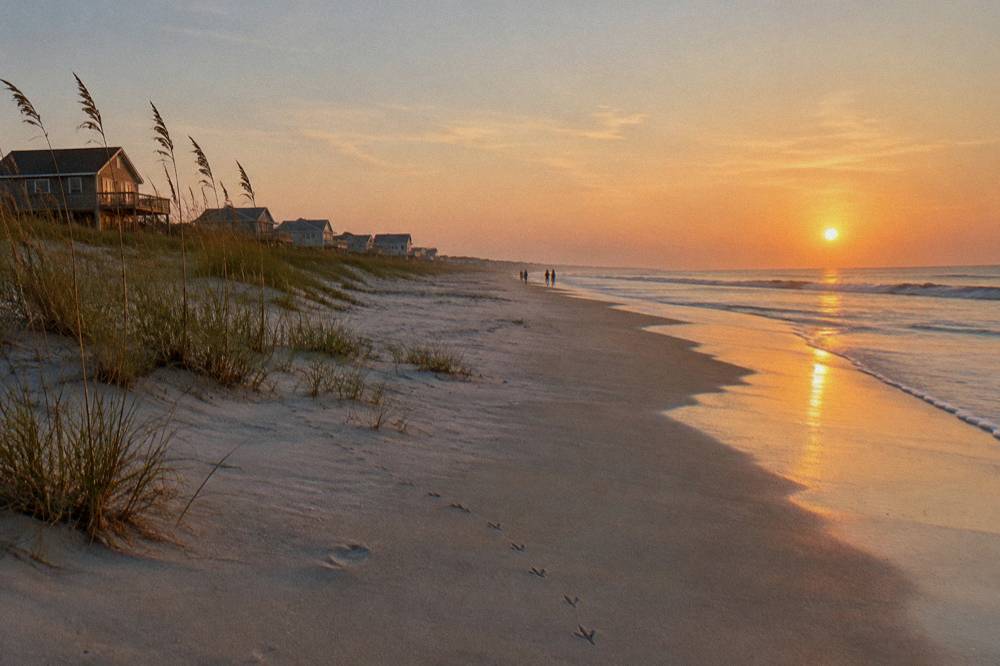
A seasonal sketch for itinerary planning:
| Season | Tour considerations | Itinerary notes |
|---|---|---|
| Spring | Cooler sand, insect activity moves horses toward the beach | Lighter lodging rates, book any tour slot |
| Summer | Most departures, most travelers, heat drives horses to breeze | Book days ahead, tour early morning |
| Fall | Cooling weather, thinner crowds after Labor Day | Best all-around window for this plan |
| Winter | Fewer open-air departures locally | Verify seasonal operation before planning |
County rules shape the tour day too: commercial tour operation west of the dune line in the 4WD beach area is prohibited before 8 a.m. and after 8 p.m., per Currituck County's horse tour rules. Your departure slot will sit inside that window, which in practice means morning and late-afternoon options rather than true dawn rides. For this itinerary the morning slot is the one to take anyway, since it preserves the afternoon and keeps the tour ahead of the day's heat.
Wind and temperature also change what the ride feels like even when the calendar says summer. A breezy morning in May can feel cool on a moving open truck, and a calm August noon can feel relentless. The packing section below covers the layering answer; the timing answer is simply to prefer the earliest legal departure and to keep the afternoon unbooked.
What Should You Pack For Three Days In Corolla?
Pack for sun, sand and wind above all: reef-safe sunscreen, hats, sunglasses, layers for an open-air truck ride, water, and closed-toe shoes you do not mind sandy. The tour runs open-air in every season it operates, so wind on a moving truck is a constant even when the parking lot feels warm.
The truck ride is the packing pivot. Two hours in open air on a beach means sun from above and reflected off sand and water, plus steady wind. Layers matter more than people expect, and a strap or pocket for hats and sunglasses has saved more than one piece of gear. Our full checklist lives in what to wear and bring on a Corolla 4x4 horse tour, which doubles as the packing core for this itinerary.
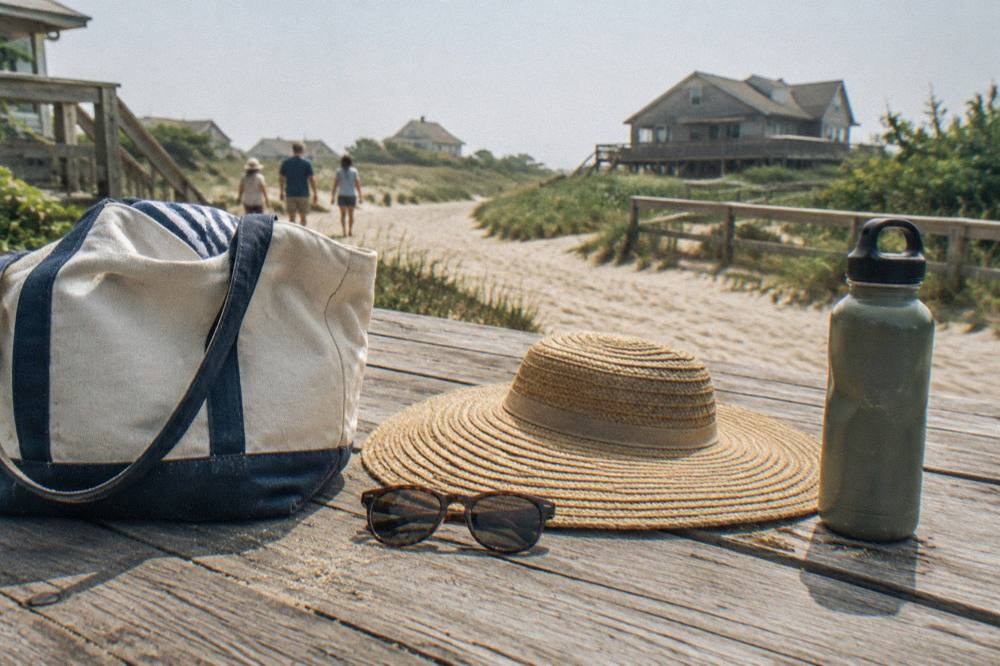
| Item | Day one | Tour day | Day three |
|---|---|---|---|
| Sunscreen and lip balm | Yes | Essential, reapply | Yes |
| Hat with a strap | Optional | Essential | Optional |
| Layers or windbreaker | Evening walk | Essential on the truck | Morning walk |
| Water bottles | Yes | Bring your own, none included | Yes |
| Sand-tolerant shoes | Flip-flops fine | Closed-toe best | Flip-flops fine |
| Binoculars | Optional | Nice to have | Optional |
Note the one supply gap the listing is explicit about: food and drinks are not included on the tour, and there is no hotel pickup, so day two starts with whatever you bring to the meeting point. A small day bag with water, sunscreen for a second application, and a wind layer is the standard kit; leave anything you would mourn at the lodging, since an open truck and blowing sand are hard on loose electronics and paper.
Cameras and phones deserve a sentence of their own. The truck stops when the guide finds horses, but the ride between stops is genuinely bouncy, so a neck strap or a zipped pocket beats a hand-held phone every time. Sand and salt spray are the other enemies; a lens cloth lives in the bag for the whole trip, not just tour day.
Where Should You Stay For This Itinerary?
Stay in Corolla itself if the tour and the village are the trip's core, since the meeting point is on Ocean Trail and every day-two stop is minutes away; Duck or points south work but add driving each day, and staying inside the 4x4 area north of the pavement is only practical with a true 4WD vehicle.
Corolla accommodations put you within a short drive of the tour departure, the lighthouse, the village and the public beach access, which is exactly what a three-day plan wants. Our where to stay in Corolla guide covers the trade-offs by area, and the Corolla versus Duck comparison is worth reading before booking if you are weighing the two. Houses inside the 4x4 beaches around Carova are a different proposition: the beach there is the only road, the Fund notes it is the sole access for residents and their guests, and the county asks drivers to use 4WD at the ramp and keep a slow, steady speed.
The three-day format strengthens the case for Corolla specifically. With only two usable days around arrival and departure, every half hour of commuting matters; a stay twenty or thirty minutes south means an earlier alarm on tour day and less appetite for the evening village walk that makes day one pleasant. Travelers who want the Duck restaurant scene can still visit it as an afternoon or dinner trip from Corolla and keep the itinerary's center of gravity where the horses are.

Common Questions About An Outer Banks Three Day Itinerary
What is a good 3-day itinerary for the Outer Banks?
Day one: arrive, walk Corolla village, visit the Currituck Beach Lighthouse area. Day two: take the 2-hour open-air 4WD wild horse tour in the morning and keep the afternoon loose for the beach or the museum. Day three: slow morning, the Corolla Wild Horse Fund museum and gift shop if you missed it, and a mid-morning departure.
Which day should I book the wild horse tour on?
Book it for day two of a three-day trip. That placement gives you a full day to arrive and settle in beforehand, and a full spare day afterward in case weather or availability forces a change. Choose the earliest departure slot that fits your group.
How much does the featured tour cost?
The 2-hour Outer Banks Wild Horse Tour by 4WD Truck is listed from $65 per person, rated 4.8 across 2,871 reviews. The booking page shows the live price and the current departure times.
Do I need my own 4WD vehicle for this itinerary?
No. The featured tour is taken in the operator's open-air 4-wheel drive truck with a guide, meeting at 1148 Ocean Trail in Corolla. Everything else in this plan, the village, the lighthouse grounds, the public beach, is reachable on paved roads.
How far in advance should I book the tour?
Local operators say reservations are strongly recommended and tours fill quickly in season, though none publish a specific lead time in days. For a summer trip, booking when your lodging is confirmed is the safe play; shoulder-season dates are usually easier.
Can I see the horses outside the tour too?
Sometimes, from a distance and legally: the county ordinance prohibits coming within 50 feet of a wild horse anywhere. Horses do appear near the village and along the beach at times, but sightings are never promised, which is why most visitors put a guided tour at the center of the plan.