Where Is The Best Place To See Wild Horses In Corolla?
The honest answer to where the Corolla wild horses actually are: the 4x4 beach north of the paved road, why locations shift with the seasons, and how a guided tour fits in.
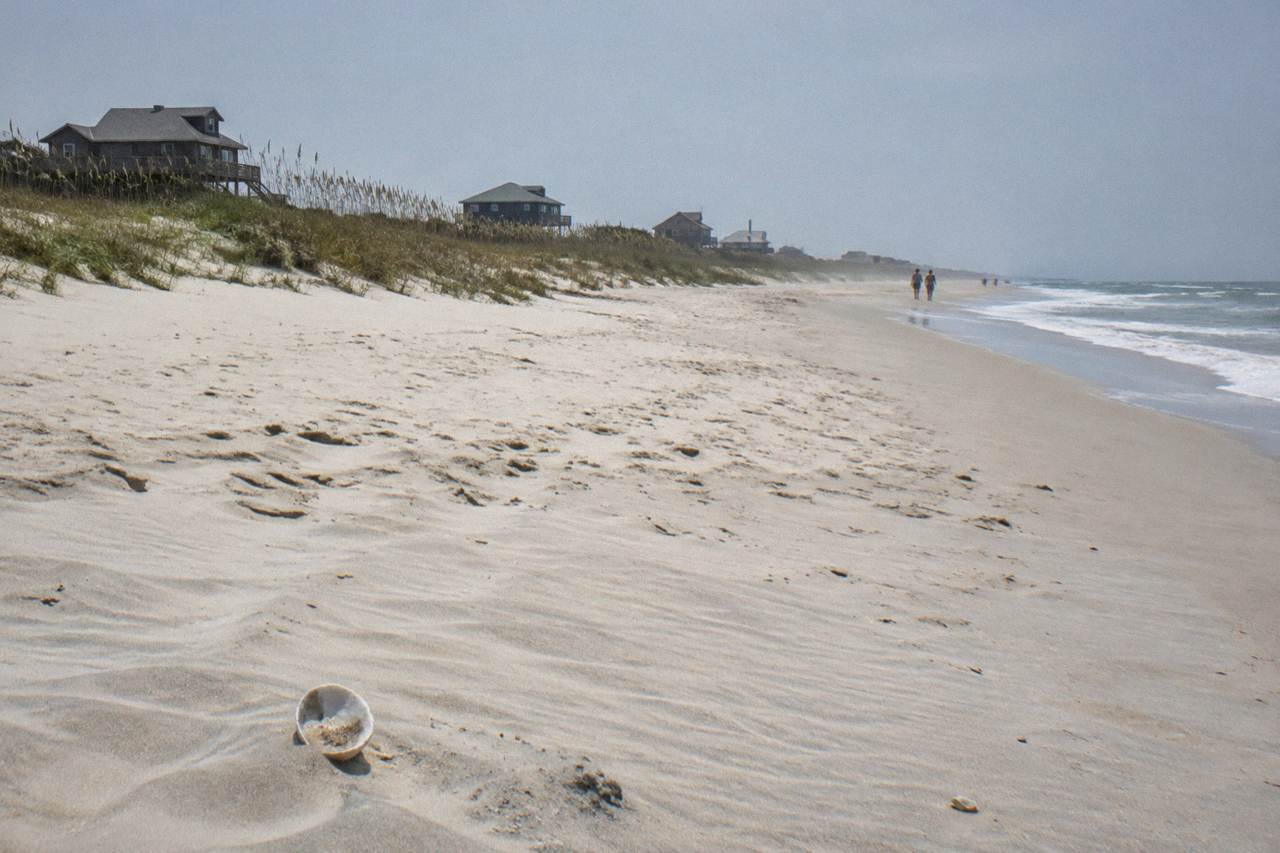
The short version of the answer is inconvenient but true: the best place to see wild horses in Corolla is the off-road beach north of where the paved road ends, and there is no fixed address beyond that. The herd the Corolla Wild Horse Fund manages roams 7,544 acres of mixed habitat on the northern Currituck Outer Banks, moving between maritime forest, swales, dune lines and the hard-packed sand at the ocean's edge according to insects, heat, wind and forage, not according to anyone's schedule. The paved, two-wheel-drive part of Corolla village sits south of that range, so a visitor standing at the Currituck Beach Lighthouse is generally standing where the horses no longer go. Everything useful about "where" flows from that single geographic fact. Since that range sits past the end of the pavement, the question becomes how to get there, and our guide to driving the Outer Banks 4X4 beach covers exactly that.
Which Spots Put You Closest To The Herd?
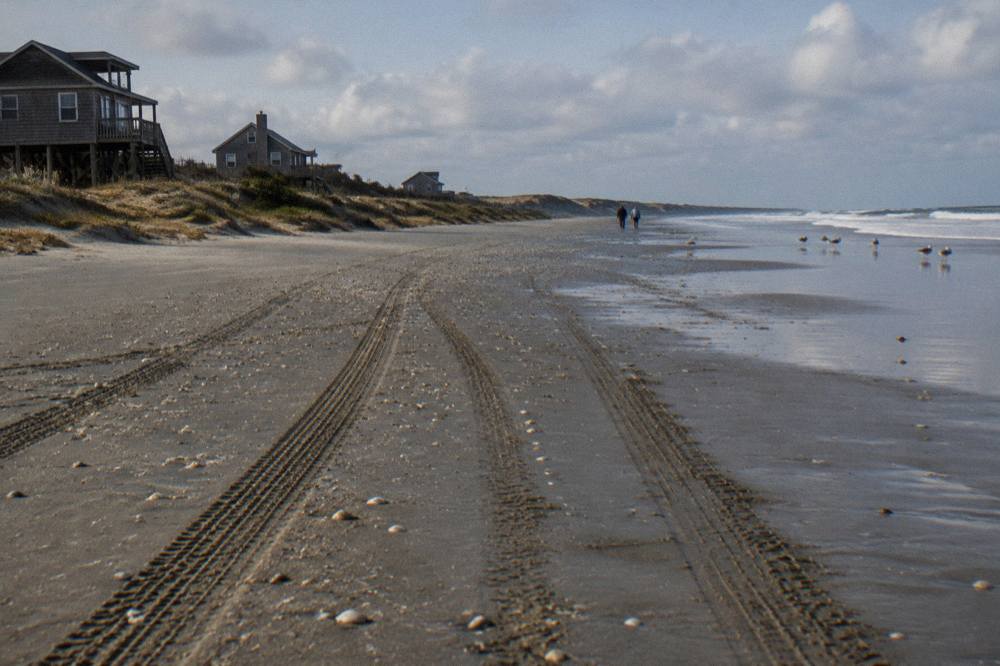
The best place to see Corolla's wild horses is the four-wheel-drive beach running from the end of NC-12 to the Virginia state line, roughly eleven miles of sand and backing habitat where the herd lives year-round. The beach is a public road, but reaching it takes a true 4x4 over soft sand, and a guided 4WD tour is the most practical way to cover it. The horses are just one reason people come here, and our guide to what else Corolla is famous for covers the lighthouse, the beaches, and more.
That answer deserves unpacking, because half the confusion visitors bring to Corolla comes from assuming the horses behave like an exhibit. They do not. The Fund describes managing wild horses across 7,544 acres that include roughly 700 houses and thousands of people and vehicles, a mix of 70 percent private land and 30 percent public use. The animals are identified by coat color, markings and home territory rather than by tags, and they shift their positions constantly.
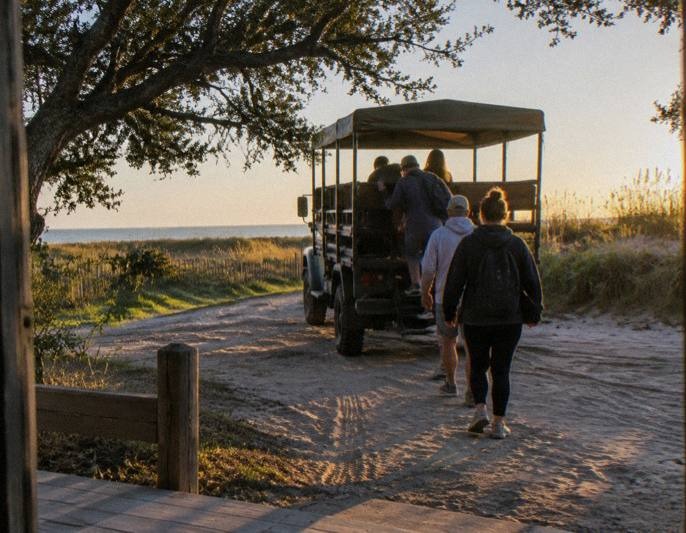
What this means in practice is that "the best place" is really "the right vehicle on the right stretch of beach at the right time." The guided 4WD truck tour exists precisely to solve that problem: it carries visitors from the meeting point at 1148 Ocean Trail onto the sand and up into the 4x4 area with a guide who spends every working day learning where the bands are. It is one of the few ways to cover that ground without bringing your own four-wheel-drive vehicle, and it is the Corolla horse tour sold on a third-party booking platform, with a live calendar and a public review count; the direct operators take bookings on their own websites and by phone.
A note on expectations before going further. Nothing in this article, and nothing any honest operator will tell you, guarantees a sighting. The horses are wild, the acreage is large, and locations change daily. What a good plan does is stack the odds: right area, right season, right time of day, right transport.
Where Do The Corolla Wild Horses Actually Roam?
The herd's range runs from the northern edge of the paved road in Corolla to a fence at the Virginia state line, taking in the off-road beach, the dunes and the wooded swales behind them. This zone is commonly called the 4x4 area or the north beach, and it includes the communities of Carova, North Swan Beach and Swan Beach. The beach itself functions as a public road.
The Fund's history page explains how this arrangement came to be. Between 1985, when the road between Duck and Corolla was paved, and 1989, eleven horses were struck and killed on Highway 12. The horses that frequented the village were moved north of the paved road, and a fence now separates the developed tourist core from the wild range. That fence is why a visitor can walk the village sidewalks, tour the lighthouse and browse the shops for days without a single wild horse appearing: the animals are, by design, on the other side of it.
The Fund's herd management page, which covers the acreage and management methods in detail, is the primary source for the size and character of the range: the Fund's herd management overview. Two facts from it shape any visit. First, the range is a working landscape of private homes and platted lots, not a park, so much of what lies behind the dune line is simply not public. Second, the beach is the one corridor everyone can travel, and it is the corridor the horses use too, especially in summer.
That points to the practical geography a visitor needs:
| Area | Where it is | What it means for horse viewing |
|---|---|---|
| Corolla village, south of the fence | Paved, walkable, where the lighthouse and shops are | Outside the herd's range; sightings here are rare and unexpected |
| The 4x4 beach, north of NC-12's end | Public road on the sand, roughly eleven miles to the state line | The heart of the range; accessible only by true four-wheel drive |
| Dune lines and maritime forest behind the beach | Mostly private land within the 7,544 acres | Where horses shelter from insects and heat; not publicly accessible |
| Carova and the Swan Beach communities | Off-road hamlets within the range | Horses cross roads and yards here; residents coexist with them daily |
The guided Corolla horse tour covers exactly the territory in that second row. If you would rather plan around other people's fresh reports of horse locations, the site's guide to finding the Corolla wild horses today collects the tools worth checking the morning you go.
Can You See The Horses Without Going Onto The 4x4 Beach?
Occasionally, yes, but it is not something to plan around. Horses sometimes appear near the fence line at the paved road's end or along the first stretch of off-road sand, and residents of Carova see them in yards and roadsides routinely. A visitor relying on luck from the paved side may wait days for a two-minute glimpse. The dependable approach is to get onto the range itself, by your own 4x4 or with a tour.
Free, self-guided viewing is possible too, and there is a whole guide to those options, patience replaces horsepower in the trade. What the free approach cannot supply is distance. The range is long, the horses move, and the odds of finding a band rise sharply with every mile covered. That is the quiet argument for the open-air 4WD truck tour, which spends its two hours moving through the heart of the range rather than waiting at its southern edge.
Worth knowing too: even visitors who drive their own 4x4 often take a tour on a different day, precisely because a guide who was on the beach that morning knows which end of it the bands favored. Two hours in an open truck with a running commentary on herd behavior doubles as a scouting trip for your own driving.
Why The Season Changes Where The Horses Are
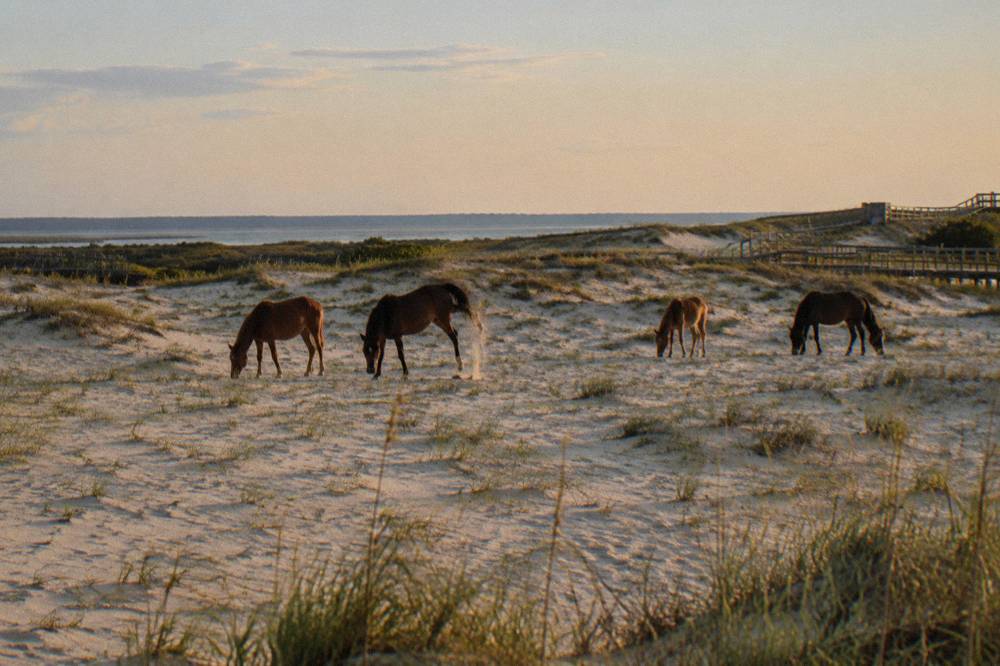
In warm months, biting insects and heat push the horses out of the shaded interior and onto the open beach, where wind and flies are fewer; in cooler months they spread back into the forest and swales. This is the single most useful fact for choosing where to look, and it repeats every year. It also explains why summer visitors report so many beach sightings near the southern fence.
The pattern has been documented repeatedly. In April 2026, local reporting noted that biting flies and shifting winds had pushed horses out of secluded areas and onto the beach, drawing crowds particularly near the southern barrier fence. Through the summer, heat stress did the same work the insects had done earlier: forcing horses out of cover and into the open, where the breeze off the water gives some relief. One regional writer summarized it bluntly this season: the horses are not multiplying, they are relocating, seasonally and predictably, in response to conditions that repeat every summer.
Foals follow the same calendar. The 2026 season brought at least twelve healthy foals, seven fillies and five colts, with the Fund noting one or two more could still arrive before the season closed. Newborn bands stay close to cover at first, then appear on the beach as the summer wears on.
Time of day matters as much as season, and the site's piece on the best time of day for Corolla horse sightings breaks it down; the short version is that early and late daylight beats midday in the hotter months. The 2-hour 4WD truck tour runs departures across the day, so the time-of-day decision is yours to make when booking.
What About The Currituck National Wildlife Refuge?
The refuge lies north of Corolla village and overlays part of the same barrier island, but it is not a horse-viewing venue and federal rules there are stricter than the County's. The U.S. Fish and Wildlife Service notes the horses are only occasionally seen on refuge tracts and must be viewed from a distance, and that all feeding of wildlife, including the horses, is prohibited. Do not plan a refuge visit as your horse strategy.
The Service's own visitor guidance describes the refuge as maritime forest and brackish marsh spread across six units between Corolla and the state line, with no developed facilities, no restrooms and no trails. Access is by boat or four-wheel-drive vehicle only, and the beach is the practical corridor: the refuge's official access page states plainly that traffic is restricted to the beachfront and that four-wheel drive is required beyond the end of Route 12. The page also carries the federal rule that it is unlawful to harm, approach, feed or kill any wild horse on the refuge.
The useful takeaway is that the refuge's existence explains some of the wild, roadless character of the north beach, and that a tour truck or your own 4x4 traveling the beach passes along its edge. But the horses are managed by the Fund under County rules, not by the refuge, and treating the refuge as a destination for photography usually ends in a long, hot walk. The full index of guides sits on Corolla North Carolina Horse Tours.
Driving The 4x4 Beach Yourself Versus Taking A Guided Tour
Self-driving puts you on the public beach with your own schedule and your own risk, and it genuinely works for experienced beach drivers in suitable vehicles. A guided tour trades that freedom for local knowledge of the day's horse locations, no wear on your vehicle, and a legal, informative framework. County rules apply to everyone on the sand either way.
The choice matters more than it might seem, and there is a fuller rundown in driving the Corolla 4x4 beach yourself versus a guided tour. The essentials:
| Factor | Your own 4x4 | The guided 4WD truck tour |
|---|---|---|
| Vehicle requirement | True four-wheel drive, high clearance recommended; county guidance says not to attempt the beach without it | Handled by the operator |
| Knowing where horses are | Your own scouting and luck | Guide on the sand daily |
| Cost model | No tour ticket, but fuel, wear and recovery risk are yours | From $65 per person, on the listing |
| Rules compliance | Your responsibility: 50 feet from horses, slow steady speed | Guide manages spacing; tour vehicles carry County identification |
| Group type | Your party only | Up to 12 travelers per truck |
County regulations for commercial tours are published by Currituck County, and they set the operating frame every licensed operator works inside: tour vehicles must display a valid North Carolina tag and County-issued yearly identification, tours west of the dune line are prohibited before 8 a.m. and after 8 p.m., amplified sound is banned, and tour vehicles must keep at least 50 feet from the horses. The County's official horse tour rules page lists all of these. Those hours also roughly bracket the best daylight for sightings, which is convenient.
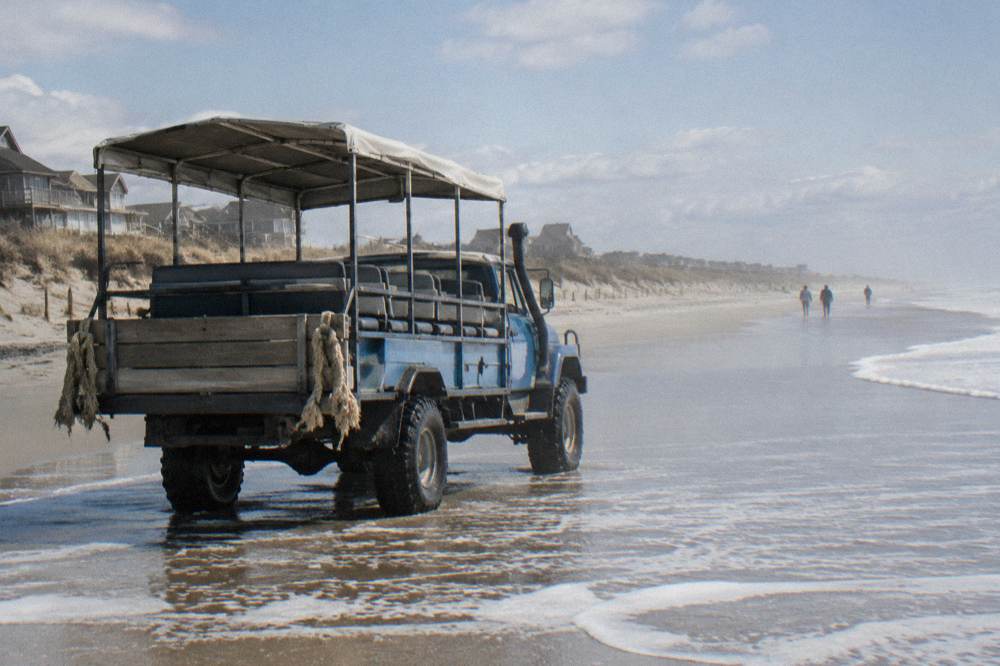
The featured listing is explicit about its own format: an open-air four-wheel-drive truck rather than ATVs, a maximum of 12 travelers, a meeting point at 1148 Ocean Trail in Corolla, and no hotel pickup, so you drive yourself to the departure lot. Riders with back problems are advised against it and the truck is not wheelchair accessible, points worth weighing before booking.
Spotting Etiquette: The Rules That Travel With You
Wherever you see the horses, Currituck County's wild horse ordinance applies: it is unlawful to come within 50 feet of a wild horse, and feeding, riding or petting them is prohibited and punishable by law. If horses approach you, the Fund states it is your responsibility to keep the 50-foot distance. These rules hold on the beach, in the communities and everywhere in the range.
The rule exists because habituation kills. The Fund has stressed that getting too close stresses the animals and can separate foals from their mothers, and its educational materials note that foals are extremely impressionable in their first months and must not become accustomed to humans. In 2025, four horses in the herd were struck by vehicles and two of them died, a statistic that underlines why drivers, guided or not, are asked to keep slow, steady speeds on the sand.
Practical etiquette for a sighting, distilled:
| Situation | What to do |
|---|---|
| Horses grazing near the beach track | Stop or slow well back, stay at least 50 feet away, let them move off first |
| A horse walks toward you | Back away calmly; the distance rule is yours to maintain, not theirs |
| Foals present | Extra space and total silence; never position yourself between a foal and its mother |
| You spot an injured horse | Call the Fund at 252-453-8002, or County dispatch after hours at 252-453-3633 |
| Tempted to feed or lure | Do not; both are unlawful, and human food harms the herd |
A licensed tour absorbs most of this burden for you, since the driver manages spacing under County observation. That is a real part of what the ticket buys. Still, knowing the rules yourself matters, because the same ordinance covers your walk on the beach afterward. The site's dedicated guide to the 50-foot rule and horse etiquette goes deeper.
Putting It Together: A Simple Plan For The Best Odds
Start with the season: warm months concentrate the horses on the open beach, cooler months scatter them inland. Pick your transport: the open-air 4WD truck tour for a guided, covered-in-two-hours approach, or your own 4x4 for independent miles. Go early or late in the day, watch the southern fence area in summer, and keep 50 feet from every horse you find.
That is the whole strategy, and none of it depends on a secret spot, because there isn't one. The herd's 7,544-acre range, the fence at the state line, the public-road status of the sand, and the seasonal push of insects and heat together explain nearly every sighting pattern visitors report. The 2-hour Outer Banks Wild Horse Tour by 4WD Truck, rated 4.8 across 2,871 reviews and priced from $65, remains the simplest way to convert that strategy into a seat on the beach with someone who knows the day's pattern; the booking page shows live availability. However you go, the reward is the same: an animal descended from colonial Spanish stock, on its own ground, at its own choosing.
Common Questions About Seeing Wild Horses In Corolla
Where is the best place to see wild horses in Corolla, NC?
The off-road beach between the end of the paved road in Corolla and the Virginia state line, roughly eleven miles of public sand backed by the herd's 7,544-acre range. In warm months the horses favor the open beach itself; in cooler months they spread into the forest behind the dunes.
Can you see wild horses without a tour in Corolla?
Yes, but it takes luck or a 4x4. Horses occasionally appear near the fence at the paved road's end, and the beach is a public road anyone with a true four-wheel-drive vehicle may drive. A guided 4WD tour simply covers that ground with a guide who knows where the bands are that day.
What time of year are the Corolla horses easiest to find?
Summer. Biting insects and heat push the herd out of the shaded interior and onto the open beach, which is where tour trucks and 4x4 drivers travel. Spring brings the first foals, and fall spreads the horses back across their full range.
Do you need four-wheel drive to see the horses?
To reach the heart of the range, yes. County guidance is blunt: if your vehicle is not equipped with four-wheel drive, do not attempt to drive on the beach. A guided tour is the alternative for visitors without a 4x4.
How close can you get to the Corolla wild horses?
Currituck County's ordinance makes it unlawful to come within 50 feet of a wild horse, and feeding, riding or petting them is punishable by law. If a horse approaches you, the Fund states that keeping the distance is your responsibility.