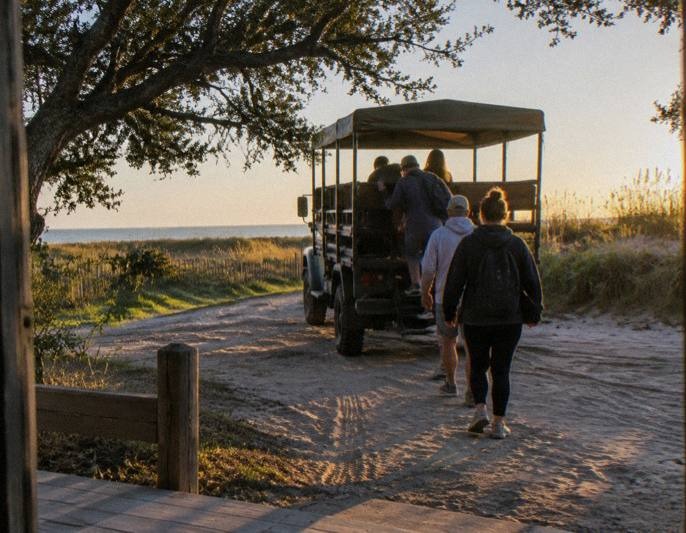
Is A Corolla Wild Horse Tour Bumpy? Accessibility And Back Health
The short answer is yes, expect a bumpy ride. A Corolla horse tour runs on the public beach and sand roads north of the paved highway, in an open-air four-wheel-drive truck, and the listing itself flags moderate fitness and advises against the tour for travelers with back problems. Here is what that means in practice, and what the alternatives are.
Short answer
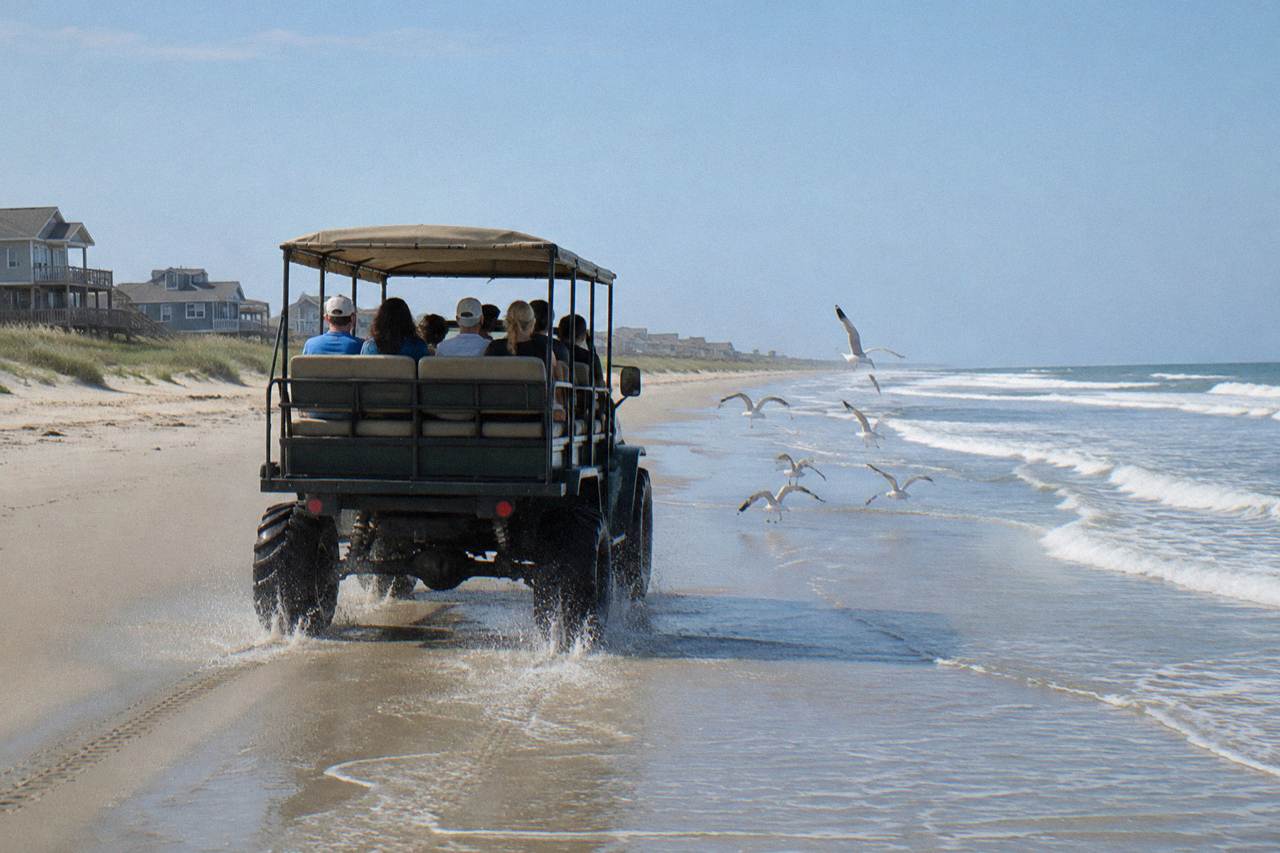
Yes, the ride is bumpy. The featured 2-hour Corolla horse tour uses an open-air 4WD truck on soft sand, is rated 4.8 across 2,871 reviews, costs from $65 per person, and the listing says it is not wheelchair accessible, is not recommended for back problems, and asks for moderate physical fitness. Alternatives include enclosed SUV tours in winter.
Riding a truck across a beach sounds simple until you picture the surface itself: loose dry sand near the dunes, firmer wet sand at the tide line, and the washboard ruts that any busy sand road develops. The featured Corolla horse tour, the 2-hour Outer Banks Wild Horse Tour by 4WD Truck, runs exactly there, on the public beach and sand tracks north of where NC-12 ends in Corolla. It carries up to 12 travelers in an open-air four-wheel-drive truck, it is rated 4.8 across 2,871 reviews, and it starts from $65 per person. It is also, by its own listing's description, a ride that asks for moderate physical fitness and is not recommended for people with back problems. The ride itself is part of the adventure: open-air 4WD trucks drive straight onto the sand, so plenty of visitors plan their whole Outer Banks trip around this tour without realizing how bumpy the beach route can be. We compared the listing, the county's rules for tour vehicles, and the operators' own pages so you can make the go or no-go call with real information rather than guesswork. If the truck ride sounds too rough for your back, the guide to Corolla horse tour vehicle types compares smoother SUV and cruiser options.
How Bumpy Is The Ride On A Corolla Wild Horse Tour?
Expect a genuinely bumpy ride, in an open-air truck, for roughly two hours on sand, with no suspension tricks that make it feel like a paved road. The listing describes transport by open air 4-wheel drive truck, with no ATVs, and the terrain is public beach and soft sand tracks shared with resident traffic. How rough any single tour feels depends on tide, wind, and how churned up the sand is that day.
The physics are straightforward. Four-wheel-drive vehicles survive on this beach by running at low tire pressure over sand that shifts under the wheels, and the tour trucks that pass county inspection do the same thing every other 4WD does out there. When the tide is low and the wet sand is firm, the ride is comparatively smooth. When the sand is soft, rutted by a busy afternoon of traffic, or cut up after wind, every ridge transmits straight into the bench seats. Travelers who have ridden it describe exactly that range in their reviews, and the tour's rating of 4.8 across 2,871 reviews suggests most consider the rattling part of the fun rather than a dealbreaker.
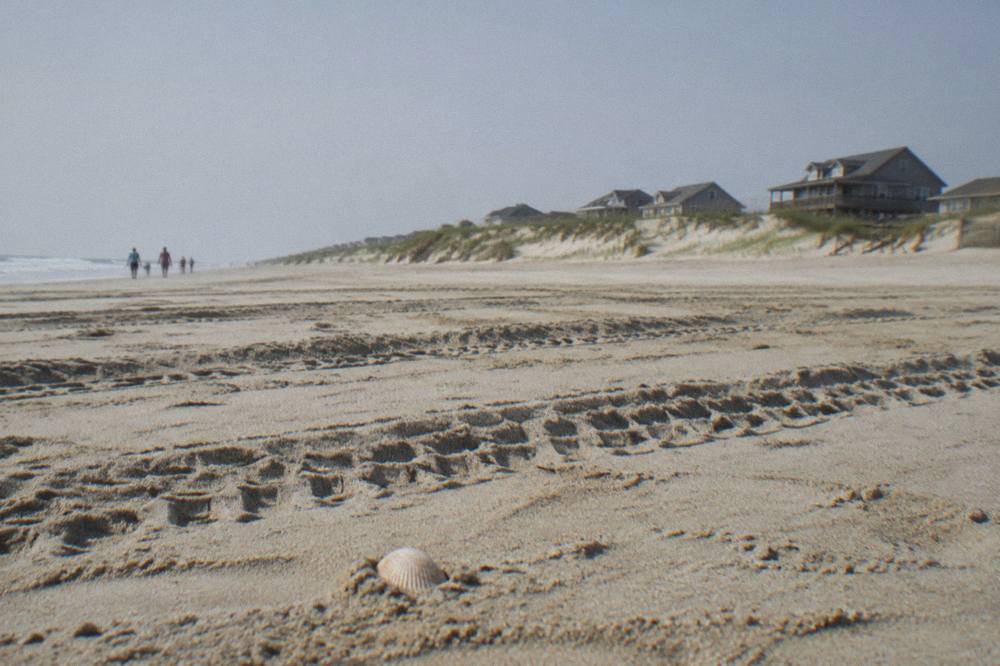
Two structural points matter more than any day-to-day condition. First, the truck is open-air: there is no enclosure buffering you from wind, spray, sun, or the constant fine sand that a busy beach throws around, so the listing's suggestion of moderate physical fitness is about the whole sensory package, not just vertical motion. Second, the tour operates on the same public road as everyone else. The County's tour operator rules let tours run west of the dune line between 8 a.m. and 8 p.m., and require tour vehicles to stay at least 50 feet from the horses, which means steady slow driving rather than dune-running, but still steady driving over uneven sand for most of two hours. Since those fixed tour hours also shape when the horses come down to the beach, check our guide to the best time of day for spotting the Corolla wild horses before you book.
The context for the terrain comes from the land itself. The herd's range covers 7,544 acres of mixed habitat including roughly 700 houses, as the Corolla Wild Horse Fund's herd management page describes, and the tour trucks cover the beach and sand roads within it. None of that is paved. If your mental image of a wildlife tour is a coach on a scenic parkway, recalibrate: this is closer to a slow, scenic, jouncing hayride with an ocean view.
| Ride condition factor | What it does to the surface | How it feels in the truck |
|---|---|---|
| Low tide, wet sand near the waterline | Firms the sand into a compact track | Smoothest the ride gets |
| Soft dry sand near the dunes | Wheels shift and sink slightly | Steady jouncing, slower pace |
| Heavy beach traffic | Cuts ruts and washboard ridges | Sharp, repeated bumps through the bench |
| Wind or weather churn | Reforms the sand between passes | Unpredictable, varies hour to hour |
Who Should Think Twice Before Booking The 4WD Truck Tour?
The listing names three groups directly: travelers with back problems, wheelchair users, and children under five years old or under 40 pounds. It also asks for a moderate level of physical fitness, and it excludes hotel pickup, food, and drinks, so you arrive, board, and ride under your own arrangements. Anyone in those named groups should treat the warnings as decisive rather than advisory.
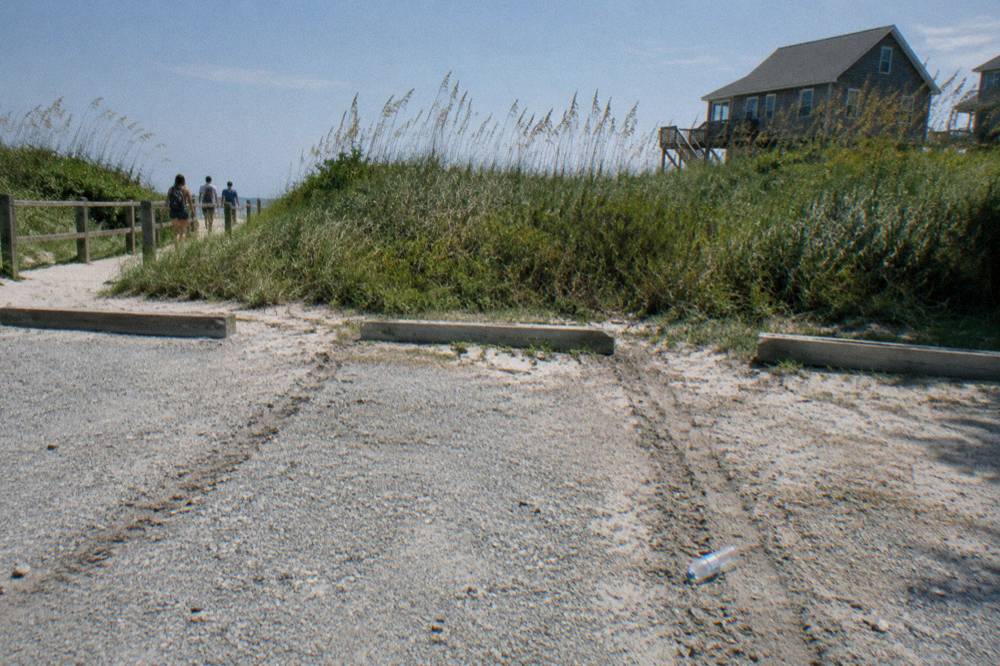
The 2-hour listing is unusually specific for a tourism product. It states the tour is not wheelchair accessible, that it is not recommended for travelers with back problems, that a moderate physical fitness level is expected, and that children under five years old or 40 pounds cannot be accommodated. The maximum group is 12 travelers, the meeting point is 1148 Ocean Trail in Corolla, where the listing notes the parking lot is shared with the Beer Garden, and boarding means climbing into an open-bed truck on sand. There is no lift, no step system, and no enclosed cabin. If those boarding and fitness requirements leave you unsure about booking, our honest verdict on the Corolla wild horse tour weighs what you actually get for the price.
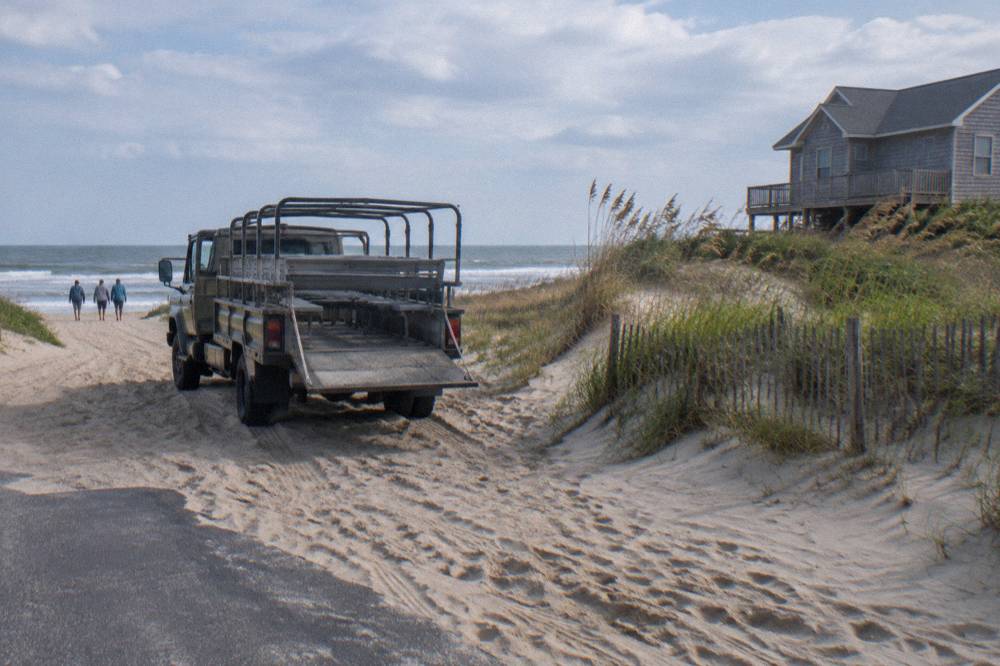
For people outside those named groups, the honest question is tolerance, not ability. Riders who are fine with a bumpy two hours report loving it; riders who expected a sedate scenic drive sometimes do not. The tour also runs entirely outdoors, so wind, sun, insects, and salt spray are part of the package, and the listing's health notes should be read alongside our rundown of what to wear and bring on a Corolla 4x4 horse tour, since the right clothing does a lot to make a rough ride comfortable.

Is The Corolla Horse Tour Accessible For Wheelchair Users?
No. The listing states plainly that the tour is not wheelchair accessible, and the reason is physical: boarding an open-bed 4WD truck parked on sand, with bench seating and no boarding assist, cannot be done safely in a chair. The beach north of Corolla is itself reachable only by four-wheel-drive vehicle or boat, so there is no paved vantage point for the 4x4 area.
That second point is the one most visitors miss. The United States Fish and Wildlife Service, describing access to the Currituck National Wildlife Refuge just north of Corolla, states that after NC Route 12 ends, traffic is diverted onto the beach and four-wheel drive is required, with refuge access by 4WD vehicle or boat only. The refuge's visitor information page adds that vehicle traffic is restricted to the beachfront. In other words, the terrain that makes the tour bumpy is the same terrain that makes the whole area hard to reach with mobility equipment, and no local operator offers an accessible vehicle for it.
There are still ways to see the herd with mobility constraints. The horses sometimes come south of the fence line into the village area, and our guide to seeing the Corolla wild horses without a tour covers the free and walkable options, including the Corolla Wild Horse Fund's museum and gift shop on Corolla Village Road, which lists seasonal hours of Tuesday to Saturday, 10 a.m. to 4 p.m. The Fund's frequently asked questions page is also the primary source for the 50-foot rule that applies wherever you encounter horses: it is your responsibility to stay at least 50 feet away, even if a horse approaches you.
Can You Take The Tour With Back Problems Or During Pregnancy?
The listing says not recommended for back problems, and that is the operator's own wording, so anyone with a diagnosed back condition should take it seriously. No one can promise a smooth ride on any particular day, because sand conditions change with every tide and weather system. Pregnancy is not mentioned on the listing, which means the decision falls to you and your doctor.
This is a place to be blunt rather than reassuring. Two hours of jouncing in an open truck is roughly the definition of sustained low-back loading, and the operator has chosen to warn about it on the booking page rather than absorb the complaints. If your back tolerates a long off-road drive at home, you have a reasonable basis for judgment. If flare-ups come from ordinary car rides, a beach truck will not be kinder. The tour's price, from $65 per person, and its strong rating, 4.8 across 2,871 reviews, describe a good product, but neither figure softens the ride.
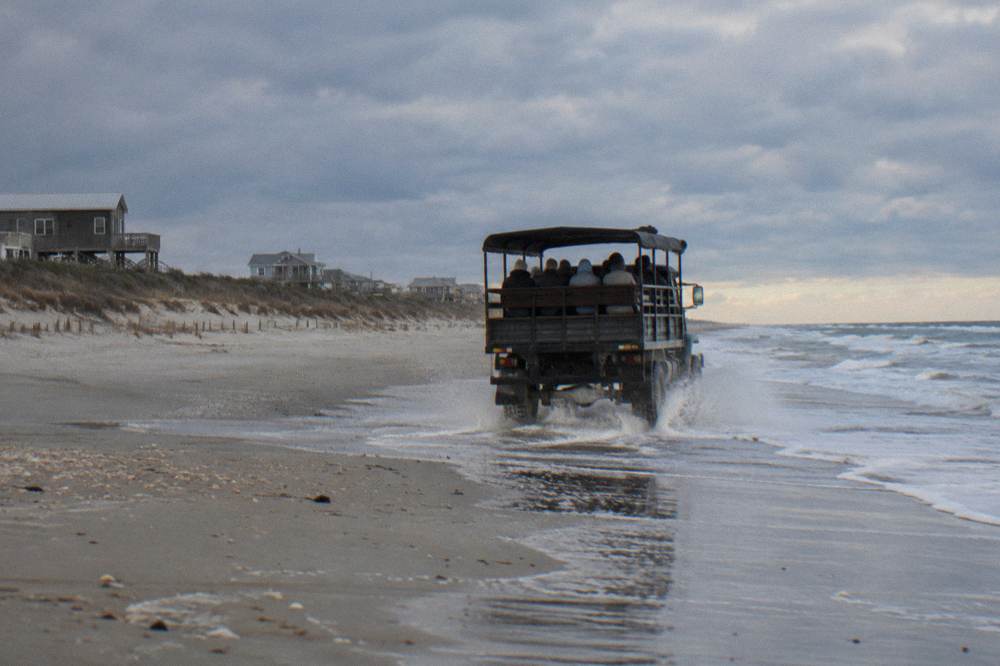
For anyone who decides the truck is too much, one smoother option exists: Corolla Wild Horse Tours runs an enclosed SUV horse tour from January through March, carrying up to six passengers, and sells directly to travelers rather than through third-party listings. An enclosed SUV on the same sand is still a 4WD ride, but the smaller vehicle and closed cabin change the experience. We describe the direct operators in detail in our comparison of Corolla wild horse tour operators, with the figures their own pages list and no claims beyond them.
What Does Moderate Physical Fitness Mean On The Listing?
In practice it means you can climb into a truck bed unassisted, sit upright on a bench without support for two hours, hold yourself steady through bumps and turns, and walk across soft sand at the meeting point. It does not mean athletic conditioning, and there is no hiking, swimming, or stair climbing anywhere in the tour.
The phrase comes straight from the booking listing, and the fitness requirement is really a stability requirement. The physical demands are boarding, sitting, and bracing. Travelers who can spend two hours standing and walking around a theme park will find the tour easier than that; travelers who need a chair with back support for a long car ride will find it harder. The listing also excludes food, drinks, and hotel pickup, so add the walk from your parking spot at 1148 Ocean Trail and whatever walking you do before and after.
The same standard applies to the other Corolla operators, and their own pages describe similar formats. Back Country Safari Tours lists a two-hour guided tour in a custom open-air beach safari cruiser covering 20 to 30 miles on the North Beach, and Coastal Explorations describes an approximately two-hour round trip in an open-air 4WD vehicle with trucks capped at 10 passengers where most tour trucks pack in 14. Those are the operators' own descriptions; none of them advertises a smooth ride, because none of them drives on anything but sand.
Are There Smoother Ways To See The Corolla Wild Horses?
Yes, three realistic ones: the winter enclosed SUV tour sold directly by one operator, the free self-directed options around Corolla village when horses come south of the fence, and the Corolla Wild Horse Fund's mainland farm events, which are walkable grass-and-gravel settings rather than beach rides. Each trades some reliability of sighting for comfort. If you'd like a sense of your odds before choosing, the guide to how the Corolla herd is counted explains why no one can promise a fixed number of horses.
Start with the honest caveat that applies to all of them: the horses roam 7,544 acres on their own schedule, and no method, truck or otherwise, guarantees a sighting. The guided 4WD tour exists precisely because covering ground with a spotter is the most reliable approach, and comfort alternatives accept a lower chance of finding horses. The horses move seasonally, with flies and heat pushing them onto the open beach in predictable patterns, so timing helps any method, a point we cover in the best time of year to see the Outer Banks wild horses.
| Option | Surface and vehicle | Comfort level | How it is booked |
|---|---|---|---|
| Featured 2-hour open-air 4WD truck tour | Beach sand, open truck, up to 12 riders | Bumpy, exposed, most reliable | Through the live listing on the tour page |
| Enclosed SUV tour, January to March | Beach sand, enclosed SUV, up to 6 riders | Bumpy but sheltered, small group | Direct with the operator |
| Self-directed viewing in Corolla village | Paved roads and sidewalks | Smooth, low exertion | Free, no booking |
| Fund farm events in Grandy | Grass and gravel at the sanctuary | Smooth, walkable | Check the Fund's calendar |
The Fund's farm events deserve a specific mention. In 2026 the Mustang Mornings program ran on Wednesdays from May 27 to August 26, 9 a.m. to 1 p.m., at the Betsy Dowdy Equine Center in Grandy, with a suggested donation of $10 per vehicle at the gate and a free screening of a 32-minute documentary. That season has ended, and the Fund's calendar is the place to check for the next openings; nothing about the farm program involves riding on the beach at all. It is the only setting where you see the Fund's rescued mustangs rather than the wild herd, and for travelers whose backs rule out the truck, it is a genuine alternative.
What Should Riders Do To Make A Bumpy Tour More Comfortable?
Dress for sun and sand, empty your pockets, secure everything loose, take motion remedies if sand driving bothers you, and choose your seat thoughtfully if the driver lets you. None of this removes the bumps; all of it removes the avoidable misery that riders sometimes blame on the ride itself.
Practical comfort on this tour is mostly about the open-air format. The listing excludes food and drinks, so bring water for before and after. Hats need chin straps or should stay home, sunglasses matter more than people expect because sand and glare combine, and layers help when the wind comes off the water. Footwear should stay on: you are climbing into a truck bed, not walking a boardwalk, and flip-flops on a sand boarding step are a known way to end the day early. If sustained vibration triggers motion sickness for anyone in your group, dose before boarding, because two hours of sand rhythm is long enough to matter.
The seat question is worth a word with the driver at 1148 Ocean Trail. Riders sometimes report that positions over the axles feel the roughest while positions closer to the cab feel steadier, though the truck's layout and the day's conditions vary, and the crew assigns seats as much for weight balance as for comfort. Ask rather than assume. And on the subject of asking: the county's rules prohibit amplified sound west of the dune line and confine tour operations to the hours between 8 a.m. and 8 p.m., per the County's horse tours page, so the guide's commentary is spoken, the pace is slow, and the loudest thing on the tour is usually the surf. If you want to dig into the choice between booking this and driving the beach yourself, our piece on driving the Corolla 4x4 beach yourself versus a guided tour walks the trade-offs, including the county guidance to keep a slow, steady speed in four-wheel drive.
| Comfort factor | Why it matters on this tour | What to do |
|---|---|---|
| Open-air exposure | Wind, sun, salt spray for two hours | Layers, strap hat, sunglasses |
| Sustained vibration | Bench seats over soft sand | Ask about seat choice, brace with legs |
| Sand underfoot at boarding | No steps or lift into the truck bed | Closed shoes, hands free |
| No food or drink included | Listing excludes both | Water before and after |
| Motion rhythm | Steady low-speed driving over ridges | Motion remedy ahead of time |
Common Questions About Corolla Horse Tour Comfort
Is A Corolla Wild Horse Tour Bumpy?
Yes. The tour runs an open-air 4-wheel drive truck on public beach sand for about two hours, and the surface ranges from firm wet sand to soft, rutted tracks depending on tide and traffic. The listing asks for moderate physical fitness and the ride is part of the experience rather than a flaw in it.
Is the tour recommended for people with back problems?
No. The listing states it is not recommended for travelers with back problems, in the operator's own wording. Anyone with a diagnosed back condition should treat that as a firm caution and consider the smoother alternatives, such as the winter enclosed SUV format sold direct by another operator or the Fund's mainland farm events.
Is the Corolla horse tour wheelchair accessible?
No. The listing states the tour is not wheelchair accessible, and boarding means climbing into an open truck bed parked on sand. The 4x4 area north of the paved road is itself reachable only by four-wheel-drive vehicle or boat, so there is no paved viewing point for that stretch of beach.
Can young children ride the tour?
The listing states the tour cannot accommodate kids under five years of age or under 40 pounds. Families with children above those limits should also weigh whether a two-hour bumpy open-air ride suits the child; our guide to Corolla horse tours with kids covers the practicalities.
How can I see the Corolla wild horses without a bumpy ride?
Options include watching from the Corolla village area when horses come south of the fence line, visiting the Corolla Wild Horse Fund's museum and gift shop, and attending the Fund's scheduled farm events in Grandy, which in 2026 ran on summer Wednesdays with a suggested $10 per vehicle donation. All trade sighting reliability for comfort.
Does the time of day affect how rough the ride is?
Indirectly. Tour hours run between 8 a.m. and 8 p.m. west of the dune line under county rules, and sand firmness varies with tide and recent traffic rather than the clock. Lower tides expose firmer wet sand; our guide to the best time of day to see Corolla wild horses covers the viewing side of that timing.
The bottom line on comfort is that this tour is honest about what it is: an open truck, a sand road, and a two-hour ride that thousands of riders have rated highly anyway, 4.8 across 2,871 reviews, from $65 per person. If your back, mobility, or tolerance for sustained vibration says no, the alternatives above let you still put wild horses in your Outer Banks week. And if the bumps sound like part of the fun, the seat on the Corolla North Carolina Horse Tours featured truck is the one Corolla horse tour sold on a third-party booking platform, with a live calendar and a public review count before you leave home.