Can You See Corolla Wild Horses Without A Tour?
The horses are wild and free to roam, so nobody sells you a gate to see them. You have several honest ways to look for them on your own, and one clear reason a guided tour may still be the smarter two hours.
Short answer
Yes. You can drive the 4WD beach at the end of NC-12 yourself if your vehicle has four-wheel drive, walk the sand at the paved end of Corolla, or visit the Corolla Wild Horse Fund museum and its seasonal Mustang Mornings open days. Every option carries the same 50-foot rule, and none promises a sighting.
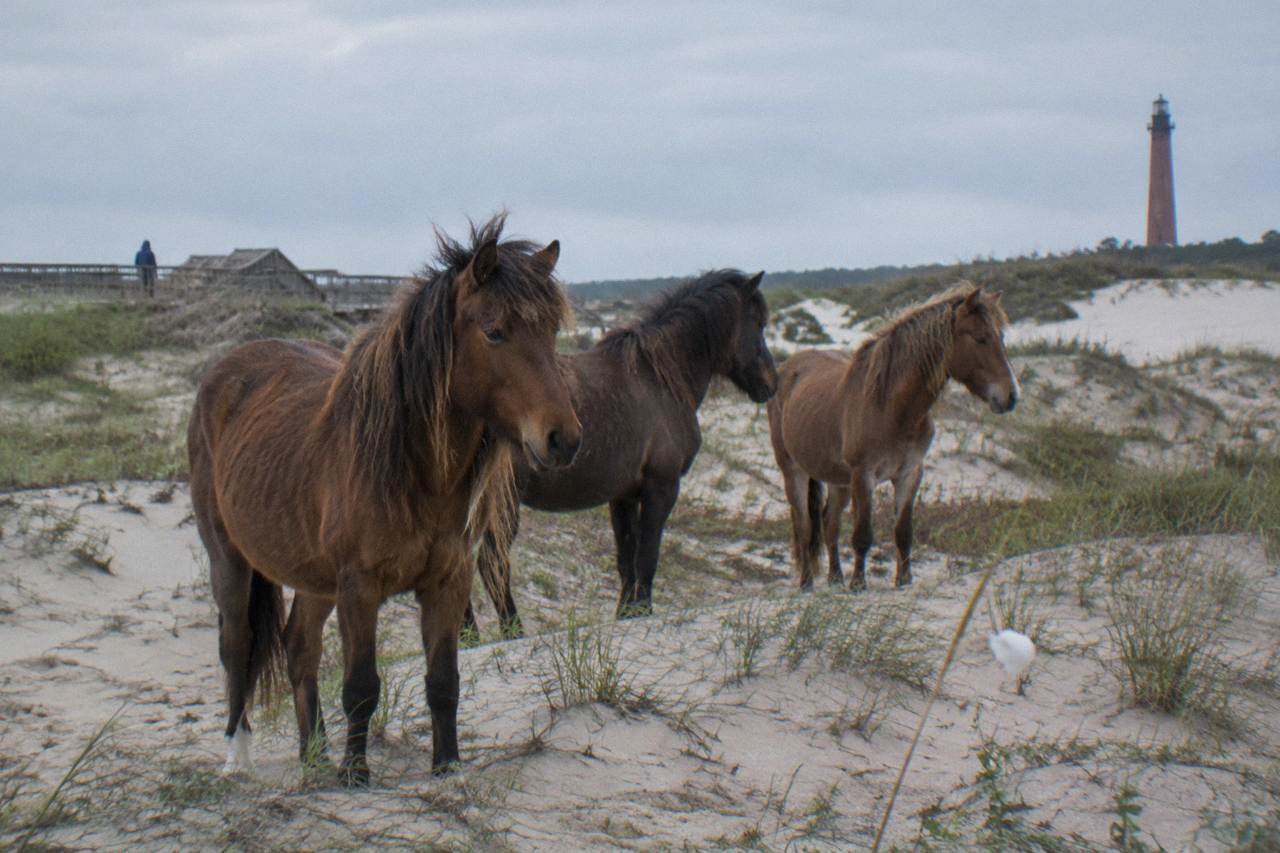
The Corolla wild horses roam roughly 7,544 acres of the northern Outer Banks, a mix of private and public land that includes the beach itself. Nobody owns a viewing spot, and no fence funnels the herd past a ticket booth. That is the honest starting point for anyone asking how to see wild horses in Corolla: the animals are wild, they move on their own schedule, and several legitimate ways exist to look for them without buying a seat on a truck.
Three of those ways cost nothing at the point of use. You can drive the off-road beach at the end of NC-12 in your own four-wheel-drive vehicle, you can walk the sand near the paved end of town, and you can visit the Corolla Wild Horse Fund's museum and gift shop in Corolla village. A fourth, the Fund's seasonal Mustang Mornings program at its Grandy farm, asks a suggested donation. None of these guarantees horses, and all of them sit under the same county ordinance that keeps people at least 50 feet away from the animals.
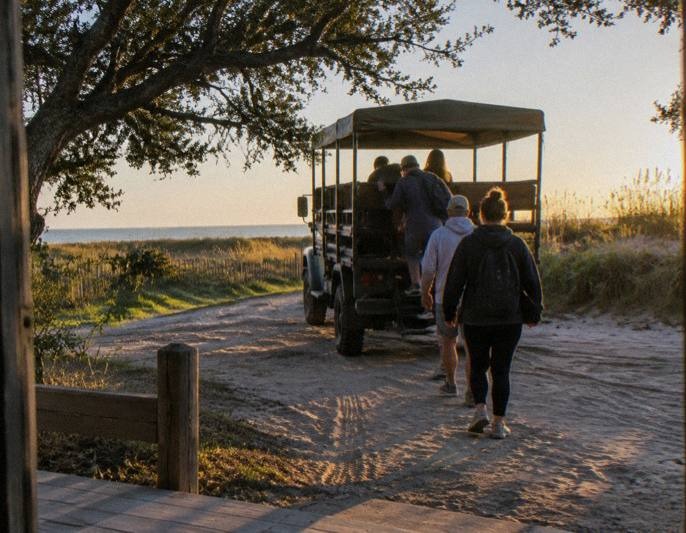
There is also the guided option, and it is not a gimmick. The two-hour open-air 4WD truck tour run by Benders Beach Services, rated 4.8 across 2,871 reviews and priced from $65 per person, exists because the herd's range is large, the driving is genuinely technical, and a guide who tracks the horses daily turns a lottery into something closer to a good bet. Every self-serve route is laid out below, along with a straight answer on when paying for the truck is the better use of a morning.
Can I See Wild Horses In Corolla Without A Tour?
Yes, you can see wild horses in Corolla without a tour, either by driving the four-wheel-drive beach yourself, by walking near the paved end of NC-12, or through the Fund's museum and its seasonal Mustang Mornings program. None of these routes guarantees a sighting, because the herd moves freely across thousands of acres, and every route carries the same county 50-foot rule.
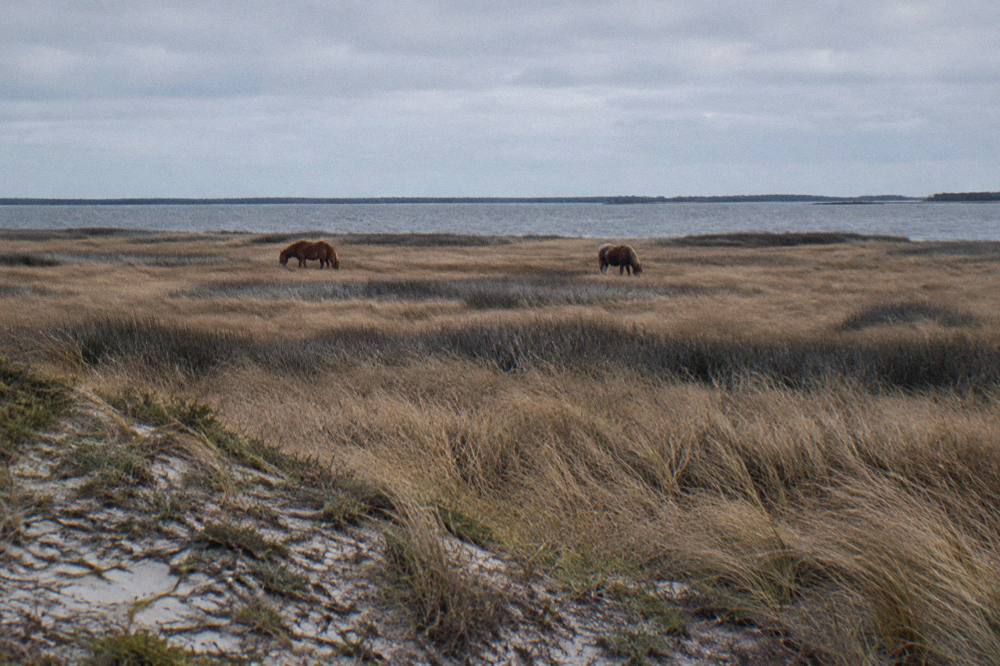
The herd's home territory sits north of where NC-12's pavement ends in Corolla, stretching roughly eleven miles up to the Virginia state line. The beach in that stretch is considered public road, open to everyone, and the Corolla Wild Horse Fund notes it is the only access for residents and guests staying in Carova, North Swan Beach, and Swan Beach. Horses cross it, graze beside it, and sometimes stand in the surf, which is why so many people spot them from a moving vehicle or a walk. Curious how big the herd actually is, since sightings depend so much on herd size, the Fund explains how the Corolla wild horse herd is counted from the air.
What the free routes trade away is knowledge and reach. The horses relocate seasonally and even daily in response to insects, heat, and wind, and a local pattern reported through 2026 had them pushed out of the maritime forest and onto the open sand in summer, where heat and biting flies made the beach the comfortable place to be. A guide who drives that beach every day knows where the herd has been; a first-time visitor in a rental SUV knows where the ramp is. Timing matters as much as location, since the best hours of the day to spot the Corolla herd explains why heat, bugs, and tour schedules all point to early morning and the hours just before sunset.
Your four honest options look like this:
| Option | What you need | Cost | Sighting odds |
|---|---|---|---|
| Drive the 4WD beach yourself | A 4WD vehicle and comfort driving on sand | Free, fuel aside | Good in season, but you must find the horses yourself |
| Walk the beach near the paved end | Sturdy legs and patience | Free | Unpredictable; horses pass through but roam widely |
| Fund museum and gift shop | Nothing but a visit to Corolla village | No admission price is published | You will see the Fund's educational material, not wild horses |
| Mustang Mornings at the Grandy farm | A Wednesday morning in season, a car | Suggested $10 per vehicle | Guaranteed horses, but rescued sanctuary animals, not the wild herd |
| Guided 4WD truck tour | A reservation | From $65 per person | The guide's daily knowledge does the work |
The last two rows are worth separating carefully. Mustang Mornings gets you close to real Colonial Spanish Mustangs, but those are the Fund's rescued animals at its mainland farm, not the free-roaming herd on the beach. A guided tour gets you into the wild herd's actual range with someone who knows it. If your goal is the wild horses specifically, that distinction matters.
Can You Walk To See The Wild Horses In Corolla?
Walking works only at the margins of the herd's range. The paved end of Corolla and the pedestrian beach near the village sit south of where the horses spend most of their time, and the heart of the range is reachable on foot only after a long walk up the sand from the road's end, which most visitors underestimate.
Start with geography. NC-12 ends in Corolla village, and beyond that point the beach itself becomes the road, open only to four-wheel-drive vehicles. Pedestrians can walk that sand, and people do, but the herd's core territory lies miles up the coast toward Carova. A walker covering soft sand in summer heat is doing real exercise, and the distance to the areas where horses are most consistently seen is longer than most families expect.
There is also the safety and etiquette dimension. Horses on the move cross the driving beach, where trucks and SUVs roll past at a steady clip. Walking visitors must stay alert to traffic as well as to horses, and the county's 50-foot rule applies to a person on foot exactly as it applies to a tour truck. The Fund's FAQ is blunt on this: there is a county ordinance making it illegal to come within 50 feet of the horses, regardless of the person's experience, and if horses approach you, it is your responsibility to keep the distance.
The practical walking play, if you try it, is timing and luck rather than distance. Horses occasionally come south of the pavement's end into the village fringe, and the Fund's educational updates describe horses appearing near people precisely because summer conditions push them into the open. When that happens, the right move is to stop, stay put, and let them pass at range, not to follow them with a phone camera. The Fund stresses that foals are extremely impressionable in their first months and must not become accustomed to humans, which is why approaching, luring, or enticing a horse closer is unlawful under the county's wild horse ordinance.
A calmer walking-adjacent option is the Fund's museum and gift shop at 1130E Corolla Village Road, open Tuesday through Saturday, 10am to 4pm, seasonally. You will not see wild horses there, but you will learn the herd's history, the management work behind it, and where sightings concentrate, which makes any later attempt smarter. Our companion page on the Corolla North Carolina Horse Tours approach covers how the guided version works if walking comes up short.
Can You Walk On The Beach In Corolla To See The Horses?
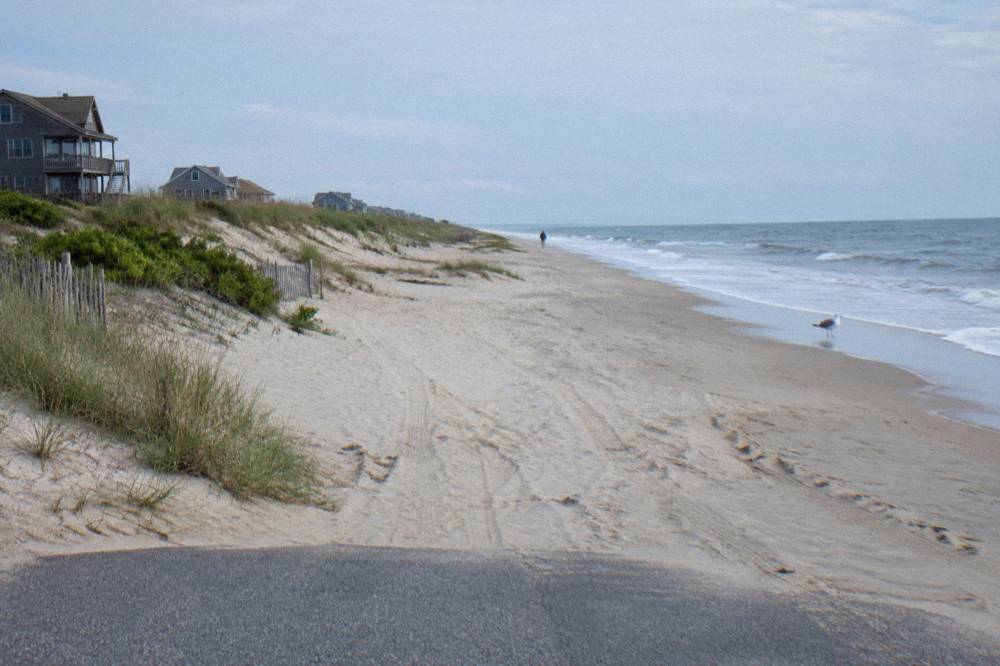
Yes, the beach is public and you can walk it, including the off-road stretch north of the paved road's end, but the sand past the vehicle ramp is shared with 4WD traffic, has no lifeguards or facilities, and puts you on foot in the herd's range with the same 50-foot rule and none of a guide's local knowledge.
The public-road status of the beach is the key fact. The Fund's history page states it plainly: the beach north of the paved road is considered public road and open to the public. Nothing stops a determined walker from heading up the sand. What you should weigh is what that walk actually involves: soft sections at high tide, vehicle traffic in both directions, summer sun with no shade, and the possibility of a several-mile round trip before you reach the areas where horses gather.
The US Fish and Wildlife Service, which manages the Currituck National Wildlife Refuge north of Corolla, describes the terrain honestly: the refuge has no developed public use facilities, no roads, no trails, no restrooms, and no visitor contact station, and vehicle traffic is restricted to the beachfront only. The refuge is open daily from sunrise to sunset, and its rules prohibit baiting or feeding wildlife, including the Corolla wild horses, with all pets required to stay leashed. The federal language is even firmer than the county's on one point: it is unlawful to harm, approach, feed, or kill any wild horse on the refuge.
If you walk, do it like this:
- Start early, both for cooler sand and because horses move to water and breeze as the day heats up.
- Stay on the wet, hard sand near the water line where walking is easier and you are visible to drivers.
- Keep well away from the dune line and any marsh edges, which is where horses rest in shade.
- If a horse appears, stop and let it choose its path; never position yourself between a mare and a foal.
- Carry water, sun protection, and a plan for the walk back, since nothing is sold on that beach.
For most visitors, the walk is a pleasant beach experience that may or may not include horses. The guided 4WD truck tour exists for the days when it does not: the two-hour open-air ride covers the same beaches with a professional guide and a driver who handles the sand. Readers who want the fuller side-by-side can also see our guide to driving the 4x4 beach yourself versus a guided tour, which works through the costs and risks in detail.
How Does Driving The 4WD Beach Yourself Work?
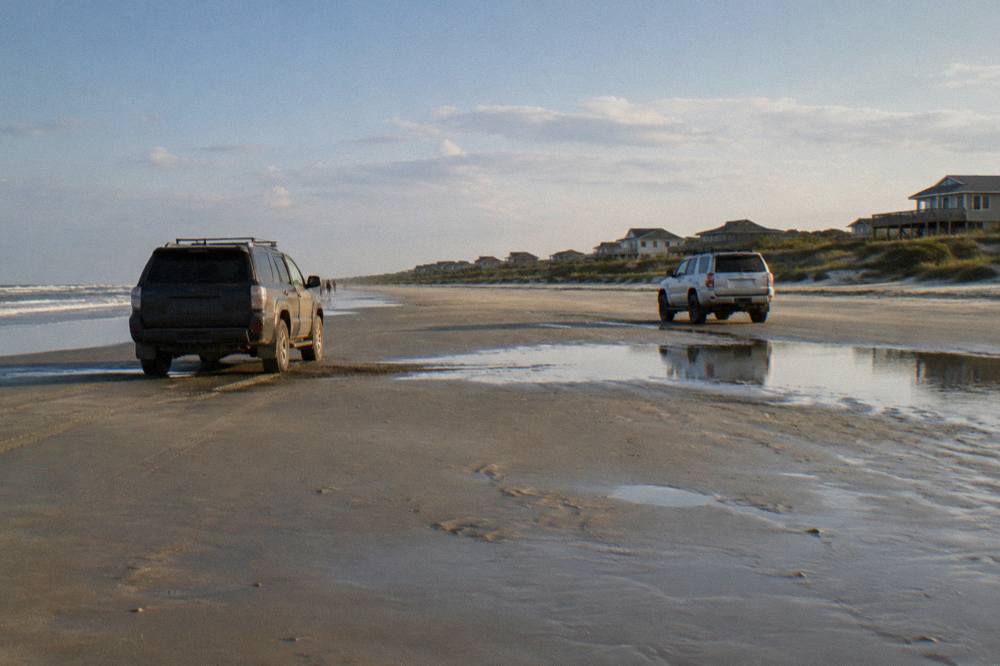
Driving yourself requires a true four-wheel-drive vehicle, entry at the beach ramp where NC-12's pavement ends, and a slow steady speed on the sand; county guidance says plainly not to attempt the beach without 4WD, and no visitor permit or fee program was found on any official page, so plan around tides, tire performance, and recovery costs rather than paperwork.
This is the most popular free route, and it is genuinely viable for the right vehicle and driver. The US Fish and Wildlife Service confirms the mechanics: follow NC-12 north to its terminus in Corolla, where traffic is diverted onto the beach and four-wheel drive is required, with refuge access by 4WD vehicle or boat only. County guidance asks drivers to engage 4WD at the ramp and maintain a slow, steady speed, and it says outright that a vehicle without four-wheel drive should not attempt the beach.
The risks are the ones people underestimate. Soft sand swallows two-wheel-drive and low-clearance vehicles, and a recovery tow on a remote beach is expensive and slow. Rental agreements frequently prohibit beach driving even in 4WD models, which catches many visitors by surprise. Tide and weather change the sand's character hour by hour, and there are no services, no restrooms, and no fuel north of the ramp.
| Factor | Self-drive on the 4WD beach | Guided 4WD truck tour |
|---|---|---|
| Vehicle requirement | Your own or a rental 4WD, permission included | None; the operator's open-air truck |
| Upfront cost | No fee found on official pages; fuel and recovery risk are yours | From $65 per person |
| Herd knowledge | Whatever you can research in advance | A guide who works the range daily |
| Driving demands | Sand driving technique, tides, traffic | Handled by the driver |
| Range covered | As far as time and fuel allow | The full off-road route in about two hours |
| Sighting odds | Real in season, but self-directed | The guide's daily tracking |
| Rules | 50-foot rule, county beach guidance | Same rules, professionally managed |
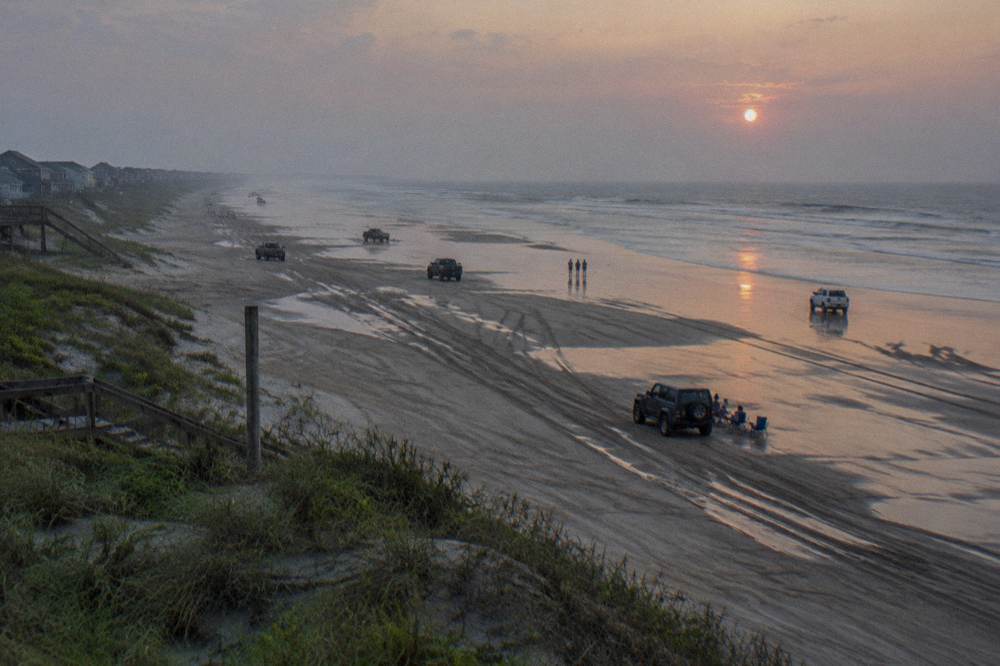
One more honest note on the ordinance: tour vehicles operating in the four-wheel-drive area are themselves regulated, and the county's horse-tour rules state that tour vehicles should stay at least 50 feet from the wild horses, with tour operation west of the dune line prohibited before 8am and after 8pm and amplified sound banned at all times. Those rules exist partly because the beach is shared, and a self-driving visitor is held to the same 50-foot standard as a licensed tour operator. Our Carova beach 4x4 access rules page carries the deeper detail on the off-road area itself.

What Are The Museum And Mustang Mornings Options?
The Corolla Wild Horse Fund's museum and gift shop in Corolla village is a free-standing educational visit with seasonal Tuesday to Saturday hours, while Mustang Mornings is the Fund's summer Wednesday open day at its Grandy farm, where a suggested $10 per vehicle donation gets you near the Fund's rescued sanctuary horses rather than the wild herd.
The museum is the easy one. It sits at 1130E Corolla Village Road, open seasonally Tuesday through Saturday, 10am to 4pm, closed Sunday and Monday. No admission price is published, so check with the Fund directly at (252) 453-8002 before counting on anything. The gift shop funds the Fund's work, and the exhibits explain the herd's Spanish colonial history, the management program, and the ordinances that protect the animals. Knowing where and why the horses move is most of the battle, and it makes every other option easier to choose.
Mustang Mornings is different in kind. In 2026 the program ran on Wednesdays from May 27 to August 26, opening the Betsy Dowdy Equine Center in Grandy to the public from 9am to 1pm, with a suggested donation of $10 per vehicle at the gate and a free screening of The Secret of Corolla, a 32-minute documentary, with a question-and-answer session. The farm is otherwise closed to visitors outside scheduled events, so the Fund's calendar is the source of truth for the next season's dates.
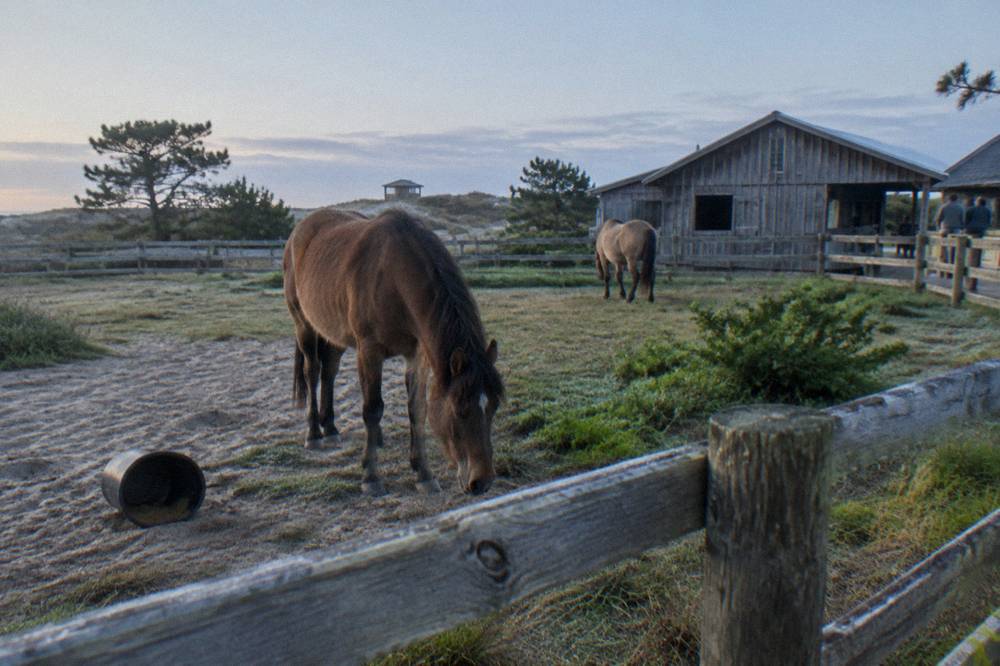
The distinction that matters: the horses at Grandy are the Fund's rescues, animals removed from the wild herd for injury or care. Seeing them up close is a genuine pleasure and it supports the organization that manages the wild herd, but it is not the same experience as watching free horses on the beach. Visitors who want both often pair a museum stop or a Mustang Mornings morning with an afternoon guided beach run, and our page on the Fund museum and Mustang Mornings expands on planning that pairing.
When Is A Guided Corolla Horse Tour The Better Choice?
A guided tour is the better choice when your vehicle is not 4WD, when your time is short, when you are visiting with children under driving age or older relatives, or when you want a guide's daily knowledge of the herd instead of a self-directed search; the featured two-hour open-air 4WD truck tour costs from $65 per person and is rated 4.8 across 2,871 reviews.
Consider the arithmetic of a DIY attempt. You need a 4WD vehicle you are permitted to drive on sand, the confidence to drive it, gas, and the time to cover miles of beach while watching for horses, traffic, and the tide. The featured tour compresses all of that into roughly two hours: an open-air four-wheel-drive truck with a professional horse guide, up to 12 travelers per departure, and a meeting point at 1148 Ocean Trail in Corolla, sharing a parking lot with the Beer Garden. The listing notes the truck uses no ATVs, food and drinks are not included, and children under five years or 40 pounds cannot be accommodated.
The honest limits, straight from the listing: the tour is not wheelchair accessible, it is not recommended for travelers with back problems, and it asks for moderate physical fitness, since boarding an open-air truck from soft sand is a small physical task in itself. None of those limits are hidden, and they map closely onto who should choose the self-drive or museum routes instead.
| Tour detail | What the listing states |
|---|---|
| Name | 2-hour Outer Banks Wild Horse Tour by 4WD Truck |
| Duration | About two hours |
| Price | From $65 per person; the booking page shows the live price |
| Rating | 4.8 across 2,871 reviews |
| Vehicle | Open-air 4-wheel drive truck, no ATVs |
| Group size | Maximum 12 travelers |
| Meeting point | 1148 Ocean Trail, Corolla, NC 27927 |
| Not included | Food and drinks, hotel pickup and drop-off |
| Fitness and age | Moderate fitness; no children under five years or 40 pounds |
The other local operators sell direct rather than through the booking page we link, and they can be booked by phone or on their own sites. Back Country Safari Tours' page lists its 2026 two-hour safari at $55 for adults with a 48-hour cancellation window, Corolla Wild Horse Tours' page lists day-of-week pricing from $55 for the open-air truck, and Coastal Explorations' page lists $49 to $65 per person with trucks capped at 10 passengers. Those are snapshots from the operators' own pages, and the tour operators compared guide works through the differences in full.
What Rules Apply No Matter How You Look For Them?
The same rules apply however you see the horses: Currituck County's wild horse ordinance makes it illegal to come within 50 feet of a wild horse and unlawful to feed, ride, pet, lure, or entice one, penalties are real and enforceable by law, and reporting an injured horse goes through the Fund at 252-453-8002 or county dispatch at 252-453-3633.
The 50-foot rule is the one number to remember. The Fund's ordinance page states that feeding the wild horses or getting within 50 feet of them is punishable by law, and the county adds that cruelty, enticing, harboring, luring, seizing, and failure to report injury are all unlawful. The county's horse-tour rules hold licensed operators to the same distance, which tells you how seriously the distance is taken when the reader is a professional. On the federal refuge, the language tightens further: the refuge page states it is unlawful to harm, approach, feed, or kill any wild horse there.
The rules in one place:
| Rule | Who it applies to | Source |
|---|---|---|
| Stay at least 50 feet from any wild horse | Everyone, on foot or in a vehicle | County ordinance; Fund FAQ |
| No feeding, riding, petting, luring, or enticing | Everyone | County ordinance via the Fund |
| Do not attempt the beach without 4WD | All drivers at the NC-12 terminus | County guidance; USFWS |
| Slow, steady speed on the sand | All drivers | County guidance |
| No amplified sound west of the dune line | Everyone in the 4WD area | County horse-tour rules |
| Report injured horses | Everyone | Fund: 252-453-8002; dispatch: 252-453-3633 |
Etiquette goes a little further than the law. The Fund asks visitors not to position themselves between a mare and her foal, to give horses the right of way on the sand, and to remember that even a horse walking toward you does not waive the distance rule; moving away is your responsibility. The Fund's ordinance page and its Mustang Mornings page are the primary sources for both, and our deeper 50-foot rule and etiquette guide covers the practical judgment calls.
How Do You Choose Between Free And Guided?
Choose free when you have a proper 4WD vehicle, flexible time, and tolerance for a possible miss; choose the guided tour when any of those is missing, since from $65 per person it buys two hours of the herd's actual range with a guide who tracks it daily, and for many visitors that is the difference between a story and a shrug.
Think about what you are actually optimizing for. The free routes are honest and real, and on a good summer day a self-driver who goes far enough north has a genuine chance. But the same seasonal forces that push horses onto the open beach also concentrate every other visitor there, and the difference between a crowded miss and a quiet hour watching a harem graze is usually local knowledge: which access point, which tide, which time of day. A guide has that knowledge because it is the job.
For balance, the guided route's own weaknesses: it costs money, it runs on a schedule, and the open-air truck means sun, wind, and a bouncy ride, which our bumpy ride and accessibility page covers candidly. The free routes' weaknesses are mirror images: no schedule to miss, but no guide to find anything either.
A reasonable hybrid, used by a lot of visitors: book the truck tour for the herd, and spend a separate morning on the free side, either the museum in the village or a walk on the pedestrian beach near the lighthouse. That way the guaranteed structure of one and the freedom of the other cover each other's gaps. Whichever mix you choose, check live availability before you build a day around it, since seats on the truck and parking at the ramp both thin out in peak weeks.
The bottom line is that the question is not whether you can see the Corolla wild horses without a tour, because you can. The question is how much of your vacation you want to spend on the search itself. Free and self-directed suits travelers with a 4WD vehicle, time, and a sense of adventure. The guided 4WD truck tour suits everyone else, and it can be reserved online ahead of time through the listing's live calendar.
Common Questions About Seeing Corolla Wild Horses Without A Tour
Can I see wild horses in Corolla without a tour?
Yes. Drive the 4WD beach at the end of NC-12 in a four-wheel-drive vehicle, walk the sand near the paved end of town, or visit the Corolla Wild Horse Fund's museum and gift shop in Corolla village. None of these guarantees a sighting, since the herd roams freely, and all are covered by the county's 50-foot rule.
Can you walk to see the wild horses in Corolla, NC?
You can walk the public beach, including the off-road stretch north of where the pavement ends, but the herd's core range lies miles up the coast. Most walkers enjoy the beach itself and treat any horse encounter as a bonus. Keep to the hard sand, watch for vehicle traffic, and hold the 50-foot distance if horses appear.
Can you walk on the beach in Corolla to see the horses?
Yes, the beach north of the paved road is considered public road and open to the public. Walking it means sharing the sand with 4WD traffic in a section with no facilities, no lifeguards, and no services, so carry water, start early, and let any horse you encounter choose its own path.
Is it free to drive on the beach at Corolla?
No official source publishes a visitor permit or fee for the beach, so driving it costs nothing beyond the trip itself. The real costs are practical: a true four-wheel-drive vehicle, fuel, tide awareness, and the risk of an expensive recovery if the sand defeats you. County guidance says not to attempt the beach without 4WD.
How close can you get to the Corolla wild horses?
Currituck County's wild horse ordinance makes it illegal to come within 50 feet of a wild horse, and feeding, riding, petting, luring, or enticing one is unlawful, punishable by law. If a horse approaches you, the responsibility to keep the distance stays yours. Report injured horses to the Fund at 252-453-8002.
Does the Corolla Wild Horse Fund museum have horses?
The museum and gift shop in Corolla village is an educational visit, not a viewing site for the wild herd. The Fund's rescued sanctuary horses live at its Grandy farm on the mainland, which opens to the public on scheduled days such as the summer Mustang Mornings program, with a suggested $10 per vehicle donation. Check the Fund's calendar for the next opening.