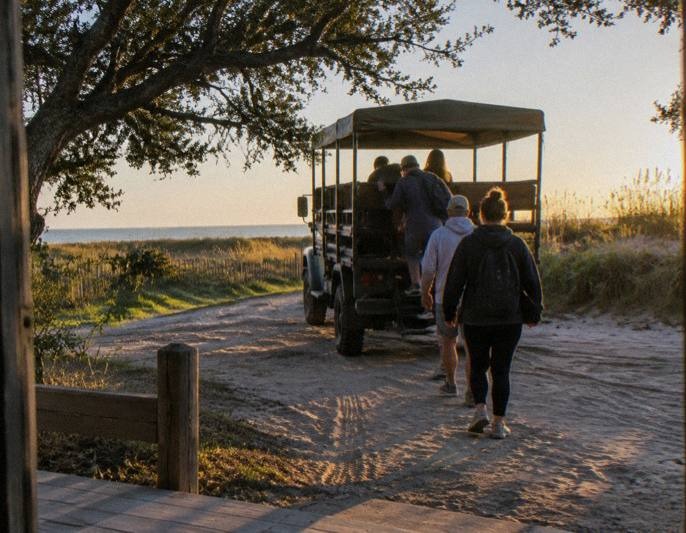
How Many Wild Horses Live On Corolla Beach NC? How The Herd Is Counted
How many horses live on Corolla Beach? The Fund does not publish a fixed number, but it counts the herd by aerial survey, manages 7,544 acres, and identifies each horse by markings.
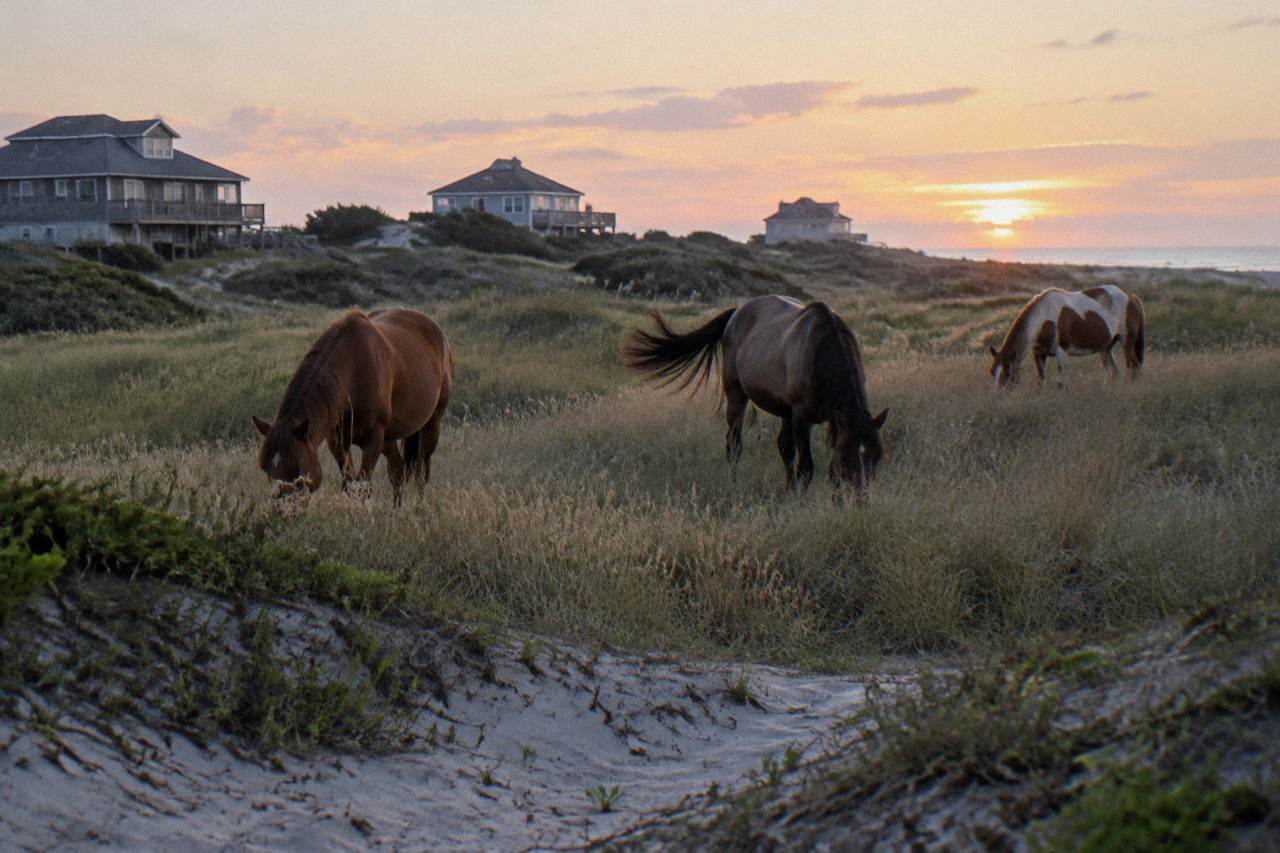
The question sounds simple: how many horses live on Corolla Beach? The honest answer is that the Corolla Wild Horse Fund, the nonprofit that manages the herd, does not publish a fixed head count on its public pages. What the Fund does publish is better than a bare number anyway: it explains how the herd is counted (by helicopter, as many as six aerial surveys), how each horse is identified (by color, markings and home territory, with no branding or microchips), and how the population is managed with a contraceptive vaccine called PZP. The herd roams 7,544 acres of the northern Outer Banks, and understanding that landscape explains why a guided 4WD tour, like the 2-hour open-air truck tour rated 4.8 across 2,871 reviews, is the practical way most visitors actually encounter it.
How Many Wild Horses Live On Corolla Beach, NC?
No official source publishes a current head count, so treat any specific number you read on a blog with caution. The Fund reports herd figures to Currituck County's Wild Horse Advisory Board rather than posting a running tally online. The herd is tracked by helicopter, with as many as six aerial counts a year, and each horse is identified on the ground by its color, markings and home territory.
The herd lives on the northern Outer Banks, beyond the end of the paved road in Corolla. The Fund's herd-management page describes the task as managing wild horses across 7,544 acres of diverse habitat, an area that includes roughly 700 houses, thousands of people and vehicles, and a mix of 70 percent private land and 30 percent public use land. That is a remarkable arrangement: a free-roaming horse population sharing a barrier island with a residential community, threaded through by one public road, the beach itself.
Why does no single number work? Because the herd is not fenced into a paddock where someone can walk a fence line and count. Horses move with the seasons, the insects and the heat, shifting between maritime forest, swales and the open beach. A count taken in April can differ from one taken in August, and foals arrive through the warmer months. The Fund's history page notes that the herd's range runs roughly eleven miles north from the paved road's end to the Virginia state line, with the beach serving as the only vehicle access for the communities of Carova, North Swan Beach and Swan Beach.
The counting method matters for visitors too. Because the Fund tracks horses by markings and territory rather than tags, individual animals are recognizable to the people who study them, and a tour guide who drives the range daily often knows which bands have been where. That local knowledge is one reason a guided excursion, like the 2-hour 4WD truck tour that holds a 4.8 rating across 2,871 reviews, tends to find horses more reliably than a first-time self-drive, a topic covered in detail in driving the Corolla 4x4 beach yourself versus a guided tour.
The question of herd size also has a management dimension the Fund is direct about. Population growth on a barrier island with limited forage leads to thin horses and horses hit on the roads, which is why the Fund uses PZP immunocontraception on designated mares. The history page records that eleven horses were hit and killed on Highway 12 between 1985, when the road between Duck and Corolla was paved, and 1989, the year the Fund was organized, and that the horses frequenting Corolla village were then moved north of the paved road. Managing the number is managing the herd's survival.
How Does The Corolla Wild Horse Fund Count The Herd?
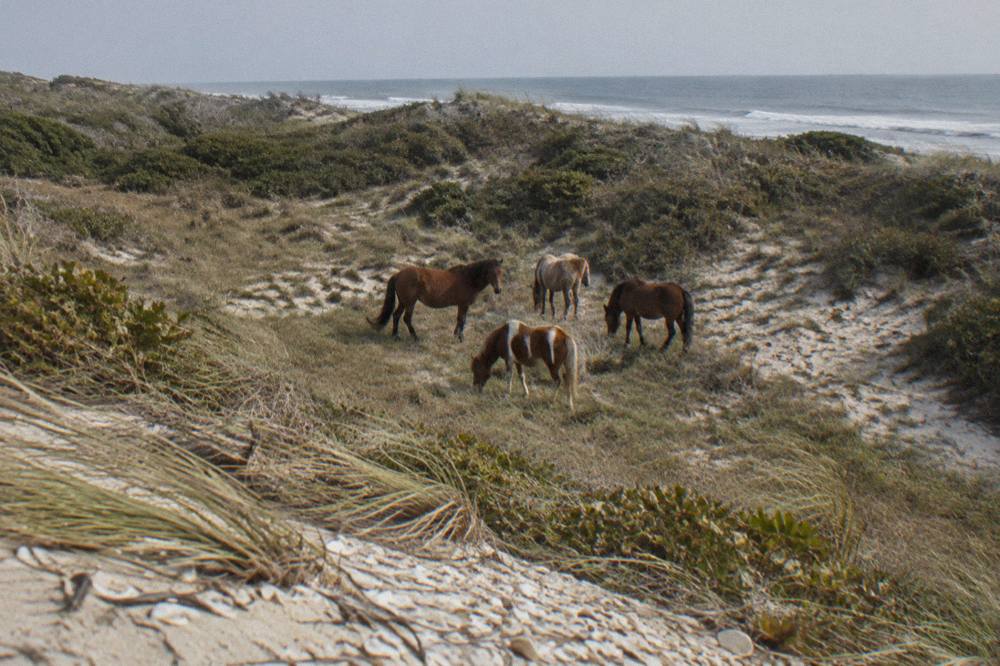
The Fund counts the herd primarily from the air, with as many as six helicopter surveys a year, and confirms those counts on the ground by identifying each horse individually. Horses are recognized by color, markings and home territory rather than by brands or microchips, so the count is a matter of accumulated recognition rather than a tag scan.
Aerial counting over eleven miles of beach, marsh and forest is the only practical way to cover the whole range quickly, before bands move. Helicopter counts are standard practice for free-roaming equid management in the United States, and the Fund's herd-management page states plainly that up to six are flown. Between flights, staff and volunteers track births, deaths and movements on the ground, which is where the identification system earns its keep: a horse with a distinctive blaze, sock or dorsal stripe becomes a record in the herd book, tied to the territory it favors.
The results feed into the county process. The Fund files administrative reports to Currituck County's Wild Horse Advisory Board, and the county separately licenses and regulates the tour operators who take visitors into the range, with rules published on the county's horse tours page: tour vehicles must display a valid state license tag, stay at least 50 feet from the horses, and operate west of the dune line only between 8 a.m. and 8 p.m. So the same local government that knows the herd's approximate size also controls how tours behave around it.
| Question | Answer |
|---|---|
| Is there a published head count? | No public figure; the Fund reports to the county's advisory board |
| How is the herd counted? | Aerial counts by helicopter, as many as six per year |
| How are horses identified? | Color, markings and home territory, no branding or microchipping |
| Range size | 7,544 acres across the northern Outer Banks |
| Northern boundary | Approximately eleven miles north, at the Virginia state line |
| Land mix | About 70 percent private, 30 percent public use |
A note on numbers you may see elsewhere: some blogs and real-estate sites print a figure around one hundred horses. Those are not primary sources, and the Fund's herd-management and FAQ pages do not state a current count. The Fund counts the herd by aerial survey, sometimes several helicopter counts in a year, and reports the numbers to the county. Plan around real numbers: Corolla North Carolina Horse Tours lists only confirmed tour prices, durations and operator details.
Why Is The Herd Managed With Birth Control Instead Of Just Counting?
PZP immunocontraception is applied to designated mares to keep the population matched to what 7,544 acres of barrier island habitat can feed. Without it, the herd would grow past its forage base, which historically meant thin horses in winter and animals struck by vehicles as they ranged wider for food.
The vaccine is not a herd-reduction program in the aggressive sense; it is a throttle. Mares treated with PZP come into fewer pregnancies, so the foal crop each year stays modest. Fresh 2026 reporting shows how modest: in 2026 the herd welcomed at least twelve healthy foals, seven fillies and five colts, with the Fund noting one or two more could still arrive before the season closed. A birth rate in that range, against natural losses, is what keeps a population stable on an island this size.
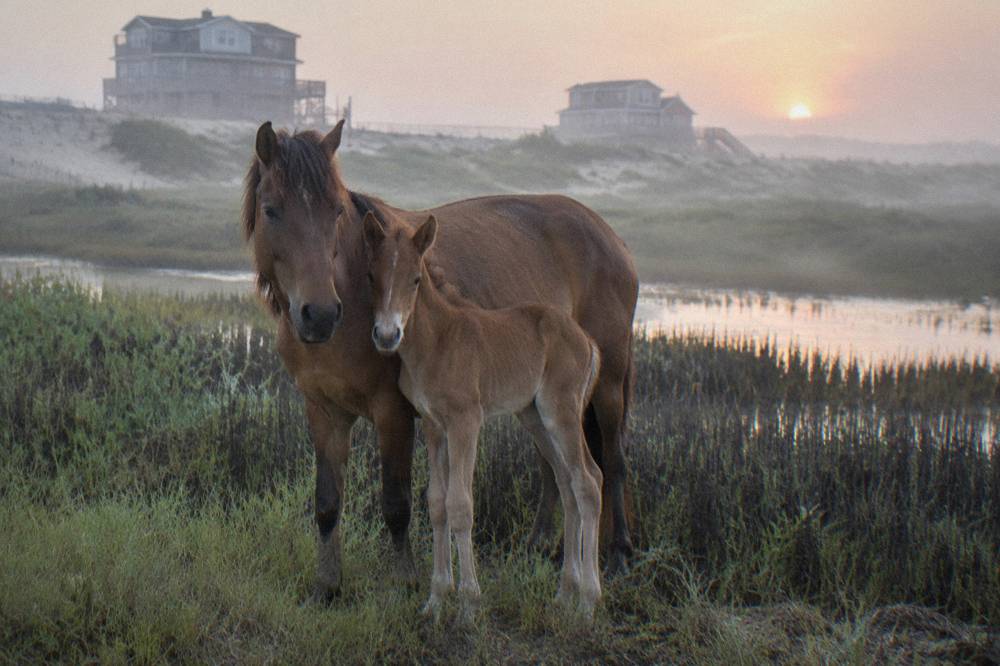
Habitat pressure is the other half of the story. The herd shares its 7,544 acres with roughly 700 houses and the vehicle traffic that serves them, and the beach doubles as the only public road for the communities north of the paved highway. Forage is seasonal, and the Fund runs a fall hay donation drive because, as it puts it, the cost and availability of hay is an ever-increasing challenge. A herd sized to its habitat is a herd that winters well.
The county ordinance backs the same goal from the human side. Feeding the wild horses or coming within 50 feet of them is punishable by law under Currituck County's wild horse ordinance, and the Fund asks that dangerous behavior be reported to county dispatch. That rule exists precisely because a horse that learns to approach people for food becomes a horse at risk, as the Fund's frequently asked questions page explains. Etiquette and population management are the same project, and the guide on the Corolla wild horse 50-foot rule and etiquette covers it in full.
Visitors who want a closer look at management in practice can support the Fund directly. Its museum and gift shop at 1130E Corolla Village Road in Corolla is open seasonally Tuesday through Saturday, and its Mustang Mornings program at the mainland farm in Grandy ran on Wednesdays through the 2026 summer, with a suggested donation per vehicle at the gate. Check the Fund's calendar for the next season's dates before planning around either.
Where Do The Horses Go When You Cannot Find Them?
Seasonal movement, not herd size, explains most failed sightings. In spring, biting flies and shifting winds push horses out of secluded cover onto the open beach; in summer, heat does the same thing. The herd relocates predictably in response to conditions that repeat every year, which is why timing and local knowledge matter more than any head count.
This pattern is the most useful thing a visitor can learn from the counting discussion. A stable, well-managed herd that knows its territory still moves across it constantly, and a band visible on the beach at 9 a.m. may be half a mile back in the swales by noon. Guides who drive the range every day track those movements in real time, which is the quiet advantage of the 2-hour open-air 4WD truck tour, whose listing promises a professional horse guide and transport by open-air truck, no ATVs, for up to twelve travelers per departure.
The timing question deserves its own look, and the site's guide to the best time of year to see wild horses on the Outer Banks breaks down the seasons. The short version: spring through early fall concentrates horses on the beach where tours can reach them, while winter scatters them into cover. None of that changes how many horses live on Corolla Beach; it changes only how visible they are on a given morning.
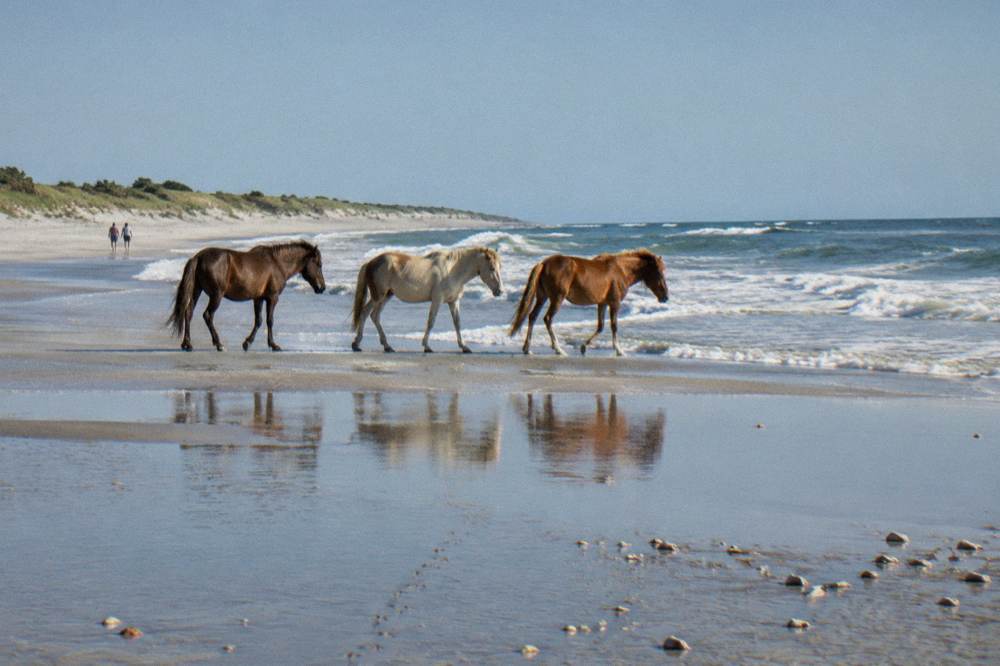
Sighting expectations should stay honest. The horses roam 7,544 acres on their own schedule, and no operator, including the featured 4WD tour, can promise an encounter. What a licensed tour does promise is access, interpretation and a driver who spends every working day learning where the bands are, plus compliance with the county rules that keep the animals at a lawful distance.
| Season | What pushes the horses | Where they tend to be | Visitor takeaway |
|---|---|---|---|
| Spring | Biting flies, shifting winds | Out of cover, onto the beach | Strong sighting months for tours |
| Summer | Heat stress | Open sand and surf line | Morning departures beat midday |
| Fall | Cooling temps, fewer insects | Mixed beach and swales | Crowds drop, movement varies |
| Winter | Cold wind, sparse forage | Secluded cover, back country | Hardest season for self-drivers |
One more context point worth knowing: the land itself is protected in layers. North of Corolla village lies the Currituck National Wildlife Refuge, whose federal access page states that four-wheel drive is required beyond the end of NC-12 and that it is unlawful to harm, approach or feed any wild horse on refuge land. The refuge sits alongside the private parcels and the public beach, so the herd's 7,544 acres overlap several jurisdictions, each with its own rules and none with a fence.
What Is The Featured Tour's Role For Herd-Curious Visitors?
The 2-hour Outer Banks Wild Horse Tour by 4WD Truck is the bookable way to put a guide's daily knowledge of the herd's movements to work. It is rated 4.8 across 2,871 reviews, runs from $65 per person, and takes up to twelve travelers in an open-air truck from a meeting point at 1148 Ocean Trail in Corolla.
For a reader who arrived here wondering about herd size, the practical takeaway is not the number but the access. The horses live beyond the paved road in terrain that demands four-wheel drive, county rules govern how tours behave there, and a licensed operator solves all of that in one booking. The listing notes the tour is not wheelchair accessible, is not recommended for travelers with back problems, requires moderate fitness, and cannot take children under five years of age or 40 pounds; food, drinks and hotel pickup are not included. The booking page shows the live price.
Curiosity about the herd also pairs well with the Fund's own offerings, the museum in Corolla village and the Grandy farm events, where the management story is told by the people who do the counting. Read the history of the Corolla wild horses for how the herd survived the paving of Highway 12 and the fence that moved it north. Together those pieces give you the full picture a number alone never could: where the horses are, why they are not counted like livestock, and what keeps them wild.
The herd's story is ultimately one of balance: a population sized by vaccine and counted by helicopter, on an island shared with houses, trucks and tens of thousands of visitors a year. The number, whenever the Fund's next report lands with the county, will be a snapshot of that balance, not a fixed fact about the beach.
Common Questions About The Corolla Wild Horse Herd
How many horses live on Corolla Beach?
No official public head count is published. The Corolla Wild Horse Fund counts the herd with up to six helicopter surveys a year and reports figures to Currituck County's Wild Horse Advisory Board rather than publishing a running tally online.
How many foals are born each year?
In 2026 the herd welcomed at least twelve healthy foals, seven fillies and five colts. Birth rates are deliberately kept modest through PZP immunocontraception so the population matches what the habitat can feed.
Why won't anyone give an exact number?
The horses are free-roaming across 7,544 acres of beach, marsh and forest, so any count is a snapshot. The Fund counts the herd by helicopter survey and reports the results to the county's Wild Horse Advisory Board, so the number shifts with each aerial count rather than staying fixed. No. The Fund identifies each horse by color, markings and home territory, with no branding or microchipping. Individual recognition by the people who study the herd substitutes for tags. Winter forage is the tight season, and the Fund runs a fall hay donation drive because hay cost and availability is an ongoing challenge. PZP management keeps the population within what the island's forage can support. You can, but timing and access matter. The horses shift seasonally between cover and open beach, the range requires four-wheel drive beyond the paved road, and a licensed guided tour, like the 2-hour 4WD truck tour, handles both with a driver who tracks the bands daily.Are the Corolla horses branded or tagged?
Does the herd ever run out of food?
Can I see the horses without knowing any of this?