What Time Of Day Is Best To See Wild Horses In Corolla?
Morning and the hours before sunset are the best times of day to see the Corolla wild horses, because heat, insects and the county's tour hours all push the herd toward the open beach at those hours.
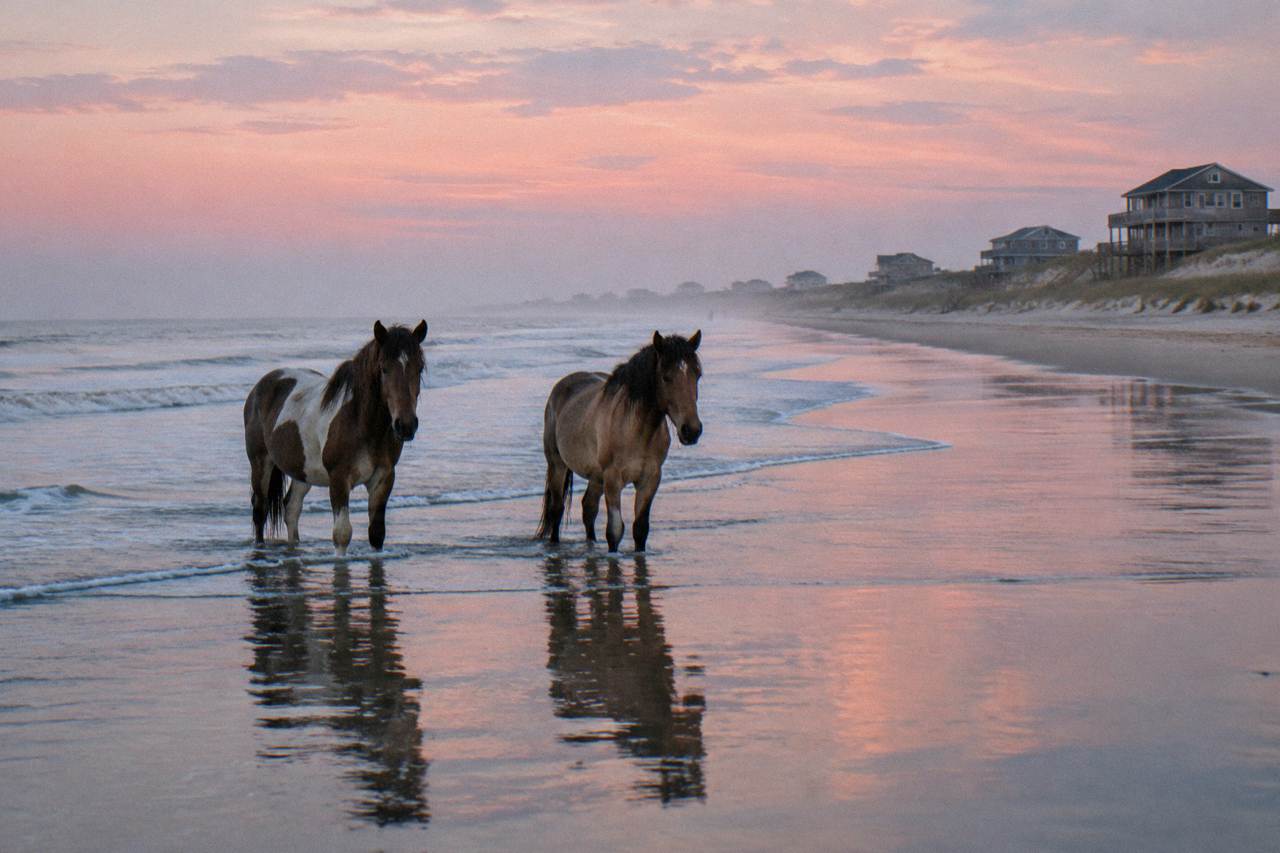
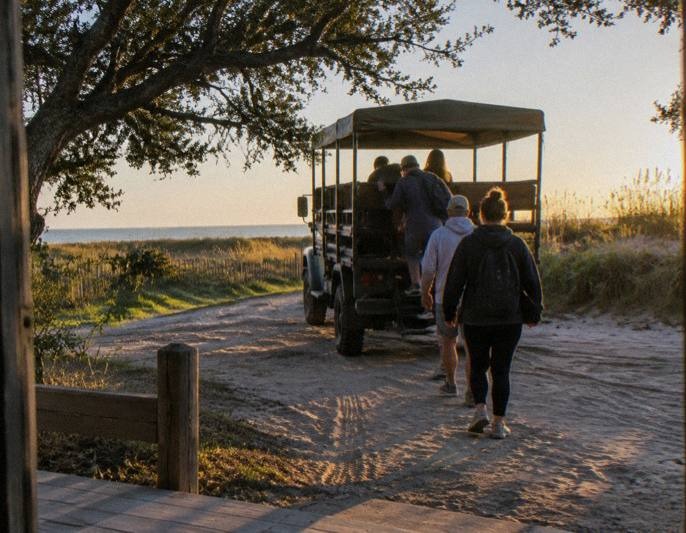
Morning and early evening are the strongest hours for wild horse activity in Corolla, and the herd's own habits explain why. Biting flies and heat push the horses out of the maritime forest and onto the open beach at the cool ends of the day, and Currituck County only permits commercial tour vehicles on the four-wheel-drive beach between 8 a.m. and 8 p.m., which brackets almost every guided option into the same window. None of that promises a sighting: the horses roam 7,544 acres and keep their own schedule. But if you are choosing a departure time for the 2-hour open-air 4WD truck tour, the biology and the rules both point the same way.
When Are The Corolla Horses Most Active?
The best time is dawn or dusk: the two or three hours right after sunrise and the two or three just before sunset are the strongest windows, while midday heat drives the horses into shaded cover away from the sand. A mid to late morning shoulder window can also work once flies get active, so book an early or end-of-day tour slot, since departures cluster in the morning and late afternoon for exactly these reasons.
The pattern is not folklore; it is thermodynamics with hooves. Overnight the sand and marsh cool down, and at first light the horses come out to graze, drink and travel while the footing is comfortable. As the sun climbs, two pressures take over. Biting insects build in the vegetation behind the dunes, so the horses move to the beach, where the wind keeps the flies down. Then afternoon heat does the same work the insects did earlier: it forces animals out of cover and toward the water's edge, or it sends them deep into shade where a truck tour cannot follow.
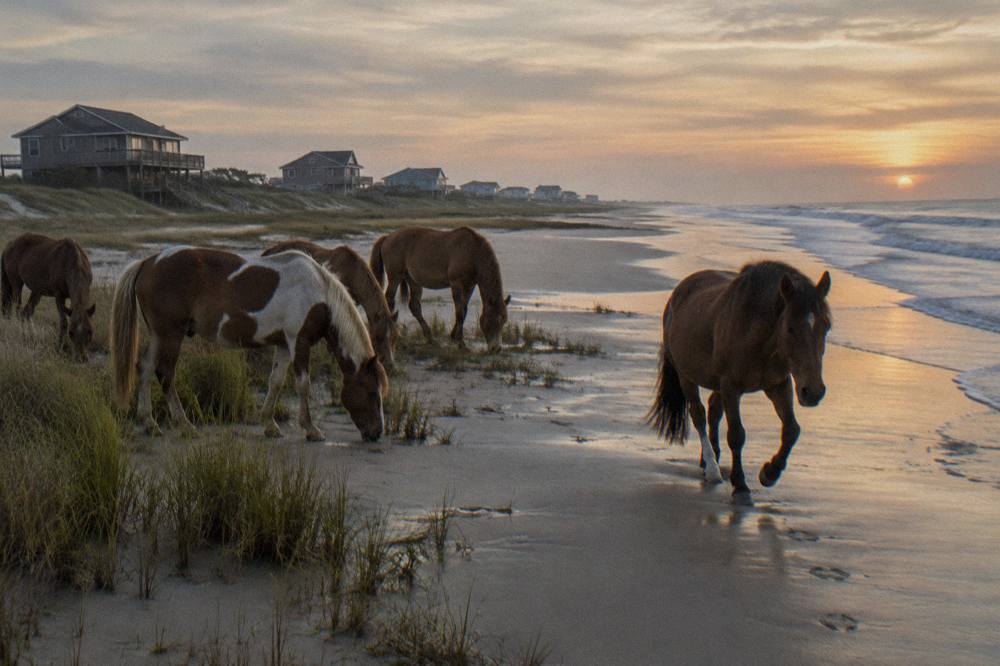
Visitors often assume the middle of the day is prime because that is when the beaches are busiest with people. The reverse is closer to true. The horses avoid crowds and midday heat, so the productive strategy is to be out when the beach is emptier and cooler. An early departure on the guided 4WD tour also means softer light for photographs and less truck traffic on the sand, which keeps the whole two hours calmer.
That matters for the Corolla horse tour specifically: the listing caps each truck at 12 travelers in an open-air 4-wheel-drive vehicle, and the ride covers the off-road stretch north of the paved road where the herd lives. A morning slot gives that whole route the best combination of horse movement, light and space.
Why Morning And Late Afternoon Beat Midday
Heat is the single biggest midday problem: on a summer afternoon the sand surface and the air behind the dunes both climb, and the horses respond by standing in shade or in the surf rather than traveling, which makes them harder to spot from a moving truck. Insects are the second problem, active in the vegetation through the warm hours. Cooler air in the morning and evening suppresses both pressures at once.
Observations from the 2026 season back this up neatly. In April, biting flies and shifting winds pushed horses out of secluded areas and onto the beach, drawing onlookers toward the southern end of the range. Through the summer the same relocation repeated for a different reason: heat stress did what the insects had done weeks earlier, moving horses out of cover and into the open. One way to read that is encouraging: in the hottest months the herd can actually be more visible in the open during the cooler edges of the day, not less.
The morning has a second, purely human advantage. The four-wheel-drive beach is a public road, and it fills up as the day goes on: resident trucks, fishing setups, families parked at the water line. Early departures from the meeting point at 1148 Ocean Trail in Corolla reach the range before that buildup, and tour vehicles are required to keep at least 50 feet from the horses, so a calmer beach means better, longer views within the legal distance.
Late afternoon carries one caution worth planning around. Currituck County prohibits commercial tour operation west of the dune line before 8 a.m. and after 8 p.m., and in June and July a 7 p.m. departure still has plenty of light. In the shoulder seasons that final slot compresses fast, so if a golden-hour ride is the goal, book it for late spring or early fall rather than October, when darkness closes in well before the county cutoff.
How Heat And Insects Set The Herd's Daily Rhythm
The horses are not following a clock; they are trading shade against insects and wind. When flies are bad in the back areas, the beach wins. When the beach gets hot, the shade wins. When both are tolerable, which is most often at dawn and dusk, the herd travels, grazes and interacts, which is exactly the behavior people hope to watch from a tour truck.
That trade-off is why time of day matters more in Corolla than in a park with fenced animals. The Fund that manages the herd describes the animals moving across a mix of private and public land with hundreds of houses and thousands of people and vehicles in it, responding to conditions that repeat every summer. Day to day, the same horses can be behind the dune line at 1 p.m. and standing in the wash at 6 p.m.
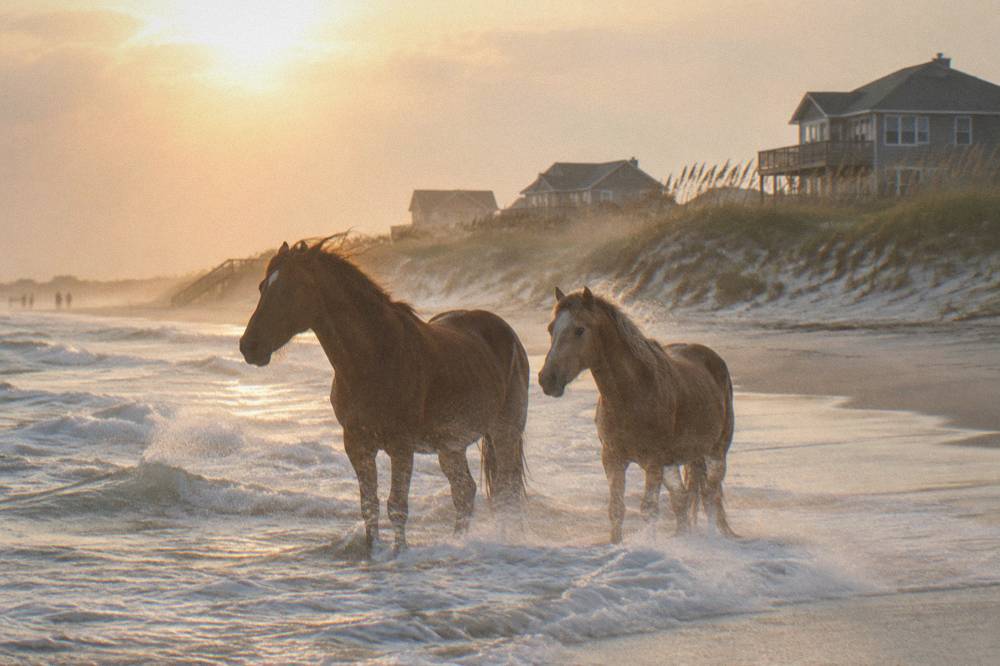
The seasonal layer stacks on top of the daily one. Foaling runs through the warmer months, and the Fund has repeatedly stressed that getting too close stresses the herd and can separate foals from their mothers. A respectful viewing distance at a good hour does more for what you see than chasing the horses at a bad one: undisturbed bands stay in the open longer. That is also the logic behind the county rule that keeps tour vehicles 50 feet back, which every licensed operator must follow.
When Guided Corolla Horse Tours Actually Depart
Departure times vary by operator and season, and the operators themselves say so: Back Country Safari Tours tells callers its times shift seasonally, and Coastal Explorations points to its booking button for the latest schedule. In practice, morning slots fill first, then late afternoon, and the midday gap is thinner both because demand is lower and because the viewing is weaker.
The featured Corolla horse tour runs about two hours from its Corolla meeting point, with the booking page showing the live price and the day's available times; the roster lists it from $65 per person, rated 4.8 across 2,871 reviews. Reading that schedule with the herd's rhythm in mind is the whole game: an 8:30 or 9 a.m. departure sits inside the morning movement window, and a 5 or 6 p.m. departure catches the pre-dusk drift back toward the water.
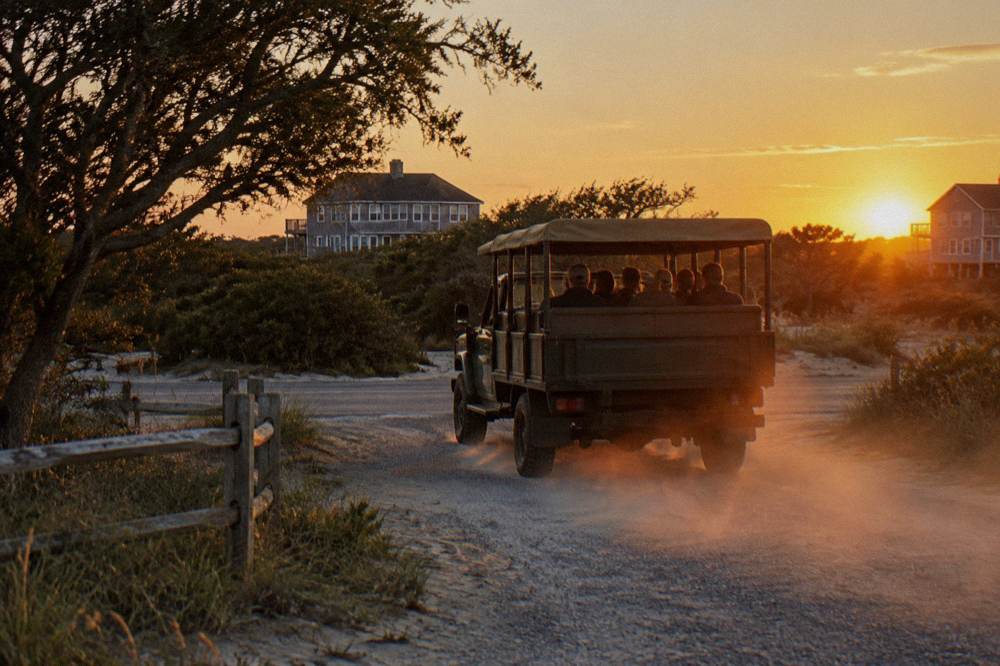
The direct-book operators follow similar clocks. The operator behind seecorollawildhorses.com runs its open-air safari trucks from April through November and switches to an enclosed SUV from January through March, describing a roughly 25-mile off-road route over about two hours. Back Country Safari Tours lists 8 a.m. to 8 p.m. hours, matching the county's window exactly, and Coastal Explorations runs roughly two-hour trips on a seasonal calendar. None of them will promise a horse at any hour, and neither will the listing for the guided 4WD truck tour; the honest pitch is that these hours maximize the odds.
For a deeper look at how the booking window changes across the calendar, the guide to the best time of year for Outer Banks wild horses covers the monthly pattern, and where to find the Corolla wild horses today explains how the herd shifts within the 4x4 area.
A rough hour-by-hour sketch, built from the county's tour rules and the seasonal behavior observers reported:
| Time block | What usually happens | Notes for visitors |
|---|---|---|
| Sunrise to about 10 a.m. | Horses graze and travel on cool sand; insects still light | Strongest window; book the earliest departure that fits |
| 10 a.m. to 1 p.m. | Flies build in the vegetation; horses drift to windy beach edges | Still productive near the water line; sand getting hot |
| 1 p.m. to 4 p.m. | Peak heat; bands stand in surf or retreat to shade | Weakest window in summer; better in spring and fall |
| 4 p.m. to 8 p.m. | Air cools; herd moves and travels again before dark | Second-best window; watch the sunset clock late in the season |
Does Time Of Day Matter More In Some Months?
Yes, and the difference is largest at the height of summer. In July and August the midday heat is intense enough that the middle of the day is genuinely poor, while spring and fall days stay mild enough that a well-timed midday visit can still work. In winter, the cool hours stretch across most of the day but tour capacity thins out, since several operators run reduced or enclosed-vehicle schedules.
Spring is arguably the sweet spot for a time-of-day strategy. April and May mornings are cool, the foals from the season's crop are young and close to their mothers, and observers in 2026 noted the fly-driven push to the beach starting in April, which concentrated activity in open, viewable spots. A morning Corolla horse tour in that window combines comfortable temperatures with peak movement.
Fall flips the arithmetic on evening trips. Through September an after-dinner departure can still run in daylight, but by October the light gives out well before the 8 p.m. county cutoff, so the effective best hours compress toward the morning. If a sunset ride is the specific goal, book it in the warmer half of the year rather than the shoulder, and check the day's final departure time on the live listing before committing to a date.
Winter deserves a word because most advice ignores it. The horses do not leave; the Fund manages them on the same range year-round, and one direct operator runs enclosed SUV tours from January through March precisely because the viewing continues. Cool-season days often give you a wider usable window, simply with fewer trucks on the sand and a different vehicle under you.
Common Questions About The Best Time Of Day
What time of day is best to see wild horses in Corolla?
Early morning, roughly sunrise to 10 a.m., and the last few hours before sunset. Insects are light and temperatures are down at those hours, so the horses graze and travel in the open. Midday heat sends them into shade or the surf, and Currituck County only allows tour vehicles on the four-wheel-drive beach between 8 a.m. and 8 p.m.
Can you see wild horses at night in Corolla?
Not on a guided tour. The county prohibits commercial tour operation west of the dune line after 8 p.m., and in most months full darkness arrives before that cutoff anyway. The horses are active at night on their own terms, but there is no legal guided window for watching them after dark.
Is sunrise or sunset better for a Corolla horse tour?
Both work, with a slight practical edge to sunrise in summer. The earliest departures reach the beach before crowds and vehicle traffic build, and the coolest air of the day keeps the herd moving. A sunset departure offers the best light for photographs, but in fall the usable daylight shrinks fast, so book late-day slots for late spring through early fall.
Do the horses come out more when it is hot?
Heat changes where they are more than how active they are. Summer heat stress pushes the horses out of the shaded back areas and toward the open beach and water's edge, so they can be more visible at the cooler ends of hot days. In the middle of a hot afternoon, though, standing in shade or surf is the more likely behavior, which is why midday is the weakest tour window.
How early do Corolla horse tours start?
The county's rule sets the floor: tour vehicles may not operate on the four-wheel-drive beach before 8 a.m. Every licensed departure, including the 2-hour 4WD truck tour, is scheduled inside the 8 a.m. to 8 p.m. window. Exact daily departure times vary by operator and season, and the live listing shows the current schedule.
What is the worst time of day to look for the horses?
Midday to mid-afternoon on a summer day, roughly 1 p.m. to 4 p.m. That is when heat drives the herd into shade or standing water and the public beach is at its busiest with people and trucks. The horses roam freely, so sightings happen at any hour, but the odds and the viewing quality are both at their lowest then.
Before locking a time, it is worth pairing this hour-by-hour logic with a look at how much Corolla wild horse tours cost, since morning and golden-hour slots on the featured 4WD truck tour tend to be the first seats to go. The operator's live listing shows the day's remaining departures, and the booking page shows the live price.
Sources worth reading directly: Currituck County's tour operator rules page states the 8 a.m. to 8 p.m. operating window and the 50-foot vehicle distance, and the Corolla Wild Horse Fund's herd management page describes the 7,544-acre range the herd moves across every day. For the rest of the timing picture, see the seasonal guides at Corolla North Carolina Horse Tours.