Wild Horse Tours On The Outer Banks: Where They Run And What Is Bookable
Wild horses roam the northernmost Outer Banks beaches around Corolla and Carova, and most horse tours sell direct on their own sites, with one 2-hour 4WD truck tour listed on a third-party booking platform with a live calendar.
Short answer
Wild horses on the Outer Banks live on roughly 7,544 acres north of the paved end of NC-12, from Corolla to the Virginia line. One 2-hour open-air 4WD truck tour from $65 per person, rated 4.8 across 2,871 reviews, can be booked through a live calendar on a third-party platform; the other Corolla operators take bookings direct. Other Corolla operators take bookings on their own websites and by phone.
Wild horses have lived on the northern Outer Banks for centuries, and today they share roughly 7,544 acres of beach, dune and maritime forest with private houses, resident vehicles and the town of Corolla at the southern edge of their range. The Corolla Wild Horse Fund, the nonprofit that manages the herd, describes the land as a mix of 70 percent private property and 30 percent public use, which is why seeing the horses on your own is harder than it sounds and why guided tours exist in the first place.
That geography also explains a point that confuses a lot of first-time visitors: almost every horse tour on the Outer Banks is run by a small local operator that sells its own seats by phone or through its own website. Exactly one, the 2-hour open-air 4WD truck tour out of Corolla, is listed on a booking platform where you can reserve a seat in advance, at a set time, with a printed price. That tour runs from $65 per person and carries a 4.8 rating across 2,871 reviews. This guide maps where the herds actually are, what each kind of tour offers, and how the booking picture really looks.
Where Can I See Wild Horses On The Outer Banks?
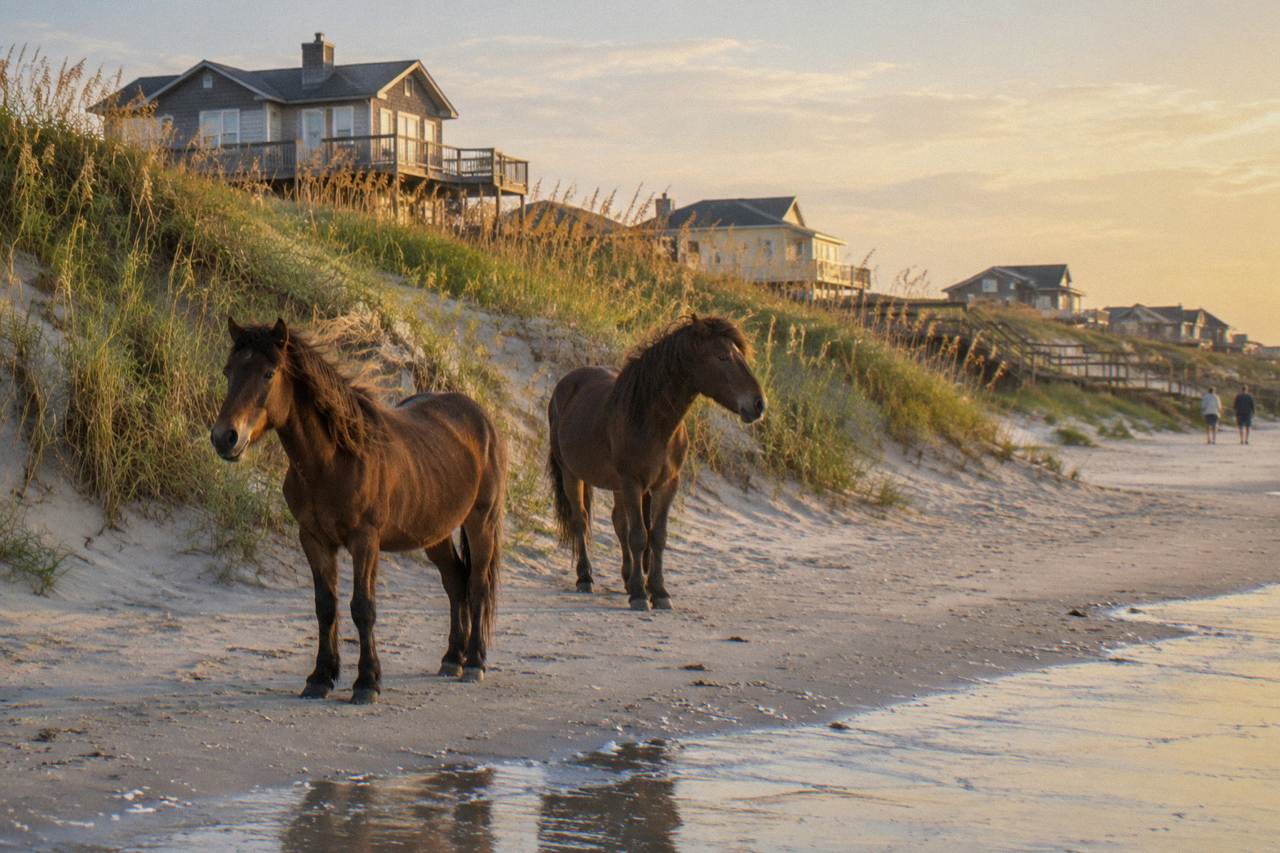
The wild horses live on the northern beaches of the Outer Banks, in and beyond the four-wheel-drive area that begins where the paved road ends in Corolla. Their range stretches roughly eleven miles north to the Virginia state line, covering about 7,544 acres of beach, dunes and maritime forest around Carova, North Swan Beach and Swan Beach. South of Corolla village, there are no wild horses on the beach.
The horses are Colonial Spanish Mustangs, the breed the North Carolina General Assembly named the Official Horse of the State of North Carolina in June 2010. They are not kept anywhere, fed by anyone, or confined by fencing on the seaward side. The Corolla Wild Horse Fund explains on its herd management page that the animals are identified by color, markings and home territory rather than branded or microchipped, and that the Fund counts the herd with aerial surveys, as many as six per year, conducted by helicopter.
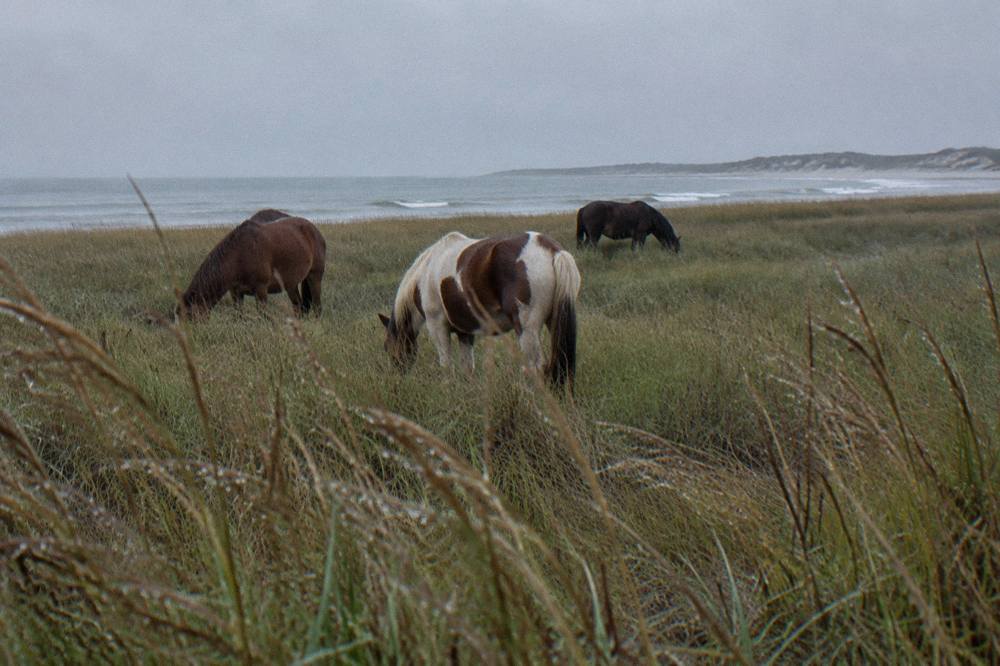
A practical consequence of that free-roaming life: the horses move. They follow the insects, the wind, the heat and the fresh water, and a group standing on the beach at dawn can be half a mile back in the sand roads by mid-afternoon. The Fund's history of the herd notes that eleven horses were hit and killed on Highway 12 between 1985, when the road through Duck was paved, and 1989, after which the horses frequenting Corolla were moved north of the paved road. That fence line at the north end of Corolla is still the southern boundary of their range, and it is the single most reliable landmark for anyone hoping to spot them.
This is also why the guided 4WD truck tour exists in the form it does. The tour trucks drive the sand north of the pavement, carrying a guide who spends every working day tracking where the bands are. The listing for the 2-hour Outer Banks wild horse tour describes exactly this: transport by open-air 4-wheel drive truck, no ATVs, a professional guide, and a route onto the beach and sand roads that a normal passenger car cannot attempt.
For readers weighing a self-guided attempt instead, the free and paid options are compared in the guide to seeing the horses without a tour, including the honest odds.
Where Are The Horses At The Outer Banks?
The horses are in the 4x4 area, the stretch of beach and sand roads north of where NC-12 ends in Corolla, plus the adjacent Currituck National Wildlife Refuge lands. The US Fish and Wildlife Service states that refuge access is by 4WD vehicle or boat only, and that vehicle traffic is restricted to the beachfront. You cannot reach their core range in a regular car.
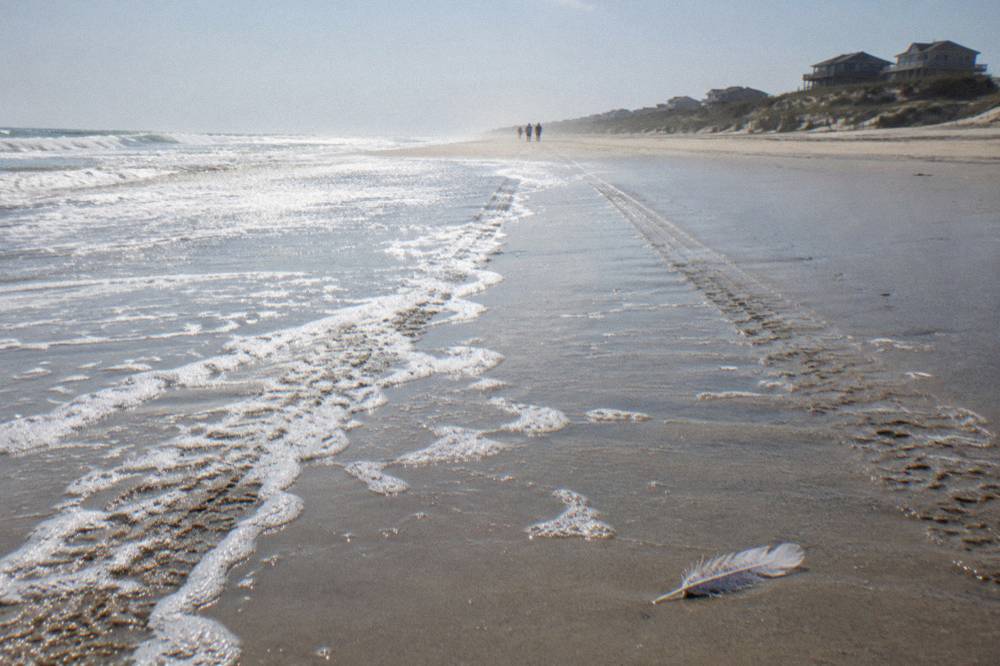
The geography works like this. NC-12 runs north through Corolla village and simply stops. From that terminus, the beach itself becomes the public road, the only access for residents and guests staying in Carova, North Swan Beach and Swan Beach. The Currituck National Wildlife Refuge sits alongside and north of that corridor; its visitor information page describes maritime forest and brackish marsh in six units between Corolla and the state line, open daily from sunrise to sunset with no developed facilities, no trails and no restrooms.
The refuge pages also carry the federal side of the horse rules: it is unlawful to harm, approach, feed or kill any wild horse on the refuge, and the horses there are to be viewed only from a distance. County rules add the 50-foot spacing that applies everywhere else on the northern beaches, and Currituck County's tour operator page adds the operating rules for the trucks themselves: licensed tour vehicles only, no running tours west of the dune line before 8 a.m. or after 8 p.m., no amplified sound on the beach, and tour vehicles staying at least 50 feet from the horses.
Where does that leave a visitor in a two-wheel-drive rental car? At the fence, looking north. The practical choices are three: take a guided tour in an operator's vehicle, drive the beach yourself in a proper 4WD, or try the low-cost options around Corolla village. That trade-off, including what county guidance actually says about airing down and speeds, is laid out in driving the Corolla 4x4 beach yourself versus a guided tour.
| Area | Where it is | Vehicle needed | Wild horse odds |
|---|---|---|---|
| Corolla village and beaches south of the fence | South of the NC-12 terminus | Any car | None; the fence keeps the herd north |
| The 4x4 beach (Corolla to Carova) | North of the paved road end | 4WD required per USFWS | Core range; horses move daily |
| Currituck National Wildlife Refuge | Six units along the corridor | 4WD or boat, beachfront driving only | Occasionally seen, distance viewing only |
| Carova, North Swan Beach, Swan Beach | The northernmost communities | 4WD via the beach road | Horses regularly pass through yards and roads |
Which Outer Banks Horse Tours Can You Book Online?
The 2-hour Corolla wild horse tour by open-air 4WD truck, from $65 per person, rated 4.8 across 2,871 reviews, with a maximum of 12 travelers per truck, is the one Outer Banks horse tour sold on a third-party booking platform with a live calendar and a public review count; other Corolla operators take bookings on their own websites and by phone. The other Corolla operators take bookings on their own websites and by phone.
That is the whole booking picture, and it is worth stating plainly because most search results imply a crowded marketplace. The featured listing, run by Benders Beach Services, departs from 1148 Ocean Trail in Corolla and covers the beach and sand roads of the 4x4 area in an open-air truck. The listing spells out the boundaries honestly: a friendly professional guide and the transport are included, while food, drinks and hotel pickup are not. The trucks are not wheelchair accessible, the ride is not recommended for travelers with back problems, a moderate level of physical fitness is expected, and children under five years old or 40 pounds cannot be accommodated.
For a reader who wants a confirmed seat at a set time on a set date, that platform-bookable tour, with its live calendar and public review count, is the practical answer. The booking page shows the live price and the next available departure times, which shift with the season. For everyone else, the direct operators described in the next section are booked on their own terms, usually with a phone call.
The distinction matters most for trip logistics. Families building an Outer Banks week around a fixed itinerary often cannot afford a "call and hope" booking the day before, and bad-weather reshuffles are easier to handle when the reservation already exists in a booking system. Travelers with flexible dates, or those already staying in the 4x4 area where the horses walk past the rental house, may find the direct operators or no tour at all perfectly fine, a comparison the worth-it guide for Corolla horse tours works through in detail.
What Do The Direct Corolla Operators Charge?
The direct operators' own pages list two-hour open-air truck tours with adult rates of $49 to $65 per person and child rates from $45, depending on operator and day of the week, and one operator lists private tours for up to 12 people at $540. These are snapshots from the operators' own rate pages, booked direct, and they are not reservable through any booking platform.
Three operators publish rates. Corolla Wild Horse Tours lists its open-air safari truck, April through November, at $55 adults on Saturday and Sunday, $59 on Monday, and $65 Tuesday to Friday, with senior and child rates below those. Back Country Safari Tours' 2026 rate page lists its two-hour Wild Horse Safari at $55 for adults, $50 for seniors, $45 for kids aged 4 to 12, and private tours up to 12 people at $540. Coastal Explorations quotes a $49 to $65 per person range for its approximately two-hour tour in trucks capped at 10 passengers, opening for the season in late April. All three describe tours of about two hours; the first operator's page says the route covers 25 miles of off-road cruising, and the second says 20 to 30 miles on the north beach.
| Operator (direct booking) | Vehicle, per its own page | Length, per its own page | Adult rate, per its own page |
|---|---|---|---|
| Corolla Wild Horse Tours | 15-passenger open-air safari truck; enclosed SUV in winter | Two hours, about 25 miles | $55 to $65 by day of week |
| Back Country Safari Tours | Custom open-air Beach Safari Cruiser | Two hours; a three-hour kayak combo is listed as temporarily unavailable | $55 adults; $540 private up to 12 |
| Coastal Explorations | Open-air 4WD truck capped at 10 passengers | Approximately two hours round trip | $49 to $65 per person |
None of these figures is a like-for-like substitute for the platform-listed tour. The featured listing's $65 from-price sits at the top of the local range, and what it buys is the advance reservation, the printed cancellation terms, and a review base of 2,871 riders, which no small direct operator's page matches. The direct operators ask for their own cancellation windows, typically around 48 hours before departure, after which the seat may be charged in full if it cannot be resold.
Seasonality is the other variable. One direct operator runs an enclosed SUV tour January through March, another reports operating seven days a week year-round, and the third opens seasonally in late April. The featured 4WD truck tour's listing shows live availability through the booking page, so shoulder-season travelers should check dates there rather than assume an August schedule.
What Does The Corolla 4WD Truck Tour Actually Include?
The listing includes transport by open-air 4-wheel drive truck, no ATVs, and a friendly professional horse guide, for up to 12 travelers over roughly two hours, meeting at 1148 Ocean Trail in Corolla. It excludes food, drinks and hotel pickup, it is not wheelchair accessible, and it does not take children under five or under 40 pounds.
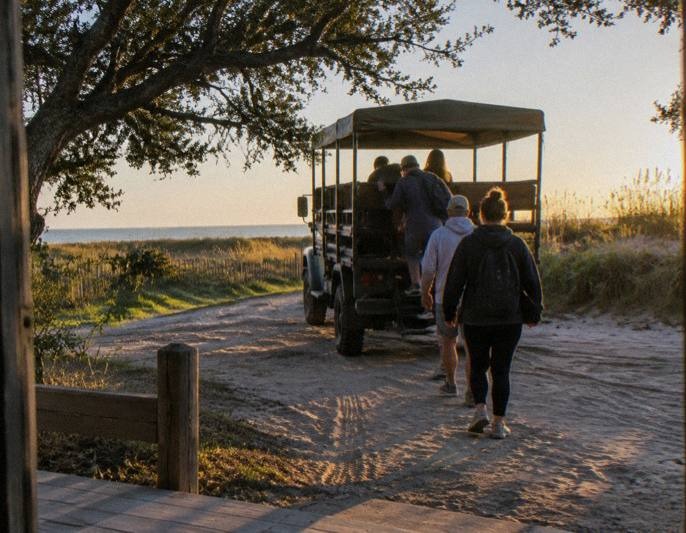
The open-air format is the point. Riders sit in the truck bed on bench seating, which puts them above the sand lines and mare-and-foal level with clear sightlines, a different experience from an enclosed SUV and the reason the summer-season format is what most people picture when they imagine a Corolla horse tour. The guide handles the driving, the spotting and the context: herd history, the fence line story, why the horses are on this stretch and not the beaches of Duck or Nags Head.
The exclusions are the ones to plan around. There is no food or drink on the truck, so bring water on hot days. There is no hotel pickup, so the meeting point at the shared parking lot in Corolla village is on you to reach, and summer traffic on NC-12 makes arriving early the safer bet. The fitness and age notes are real restrictions, not boilerplate: the ride is over sand, it moves, and a parent of a four-year-old needs a different plan. Families with younger children or accessibility questions have options, laid out in the guides on Corolla horse tours with kids and on the bumpiness and accessibility of the ride.
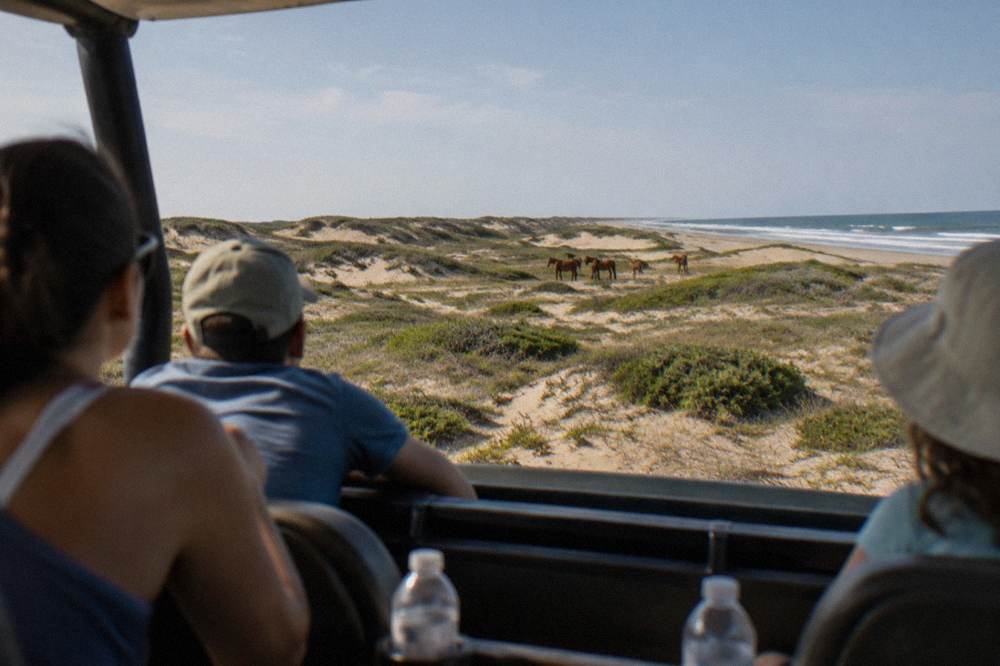
What the tour cannot promise is a sighting on demand. The horses roam the full acreage on their own schedule, and weather, tides, insects and crowds all shift where the bands stand hour to hour. The guides' daily tracking makes an encounter likely in the way the Fund and operators describe it, but nobody honest guarantees horses, and the listing does not either.
When Are The Horses Easiest To Find?
The horses are most visible from late spring through early fall, when insects and heat push them out of the maritime forest and onto the open beach and sand roads, and the 2026 pattern held that trend through summer. Within a day, guides report the bands shifting with wind, tide and temperature rather than a fixed schedule.
The fresh reporting from the herd's own watchers describes a herd that relocates predictably rather than randomly. In April, biting flies and shifting winds moved the horses out of secluded cover and onto the beach, drawing crowds near the southern barrier fence. Through the summer, heat stress did the same work the insects had done earlier, forcing animals out of cover and into the open where tour trucks and beach drivers could see them. The practical read for a visitor: a hot, buggy midsummer afternoon often beats a cool, breezy one for open-beach sightings, even though the cool day is more comfortable.
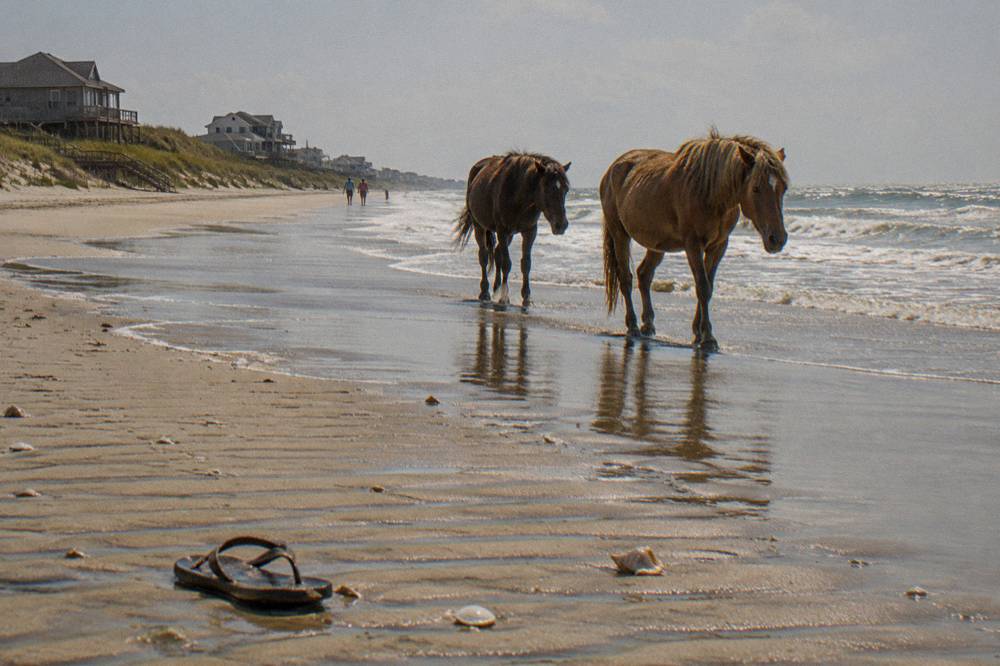
Foal season adds a layer. The first foals of 2026 were spotted roaming free by late April, and the count climbed through the season. Foals are the sighting most riders hope for, and they are also the animals most sensitive to human pressure, which is why the distance rules matter most around mare-and-foal pairs. The deeper timing breakdown, including the hour-by-hour question, is in the best time of day to see the Corolla wild horses and the seasonal best time of year on the Outer Banks.
| Season | Where the horses tend to be | What it means for a tour |
|---|---|---|
| Spring | Pushed onto open beach by flies and wind | Good open sightings; the first foals appear |
| Summer | Open beach and sand roads, avoiding heat and cover | Peak visibility; peak crowds; book ahead |
| Fall | Drifting back to normal patterns as pressure eases | Comfortable conditions, somewhat less predictable |
| Winter | Scattered across the range, fewer beach drivers | Fewer tours running; enclosed-vehicle options appear |
How Close Can You Get To The Horses?
Currituck County's wild horse ordinance makes it illegal to come within 50 feet of a wild horse, and unlawful to feed, ride, pet or entice one, and the Fund states plainly that getting closer or feeding the horses is punishable by law regardless of a person's experience with horses. If a horse approaches you, the responsibility to keep the distance is yours.
The 50-foot rule is the one number that matters on the northern beaches, and it applies to everyone: walkers, beach drivers, photographers and tour trucks alike. Currituck County's operator rules require licensed tour vehicles to hold the same distance, which is why a tour truck stops well back and lets the guide narrate while the binoculars and zoom lenses do the rest. The rule exists because habituation is the danger, not aggression. The Fund's educational material stresses that foals are extremely impressionable in their first months, that close contact stresses the animals, and that habituated horses can be separated from their mothers or drawn toward roads and vehicles.
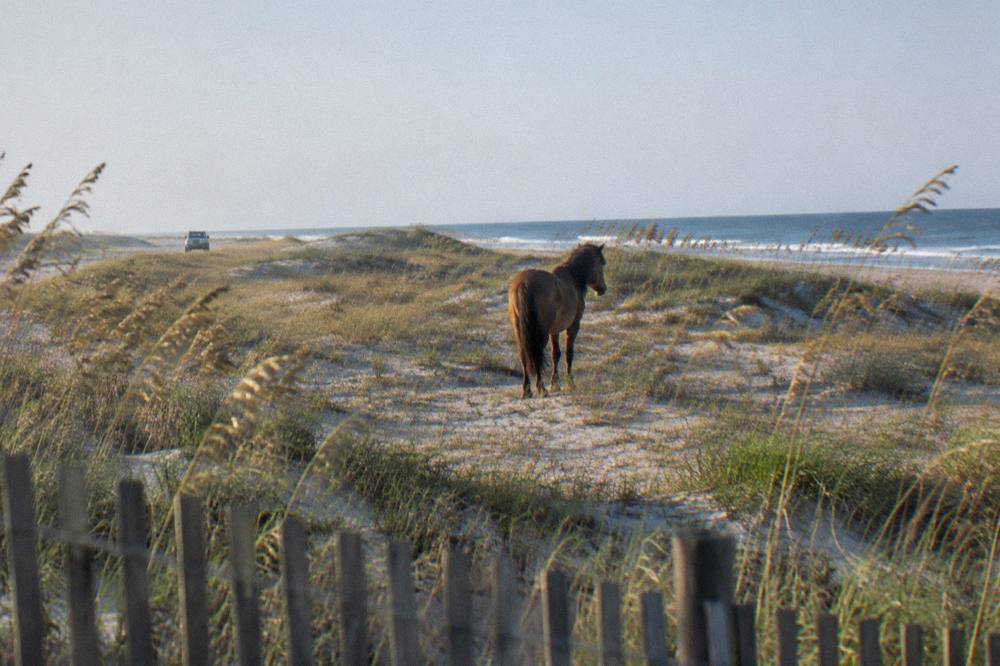
There is a real advantage here for the guided format. A licensed guide knows the rule, applies it uniformly, and models it for a truckload of visitors at once, while a self-driving visitor juggling a rental 4WD, soft sand and a horse in the road is working without that guardrail. The etiquette details, including what to do when horses walk up to your vehicle, are collected in the guide to the Corolla 50-foot rule and horse etiquette.
Reporting matters too. Injured or endangered horses should be reported to the Fund at 252-453-8002, or to Currituck County dispatch at 252-453-3633 after hours. Reporting an injury you witness is not optional courtesy; the County Code treats failure to report as unlawful alongside cruelty and enticement.

How Does A Horse Tour Fit Into An Outer Banks Trip?
A Corolla horse tour takes about two hours plus travel to the Corolla meeting point, which makes it a natural anchor for a northern Outer Banks day that can also include the Currituck Beach Lighthouse, the Whalehead estate and the Fund's museum and gift shop in Corolla village. The tour does not include pickup, so plan the drive north on NC-12 around it.
The northern villages reward a full day. The lighthouse and Whalehead sit minutes from the tour's meeting point in Corolla, and the Fund's museum and gift shop at 1130E Corolla Village Road operates seasonal hours, Tuesday through Saturday, 10 a.m. to 4 p.m., closed Sunday and Monday, with no stated admission figure, so check with the Fund before counting on a price. The pairing of lighthouse climb and horse tour is common enough to have its own planning page, Currituck Beach Lighthouse and Whalehead with a horse tour.
Timing the day matters more than most visitors expect. Summer traffic on the two-lane road north through Duck can add serious time to the drive, and the county's operating window for tour vehicles on the beach, 8 a.m. to 8 p.m. west of the dune line, brackets when trucks actually run. Booking a morning departure and spending the afternoon at the lighthouse and village is the pattern that leaves slack for delays, and the three-day Outer Banks itinerary with a wild horse tour sequences it end to end.
The audience question is worth one honest paragraph. The open-air truck tour is best suited to travelers who can ride over sand for two hours, want the guide's local knowledge, and value a reserved seat over the lowest possible price. Readers whose priority is spending nothing should start with the free ways to see the Corolla wild horses; readers comparing Corolla with Duck as a base town should read Corolla versus Duck for a wild horse trip. The one bookable option here is the Corolla North Carolina Horse Tours excursion, and it is a straightforward pick to compare and book.
Readers ready to compare the one online listing directly can visit the full tour page for the Corolla 2-hour 4WD wild horse tour, or Check availability beside it.
Common Questions About Wild Horse Tours On The Outer Banks
Where can I see wild horses on the Outer Banks?
On the northern beaches from the end of paved NC-12 in Corolla to the Virginia line, a range of roughly 7,544 acres including the 4x4 beach and the communities of Carova, North Swan Beach and Swan Beach. South of the Corolla fence there are no wild horses. Access to the range requires a 4WD vehicle, a boat, or a seat on a guided tour.
Where to see wild horses Outer Banks?
Corolla and Carova are the answer for the northern herd. The practical options are the online-bookable 2-hour open-air 4WD truck tour from $65 per person, direct-booking local operators, or self-driving the 4x4 beach in a proper four-wheel-drive vehicle.
Where are the horses at the Outer Banks?
They roam freely across the 4x4 area's beach, dunes, maritime forest and sand roads, moving with insects, heat, wind and tides. Spring and summer tend to push them onto the open beach; cooler seasons scatter them wider through the interior. No fence pins them to one spot, and no tour can promise a sighting on demand.
Can you book a wild horse tour online in advance?
One Corolla tour is listed on a booking platform: the 2-hour open-air 4WD truck tour from $65 per person, rated 4.8 across 2,871 reviews, meeting at 1148 Ocean Trail in Corolla. The other Corolla operators take bookings on their own websites and by phone.
How close can you get to the wild horses?
Currituck County's ordinance sets 50 feet as the minimum distance, and feeding, riding or petting a wild horse is unlawful. If a horse approaches you, staying 50 feet away is your responsibility. Tour trucks follow the same rule, which is why guides stop well back and narrate from there.
How long do Outer Banks horse tours take?
The listed Corolla truck tour runs about two hours. The direct operators also describe two-hour trips, one covering about 25 miles of off-road driving and another 20 to 30 miles on the north beach, with a three-hour kayak combination listed as temporarily unavailable at one operator.