Can You Touch The Wild Horses In Outer Banks?
No, you cannot touch the wild horses in the Outer Banks. Currituck County's ordinance makes coming within 50 feet, feeding, petting or riding them unlawful. Here is what the rule says and what to do instead.
What Are The Rules Around Touching Them?
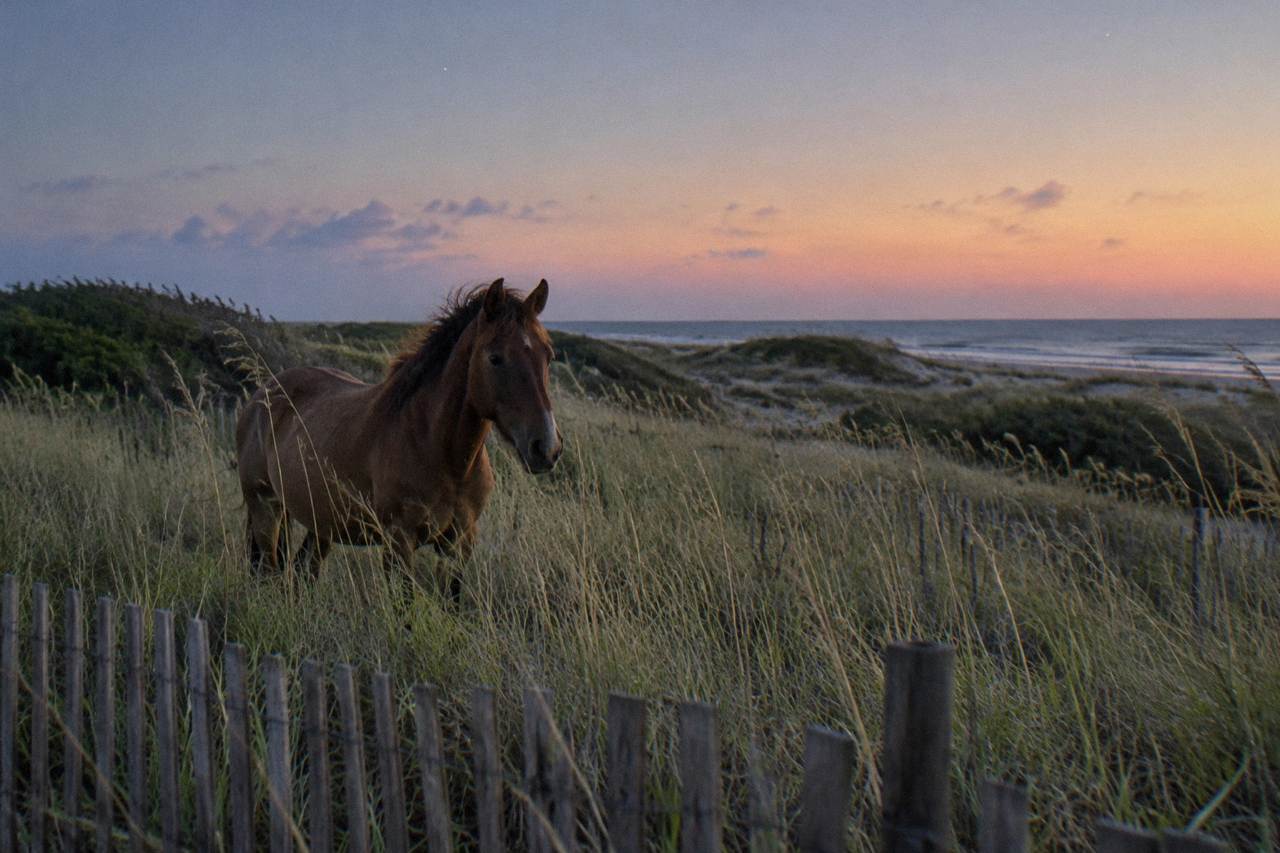
No, you cannot touch the wild horses in the Outer Banks. Currituck County's wild horse ordinance makes it illegal to come within 50 feet of them, and it separately forbids feeding, riding or petting any wild horse. The rule applies to every visitor regardless of horse experience, and violations are punishable by law. The safe, legal way to see the herd up close is from a licensed tour vehicle. Riding them is off the table too, and our guide to beach horseback riding rules in the Outer Banks explains exactly where the law draws the line.
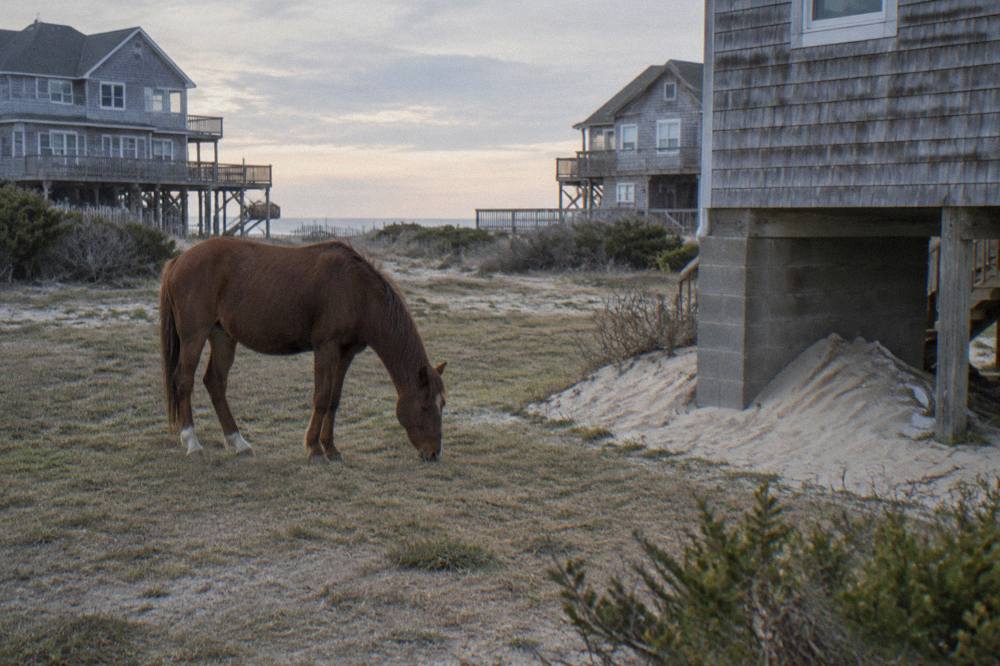
That answer surprises people who have seen photographs of the herd standing casually beside vacation rentals or walking the surf line at Corolla. The horses look calm, tolerant, almost domesticated. They are not. They are wild animals managing their own lives across 7,544 acres of the northern beach, and the law that protects them is written in plain language that leaves no room for a friendly exception. The Corolla Wild Horse Fund's FAQ puts it directly: "There is a county ordinance that makes it illegal for people to come within 50 feet of the horses, regardless of the person's experience."
The rule also cuts the other way. If a horse walks toward you, the responsibility stays with you. The Fund's guidance is that if horses approach you on the beach, "it is your responsibility to stay at least 50 feet away." You cannot claim the horse started it. You step back, you keep your distance, and you let the animal pass.
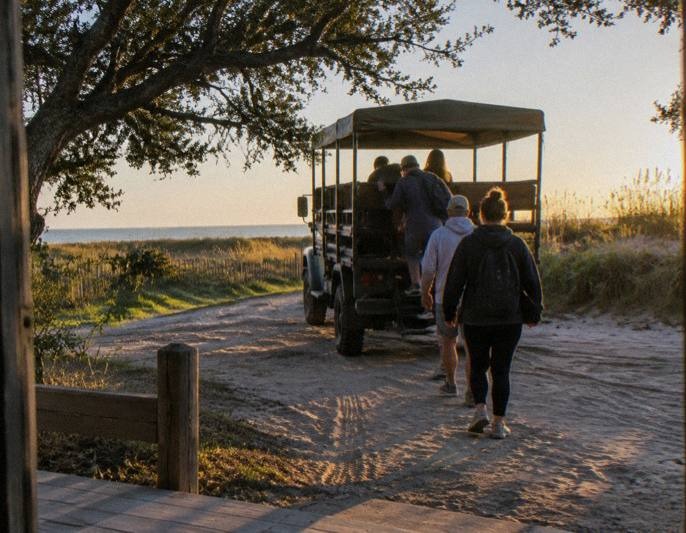
For most visitors the practical solution is a guided trip such as the 2-hour open-air 4WD truck tour, where a licensed operator who knows the ordinance and the herd does the driving while passengers watch from a lawful range. That tour, rated 4.8 across 2,871 reviews, exists largely because of this rule: it is the reliable way to spend time near the horses without ever breaking it.
What Exactly Does The Outer Banks Horse Ordinance Prohibit?
The ordinance prohibits three things: intentionally coming within 50 feet of a wild horse, luring or enticing a horse to come within 50 feet of you, and feeding, riding or petting any wild horse. Currituck County's tour rules additionally require licensed tour vehicles themselves to stay at least 50 feet from the herd. Together these prohibitions cover every route a person might take to touching one.
The Fund's page on the Currituck County ordinances summarizes the county code in language any visitor can act on: "feeding the wild horses or getting within 50 feet of them is punishable by law," and cruelty, enticing, harboring, luring, seizing and failure to report an injury are all unlawful. The ordinance also bars bringing any other horse into the area between the end of the paved portion of NC Highway 12 and the Virginia state line, a detail that matters to people who trailer their own horses to the beach.
Notice what the second prohibition closes off. Some visitors reason that if they stand still and let a horse approach them, no law is broken. The ordinance anticipates exactly that: luring or enticing a horse within 50 feet is treated the same as walking up to one. The Fund explains why in its educational materials, noting that getting too close stresses the animals and can separate foals from their mothers.
The rule reaches onto federal land as well. The Currituck National Wildlife Refuge states that on the refuge "it is unlawful to harm, approach, feed or kill any wild horse," and its regulations prohibit baiting or feeding wildlife outright. North of the paved road, county and federal rules point the same direction.
| Prohibited action | What the rule covers | Who enforces it |
|---|---|---|
| Approaching within 50 feet | Intentionally closing distance to any wild horse, on foot or by vehicle | Currituck County animal control and law enforcement |
| Luring or enticing | Attracting a horse to come within 50 feet of you, including with food or calls | Currituck County |
| Feeding, petting or riding | Any physical contact or provision of food, treats or water | Currituck County |
| Harming or approaching on the refuge | Any approach, feeding, harm or killing on refuge tracts | US Fish and Wildlife Service |
If you spot an injured horse, do not go to it. Call the Fund at 252-453-8002, or after hours Currituck County dispatch at 252-453-3633. That call is the correct form of contact with a wild horse.
Why The 50-Foot Rule Exists
The 50-foot rule exists because the herd's survival depends on staying wild. Habituated horses lose their fear of people and roads, which historically led to deadly vehicle strikes, and foals that become accustomed to humans in their first months are harder to keep safe. Distance is the management tool that keeps a wild population viable on a beach full of houses and trucks.
The history behind the rule is sobering. The Fund records that eleven horses were hit and killed on Highway 12 between 1985, when the road between Duck and Corolla was paved, and 1989, the year the Fund was organized. The horses frequenting the village were moved north of the paved road to what locals call the 4x4 area, and the county ordinance followed. Every horse that learns to approach people for food is a horse that spends more time near roads, trucks and crowds.
The Fund has repeated the point in recent educational updates. Foals, the Fund notes, are extremely impressionable, and it is critical that in their first months of life they do not become too accustomed to humans. A foal that follows a person holding a snack today is a horse that walks up to a stranger's car door tomorrow. The herd welcomed at least twelve healthy foals across the most recent season, and every one of them needs to grow up wary.
Distance also protects people, though visitors rarely see it that way. A wild horse is a large animal with nothing to gain from being cornered. The Fund's materials on the herd describe animals that tolerate human presence at a remove but defend space, food and young like any wild species. Fifty feet is where watching stops and interfering begins.
Our companion guide on the fifty-foot rule and horse etiquette breaks the practical side further, including what to do when a horse walks through a beach crowd.
What Happens If A Horse Approaches You?
If a horse approaches you, the law still requires you to keep 50 feet of separation. Back away calmly, keep children and pets close, never offer food, and give the animal a clear line to move on. The ordinance does not distinguish between a horse that came to you and one you went to, so the retreat is always yours to make.
This scenario is common enough that the Fund devotes a section of its FAQ to it. Horses wander through the 4x4 area's roughly 700 houses, along driveways and down to the water, and encounters happen without anyone seeking them. The Fund's answer is consistent: it is your responsibility to stay at least 50 feet away. Move behind a vehicle if one is nearby, avoid standing between a mare and her foal, and do not try to shoo or guide the animal. The full index of guides sits on Corolla North Carolina Horse Tours.
Feeding is the fastest way to turn a passing encounter into a habit. A horse that receives a handout will return to the spot and to people, and the Fund treats that as a serious welfare problem rather than a charming anecdote. On the refuge the prohibition is explicit: baiting or feeding wildlife, including the Corolla wild horses, is listed among the prohibited activities, and pets must stay leashed.
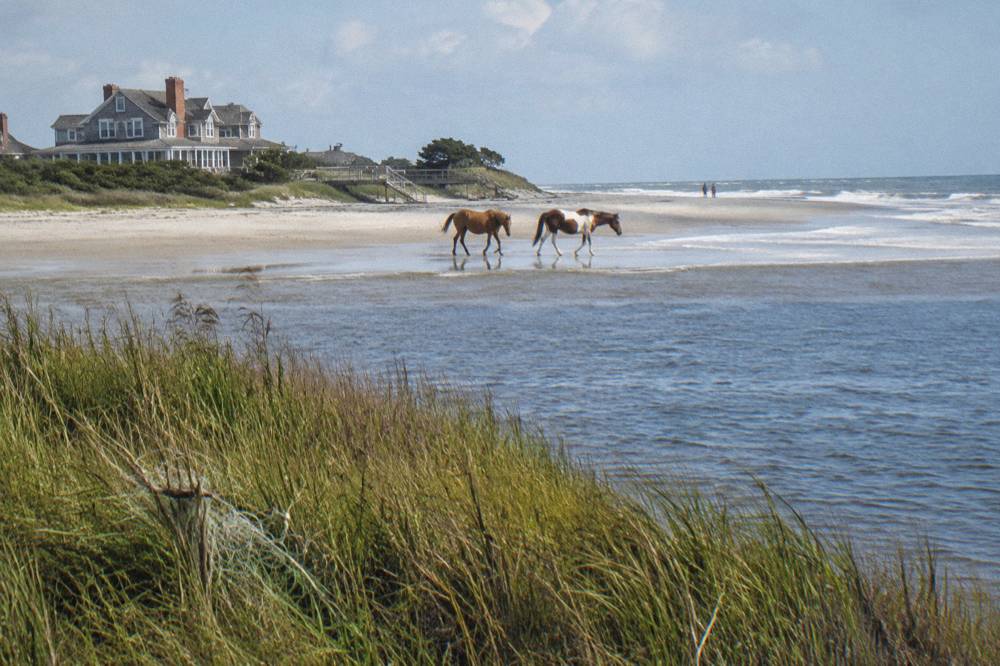
Photography works fine from the right range. A phone or camera with even modest zoom frames a horse beautifully at fifty feet, and the animals carry on grazing, walking and playing exactly as they would with no one there. The photographs that look closest, including most of the images on tour operators' pages, are taken from vehicles with long lenses, not from beside the horses.
How A Guided Tour Keeps You Legal
A licensed tour keeps you legal by making distance the vehicle's job. Currituck County requires tour operators to hold a yearly county identification, to stay at least 50 feet from the horses, and to run only between 8 a.m. and 8 p.m. west of the dune line, so the passenger simply watches while a regulated driver manages the approach.
The county's tour rules, published on the Currituck County horse tours page, build the compliance into the operator's license. Tour vehicles must display a valid North Carolina tag and county-issued yearly identification, they must keep 50 feet from the herd, amplified sound is banned west of the dune line at all times, and violations bring citations that can suspend the license. An operator's entire business depends on respecting the same rule you are bound by.
That is the quiet advantage of the 2-hour open-air 4WD truck tour from the meeting point at 1148 Ocean Trail in Corolla. The truck carries up to 12 travelers, the guide handles the driving and the distance, and passengers get an unobstructed view from open-air benches that a car window cannot match. Rated 4.8 across 2,871 reviews and listed from $65 per person, the tour is a well-documented way to spend time with the herd without ever testing the ordinance's patience.
Guides also carry knowledge the law does not require but the experience benefits from: which horses are which, how the Fund identifies them by color and markings rather than brands or chips, and why a given band is using one stretch of the beach this week. None of that requires proximity. It requires someone who watches the herd professionally.
The tour listing notes a few practical limits worth knowing before you book. It is not wheelchair accessible, it is not recommended for travelers with back problems, and it cannot accommodate children under five years or under 40 pounds. Food, drinks and hotel pickup are not included, so plan around the two hours you spend on the truck.
What To Do Instead Of Touching The Horses
Instead of touching, watch from a distance, photograph with zoom, visit the Fund's museum and gift shop in Corolla village, or attend a scheduled farm event where the Fund's own rescued mustangs can be seen up close under supervision. Each option satisfies the urge the ordinance blocks, and several of them are free.
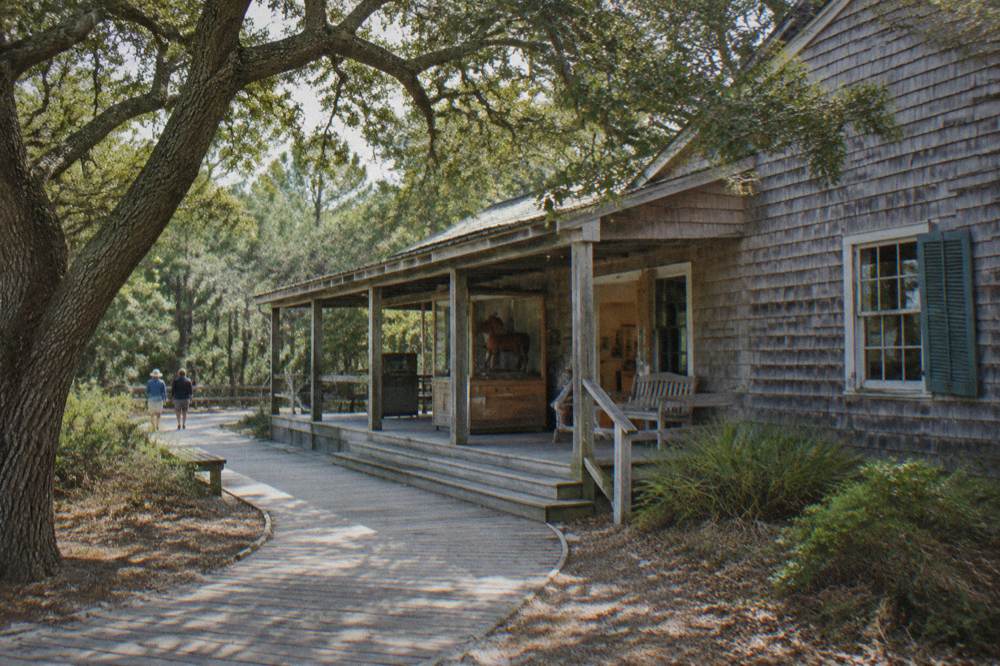
The museum and gift shop at 1130E Corolla Village Road, open seasonally Tuesday through Saturday, is the place to see tack, photographs and the Fund's history at any range you like. On the mainland in Grandy, the Fund's farm opens to the public on scheduled dates; in 2026 the Mustang Mornings program ran on Wednesdays from late May through late August with a suggested $10 per vehicle donation at the gate, and the Fund's calendar lists the next openings, including a fall open house. These events feature the Fund's rescued horses, animals in its care, not the wild herd, and that distinction is exactly what makes contact appropriate there and unlawful on the beach.
For seeing the wild herd itself, the options narrow to two: a guided tour, covered above, or self-driving the 4x4 beach. The self-drive route is genuinely possible, and our article on driving yourself to see the horses explains what four-wheel-drive access requires, but it puts the burden of the 50-foot rule entirely on you. County guidance asks drivers to keep a slow, steady speed, and the beach north of the paved road is public road with horses, pedestrians and trucks sharing it (see Corolla Beaches).
There is one more thing worth doing instead of touching: supporting the herd's management. The Fund runs on donations, and it has described the cost and availability of winter hay as an ever-increasing challenge. A donation or a gift-shop purchase does more for these animals than any amount of careful petting ever could.
Common Questions About Touching Outer Banks Wild Horses
Can you touch the wild horses in Outer Banks?
No. Currituck County's wild horse ordinance makes it illegal to come within 50 feet of a wild horse and separately forbids feeding, riding or petting any wild horse. The rule applies to everyone regardless of experience, and violations are punishable by law.
Can you feed the wild horses in Corolla?
No. Feeding a wild horse is expressly unlawful under the county ordinance, and on the Currituck National Wildlife Refuge baiting or feeding wildlife, including the horses, is a prohibited activity. Feeding also habituates horses to people and roads, which the Corolla Wild Horse Fund treats as a serious welfare risk.
What if a wild horse walks up to me?
The responsibility to keep 50 feet of distance stays with you even when the horse closes it. Back away calmly, keep children and pets close, never offer food, and give the animal room to move on. Report injured or dangerously behaving horses to the Fund at 252-453-8002 or Currituck County dispatch at 252-453-3633.
Can children pet the Corolla horses?
No, the rule has no age exception. Children must stay 50 feet away just like adults, which is one reason guided tours are popular with families: the truck holds everyone at a lawful range while the guide keeps the group informed and safe. The featured 4WD truck tour cannot carry children under five years or under 40 pounds.
Can you ride the wild horses on the beach?
No. Riding a wild horse is unlawful under the same ordinance, and the county code also bars bringing any other horse into the area between the end of paved NC Highway 12 and the Virginia state line. There is no riding operation using the wild herd; see the herd only as a spectator.
How close can you legally get to the horses?
Fifty feet, measured between you and the animal, whether you are on foot or in a vehicle. Licensed tour vehicles are held to the same 50-foot minimum by county rule, which is why a tour is the simplest way to watch the herd without risk of a citation.