Do You Need A 4x4 To Get To Carova Beach?
Yes, you need a 4x4 to reach Carova Beach: the paved road ends in Corolla and the beach itself becomes the road. Here is what that means for your trip and your alternatives.
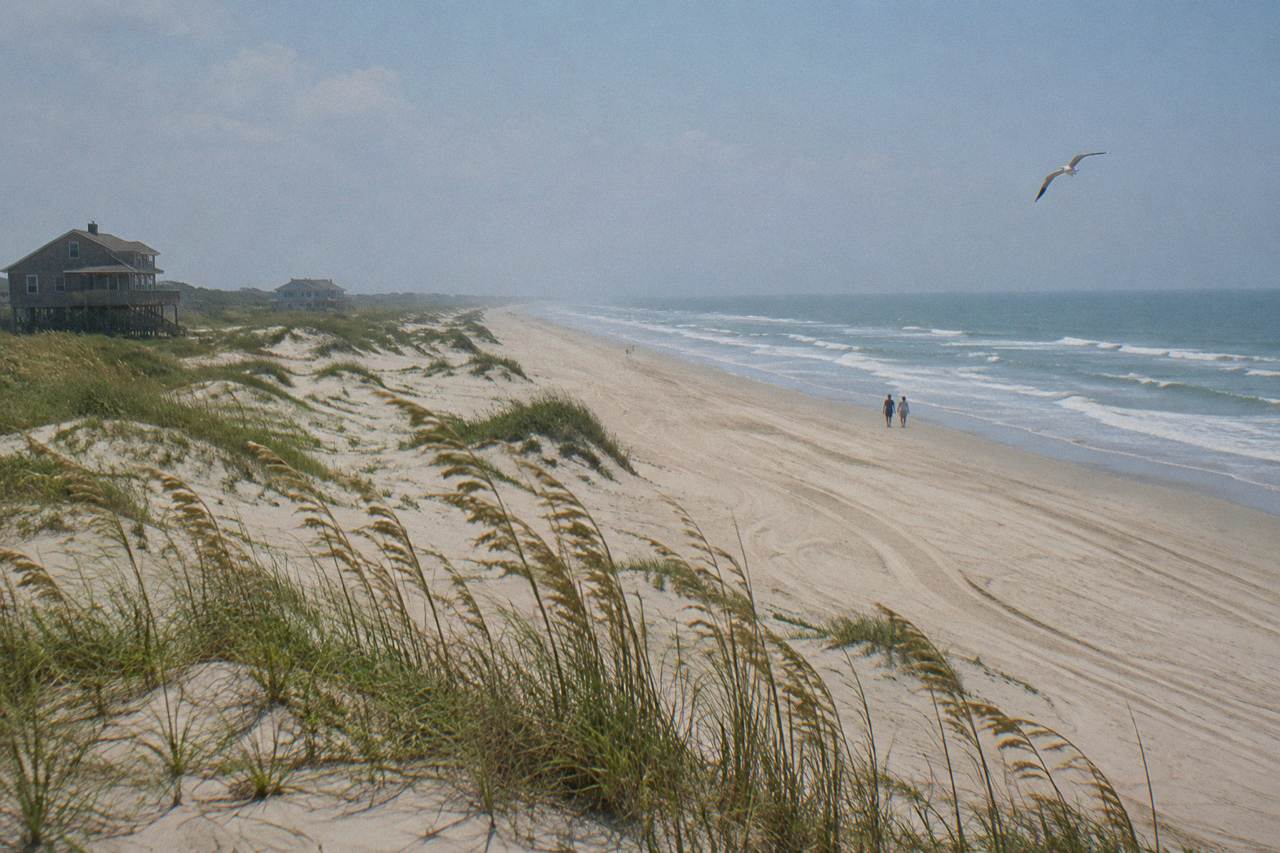
The northern Outer Banks does something unusual with its geography: it simply stops paving. North Carolina Route 12 carries you through Duck and Corolla and then terminates, and from that point to the Virginia state line the beach itself is the road. Everything north of the end of the pavement, including the hamlets of Carova, North Swan Beach and Swan Beach, is reachable only by sand or by water. That is why this question gets asked so often, and why the answer has real consequences for how a trip is planned.
Do You Need Four-Wheel Drive?
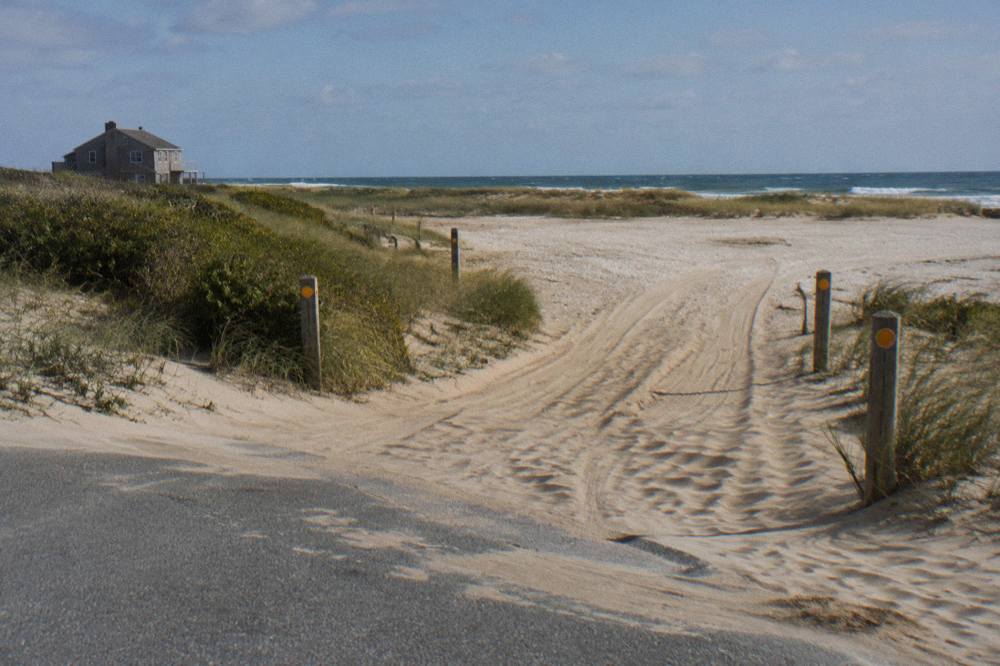
Yes, you do. Carova Beach sits past the northern end of the paved road in Corolla, where traffic is diverted onto the sand at the end of NC-12, and the U.S. Fish and Wildlife Service states plainly that four-wheel drive is required from that point. A standard two-wheel-drive car cannot make the trip, and attempting it risks getting stuck in soft sand miles from help.
The reasoning comes straight from the agencies that manage the land. The Currituck National Wildlife Refuge, which spans six units between Corolla and the state line, publishes access guidance that leaves no wiggle room: follow NC-12 north to its terminus in Corolla, where traffic diverts onto the beach, and four-wheel drive is required from there. The refuge itself is reachable by 4WD vehicle or boat only. County guidance echoes the same point, telling drivers to engage 4WD when entering the ramp and to keep a slow, steady speed, and not to attempt the beach at all in a vehicle without it.
What trips up many visitors is that the beach looks like a road. It functions as one: the Corolla Wild Horse Fund's history of the area notes that the beach north of the paved road is considered public road and is open to the public, and that it is the only access for residents and guests staying in Carova, North Swan Beach and Swan Beach. Rental trucks, delivery vehicles and tour trucks run it every day in season. But a public road made of sand follows different physics than asphalt, and the vehicles that handle it are the ones built for it.
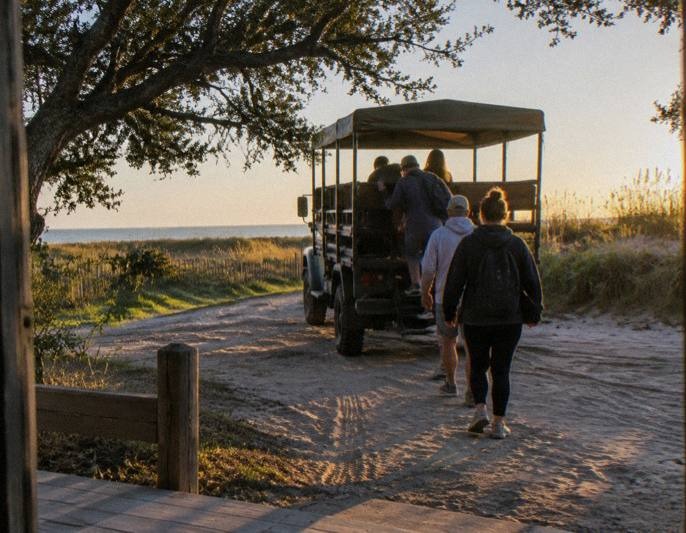
For travelers who arrive without a 4x4, the practical answer is not to abandon the plan but to change vehicles. The guided 2-hour open-air 4WD truck tour from Corolla covers exactly this terrain with a driver who does it daily, rated 4.8 across 2,871 reviews and listed from $65 per person. It is one of the few ways to stand in the 4x4 area without owning a truck, and it pairs the crossing with a guide who knows where the wild horses tend to be.
Why The Paved Road Ends Where It Does
NC-12's pavement stops in Corolla because the developed barrier island effectively stops there too. North of the terminus, the land becomes a 7,544-acre mix of maritime forest, marsh and sand shared by the wild horse herd and a scattering of houses, with the beach serving as the only through-route. The road was never extended, so the beach inherited the job, and every rule that governs the area was written around that fact.
The Corolla Wild Horse Fund, which has managed the herd since its organization in 1989 and incorporation as a nonprofit in 2001, describes the habitat on its herd-management pages: the horses roam those 7,544 acres of diverse habitat, which include roughly 700 houses, thousands of people and vehicles, and a mix of private and public land. The Fund's history page records that eleven horses were hit and killed on Highway 12 between the paving of the Duck-to-Corolla road in 1985 and 1989, after which the horses frequenting the village were moved north of the paved road to what locals call the north beach or the 4x4 area. A fence now marks that boundary roughly eleven miles south of the Virginia line.
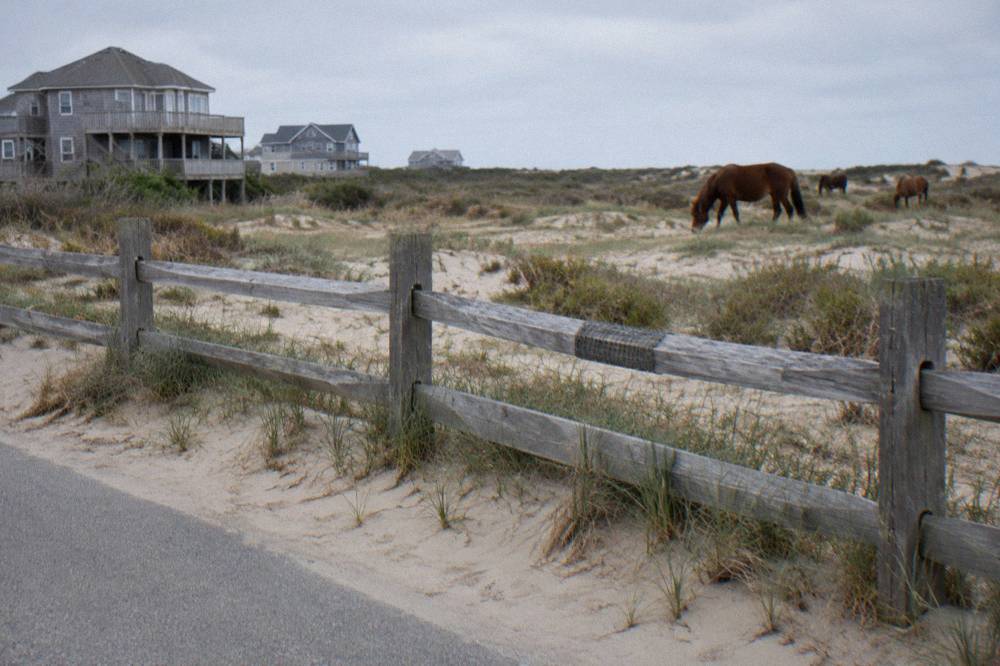
That history explains a lot about the current rules. Because the beach doubles as a road and a wildlife corridor, Currituck County's tour-operator rules are unusually specific: commercial tour vehicles must display a valid North Carolina tag and county-issued identification, tour operation west of the dune line is prohibited before 8 a.m. and after 8 p.m., amplified sound is banned there at all times, and tour vehicles must stay at least 50 feet from the wild horses. The same logic applies to private drivers, who share the sand with an animal population that has already lost horses to vehicles in the past.
This is also where a decision point arrives for most readers. If the plan was to see the 4x4 area and the horses in it, the choice is between renting or bringing a 4WD vehicle and driving it yourself, or riding in with an operator who does this every day. The site's comparison of driving the Corolla 4x4 beach yourself versus a guided tour works through that trade-off in detail.
The booking page for the guided truck tour shows the live price and current departure times, and free-cancellation terms are offered on the listing, which matters when beach weather shifts a day's plans.
Can You Walk, Bike Or Take A Boat Instead?
Walking into Carova from the end of the pavement is physically possible along the hard sand at low tide, but it is a long, exposed route with no services, and the refuge advises viewing any horses only from a distance. Boats reach parts of the northern sound and refuge tracts, but for almost everyone the realistic options remain a 4WD vehicle or a seat on a guided tour truck.
The walking question deserves an honest answer rather than a flat no. The beach is public and open, and people do stroll north from the access points near the NC-12 terminus. But Carova's heart is several miles up the sand, the route offers no shade, no water and no restrooms, and tide and weather can change the character of the walk quickly. The Currituck National Wildlife Refuge, which the walking route borders, has no developed public facilities at all: its pages note there are no roads, trails, restrooms or visitor contact stations on refuge land, and that it is open daily from sunrise to sunset year-round. Anything you carry in, you carry out.
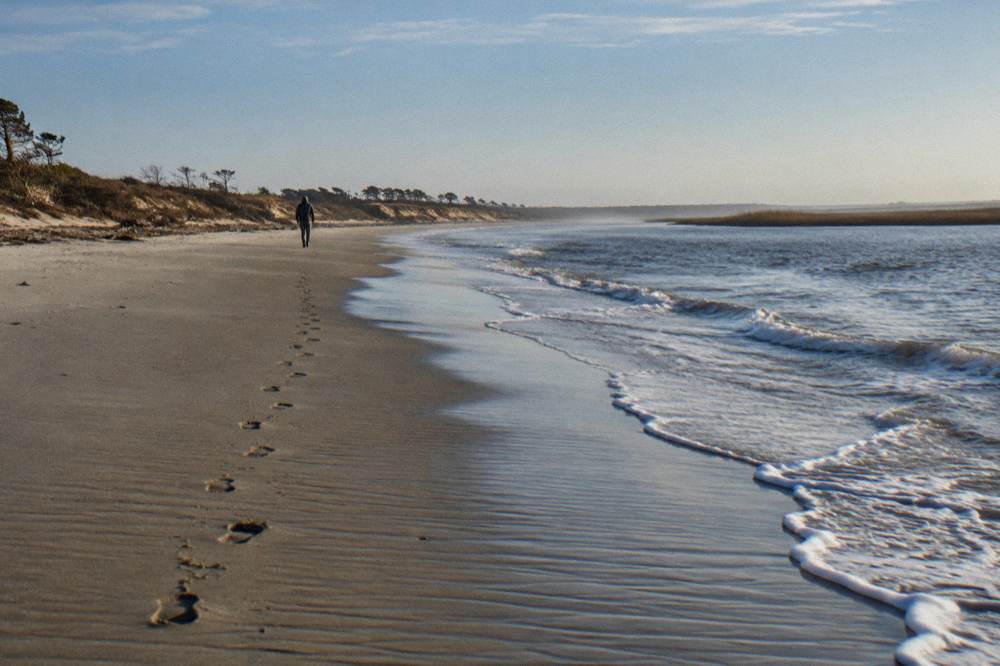
Biking faces the same distances with the added problem of soft sand above the tide line, which swallows standard bike tires. Boating is genuinely viable for some: the refuge's visitor information notes that access to certain tracts, Monkey Island and Swan Island among them, is by boat or 4WD vehicle. But a boat is not a practical substitute for a family that simply wants to see Carova and the horses for an afternoon.
Here is a quick way to compare the realistic approaches:
| Approach | Works without a 4x4? | Best for | Main drawback |
|---|---|---|---|
| Drive your own 4WD truck or SUV | No, requires one | Independent travelers, repeat visitors, house renters in Carova | Sand driving skill, no services, stuck-vehicle risk |
| Guided open-air 4WD truck tour | Yes | First-time visitors, families with kids five and up, anyone who wants a guide | Fixed schedule, shared vehicle of up to 12 travelers |
| Walk north along the beach | Yes | Short outings near the terminus, hardy walkers at low tide | Long exposed distance, no facilities, tide dependent |
| Boat into refuge or sound tracts | Yes, with a boat | Anglers and experienced boaters | Not practical for a typical sightseeing afternoon |
What Driving The 4x4 Beach Yourself Actually Involves
Driving your own 4x4 onto the beach at the end of NC-12 means engaging four-wheel drive at the ramp, holding a slow steady speed, and staying on the beachfront, since the refuge restricts vehicle traffic to the beach only. No official county or federal source publishes a numeric speed limit, permit, or fee for driving this stretch of beach, so treat any figure you see elsewhere with caution.
The mechanics matter more than most first-timers expect. Soft sand near the upper beach demands momentum and low tire contact pressure, drivers need to watch for pedestrians, fishing lines and horses, and a vehicle that bogs down can sit for hours before a recovery service arrives. County guidance is brief and pointed: use 4WD when entering, maintain a slow steady speed, and if the vehicle lacks four-wheel drive, do not attempt the beach. The Fund's material adds the wildlife dimension, since the herd shares those same miles and the county's wild horse ordinance makes feeding the horses or coming within 50 feet of them punishable by law. The Fund asks that dangerous behavior be reported to Currituck County dispatch. Everything else covered here is indexed on Corolla North Carolina Horse Tours.
Timing follows the tour rules as much as the tide. Commercial tours operate west of the dune line only between 8 a.m. and 8 p.m., a window that signals when the beach is busiest and when conditions are considered manageable. For a fuller picture of what the area permits and prohibits, the guide to Carova Beach 4x4 access rules lays out the rules in one place.
No 4x4? The Guided Corolla Horse Tour Is The Simplest Way In
The 2-hour Outer Banks Wild Horse Tour by 4WD Truck puts a driver and guide behind the wheel of an open-air four-wheel-drive truck and takes up to 12 travelers from a meeting point at 1148 Ocean Trail in Corolla into the 4x4 beaches. It is rated 4.8 across 2,871 reviews, listed from $65 per person, and it exists largely because so many visitors arrive without a vehicle that can make the crossing themselves.
The listing details tell the story of who this is for. The truck is open-air, with no ATVs involved, and the ride includes a professional horse guide who knows the herd's range. Food, drinks and hotel transport are not included. The tour is not wheelchair accessible, is not recommended for travelers with back problems, asks for moderate physical fitness, and cannot accommodate children under five years old or under 40 pounds. Those constraints are honest ones: the ride crosses soft sand and the sea air is part of the point.
For a household weighing the cost of a 4WD rental against a booked seat, the arithmetic usually favors the tour for a single outing. A rental truck covers a whole vacation's needs, but it also hands you the sand-driving responsibility, the stuck-vehicle risk and the search for the horses on your own. The tour concentrates the same terrain into two hours with someone who reads the beach for a living. Riders on the listing describe guides who spot horses and explain the herd's history along the way.
Availability moves with the season, and the booking page shows live departures and the current price. Visitors planning a summer trip, when seats fill fastest, benefit from reserving ahead; the site's guide to the best time of year to see the wild horses explains how the seasons change both crowds and horse behavior.
How The Horses And The Refuge Shape The Whole Area
The same geography that blocks ordinary cars is what keeps the wild horse herd wild. The 4x4 area's 7,544 acres of mixed public and private land, patrolled by county rules and bordered by the Currituck National Wildlife Refuge, give the horses a range that a paved highway would have destroyed, which is exactly what happened on Highway 12 before the herd was moved north of the pavement.
The refuge's own framing is matter-of-fact. Its pages describe the horses as feral mammals that are not a natural component of the barrier island, are occasionally seen, and must only be viewed from a distance, and they prohibit baiting or feeding wildlife, including the Corolla wild horses, along with all commercial activities and pets off-leash. The Fund, which co-manages the herd's welfare with the county through efforts like the programs described on its history page, takes a warmer view of the animals' Colonial Spanish Mustang lineage, which the North Carolina General Assembly recognized in 2010 by naming it the state horse. Both perspectives land on the same instruction for a visitor: keep your distance and let the horses be horses.
That instruction is easiest to follow from a tour truck. Guides hold the county-mandated 50 feet, position the vehicle for viewing, and interpret what the herd is doing. A private driver can comply too, but it takes more discipline on a beach where a horse may walk toward your parked truck, at which point the Fund's FAQ is explicit that staying 50 feet away is your responsibility.
One planning note for anyone pairing a visit to the horses with other stops: the Fund's museum and gift shop on Corolla Village Road, with seasonal hours, makes an easy before-or-after stop, and the Corolla lighthouse and Whalehead sit south of the terminus in the paved village. The essentials of the beach crossing itself are worth a final look before any itinerary is locked in.
Common Questions About Getting To Carova Beach
Do you need a 4x4 to get to Carova Beach?
Yes. The paved road ends in Corolla, the beach becomes the route north, and four-wheel drive is required per the U.S. Fish and Wildlife Service and county guidance. The alternatives are a boat, a long walk, or a seat on a guided 4WD tour truck.
Can a regular car drive on the beach at Carova?
No. County guidance is explicit that vehicles without four-wheel drive should not attempt the beach, and soft sand strands two-wheel-drive cars regularly. Park at the Corolla end and walk a short way, or book a guided tour.
Do you need a permit to drive on the Corolla 4x4 beach?
No county or state source publishes a visitor permit or fee for beach driving, so assume none is required but confirm with current county sources before your trip. The requirement is simple: four-wheel drive, a slow steady speed on the sand, and traffic restricted to the beachfront.
Sometimes, from the paved village or a walk near the terminus, but the herd's core range is the 4x4 area north of the fence. The guided open-air 4WD truck tour is the standard way in without your own vehicle, rated 4.8 across 2,871 reviews and listed from $65 per person. Yes. The Fund's history pages note the beach north of the paved road is considered public road, open to the public, and it is the only access for residents and guests staying in Carova, North Swan Beach and Swan Beach. The 4x4 area runs roughly eleven miles from the fence at the end of Corolla to the Virginia state line, with Carova's settled heart several miles up the sand. The guided truck tour spends about two hours covering that terrain with stops for viewing.Can you see the wild horses without a 4x4?
Is the beach at Carova a public road?
How far is Carova Beach from the end of the pavement?